🐠 Guppy
🧾 Quick Facts
The guppy, known for its vibrant colors and versatility in aquariums, is one of the most popular freshwater fish globally. It's often celebrated for its ease of care and adaptability, making it a favorite among both beginners and seasoned aquarists. Below are some quick facts about guppies:
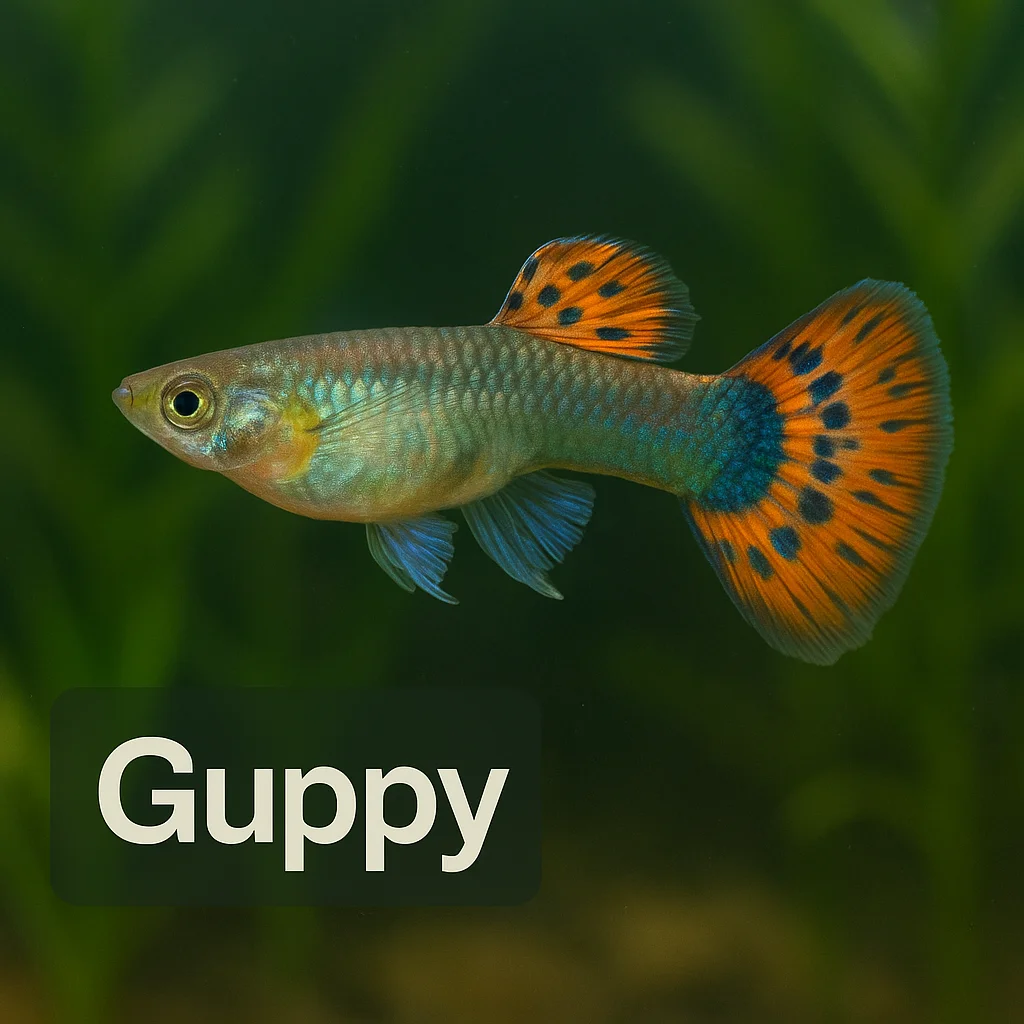
- Common names: Guppy, Millionfish, Rainbow Fish
- Scientific name: Poecilia reticulata
- Freshwater / Marine / Brackish: Freshwater
- Origin: Northeastern South America; common in rivers and streams
- Typical adult size range: 1.5 to 2.5 inches (4 to 6 cm)
- Lifespan: 1 to 3 years (varies greatly)
- Temperament: Peaceful
- Recommended tank size: 10 gallons minimum
- Water temperature range: 72°F to 82°F (22°C to 28°C)
- pH / hardness: pH 6.8 to 7.8; moderate hardness
- Diet type: Omnivore
- Activity zone: Top to mid-level of the tank
- Social needs: Prefer groups (shoaling)
- Beginner suitability: Easy
🔍 Identification
Guppies are easily identifiable by their colorful and diverse appearances. They have a streamlined body with a slightly upturned mouth, ideal for feeding at the water's surface. Their fins vary widely in shape and size depending on the strain.
- Body shape and silhouette: Slim, elongated body
- Key colors/patterns: Wide range; common colors include red, blue, green, yellow, and black
- Fin shapes: Varied; can include fan, veil, and lyretail shapes
- Male vs female: Males are smaller, more colorful, with larger fins; females are larger with duller coloration
- Common look-alikes: Endler's livebearer; distinguishable by smaller size and less ornate fins
- Top ID Tips: Look for slender bodies and upturned mouths
- Bright and varied color patterns are indicative
- Observe fins for unique shapes and sizes
- Check males vs females based on size and color
- Understand species can vary widely in appearance
🌍 Origin & Natural Habitat
Guppies originate from northeastern South America, thriving in a variety of freshwater environments such as slow-moving rivers, streams, and ponds. These habitats usually have abundant aquatic vegetation, which provides shelter and feeding grounds. The climate is typically tropical with distinct wet and dry seasons, influencing their natural behavior such as breeding cycles.
Understanding guppies' native habitats helps recreate suitable aquarium conditions, promoting health and natural behavior.
🧪 Tank Setup & Water Parameters
Creating an optimal environment for guppies helps ensure their health and vitality. They thrive in a well-filtered tank with a stable temperature, mimicking their natural habitat. An aquarium with plants provides hiding spaces and helps maintain water quality.
- Tank size considerations: Minimum of 10 gallons; more space is better for shoaling behavior
- Filtration and flow: Moderate flow; ensure good filtration to maintain water quality
- Heating needs: Heater may be necessary to maintain consistent temperatures in cooler climates
- Substrate and decor: Sand, gravel, or a mix; add live or artificial plants for hiding
- Lighting: Moderate lighting to mimic natural conditions
- Setup Checklist: Ensure adequate tank size
- Opt for moderate water flow
- Include plants for hiding
- Stabilize water temperature
- Maintain clean and clear water
🤝 Temperament & Compatibility
Guppies are social fish that thrive in groups. They display peaceful behavior, making them suitable for community tanks. Their lively nature is best observed when housed with similar-sized non-aggressive fish. Care should be taken to avoid fin-nipping species that might stress guppies.
- Compatibility Notes: Ideal tankmates include other peaceful species
- Avoid aggressive or large fish
- Compatible with tetras, mollies, and small catfish
- Provide a social group for interaction
- Ensure mixed-sex groups or all males to control reproduction
🍽️ Diet & Feeding
Guppies are omnivores, consuming a varied diet in the wild consisting of algae, plant matter, small invertebrates, and insect larvae. In captivity, a balanced diet can include high-quality flakes, live or frozen foods, and vegetables. Feeding small portions several times a day is preferred.
- Feeding Tips: Use a varied diet for optimal health
- Include live or frozen foods for enrichment
- Feed small portions multiple times daily
- Remove uneaten food to maintain water quality
- Supplement with vegetable matter occasionally
🧬 Growth, Color Changes & Lifespan
Guppies exhibit distinct differences between juveniles and adults, primarily in color intensity and fin development. Stress indicators include clamped fins and a reduction in activity. Lifespan varies between 1 to 3 years, influenced by diet, aquarium conditions, and overall care.
Guppies may display color changes depending on mood and lighting. Consistent high-quality care often enhances their coloration, making them a vibrant addition to any tank.
🪺 Breeding & Reproduction
Guppies are livebearers, giving birth to free-swimming young. Breeding is relatively straightforward, occurring frequently without intervention. Comfortable conditions trigger breeding, with females being capable of storing sperm for future fertilizations.
Fry require small, specialized foods like infusoria or powdered fry food, and a separate breeding tank can improve survival rates.
🩺 Common Health Issues & Prevention
Guppies can face health challenges like ich, fin rot, and various parasites. Maintaining optimal water conditions and practicing good tank hygiene is key to prevention. Introducing new fish should be accompanied by proper quarantine procedures to avoid tankwide issues.
- Prevention Basics: Regular tank maintenance
- Ensure good water quality with stable parameters
- Quarantine new arrivals before introducing them
- Observe fish for signs of stress or disease
- Avoid overfeeding to maintain cleanliness
🌱 Role in the Aquarium
Guppies contribute to a vibrant and active aquarium environment. They help with algae control to a minor degree and provide visual appeal with their striking colors. Ethical considerations include sourcing from reputable breeders to avoid environmental impacts associated with wild capture.
📉 Conservation & Responsible Keeping
Guppies are widely captive-bred due to their popularity, reducing pressure on wild populations. Hobbyists must ensure they do not release any aquarium fish into local waters, as this can disrupt ecosystems. Consider rehoming through aquarist communities if required.
- Responsible Keeping Tips: Support captive breeding
- Never release fish into the wild
- Research on sources to ensure ethical procurement
- Participate in local groups for rehoming efforts
- Practice responsible stocking and care
📌 Summary
- ID highlights: Bright coloration, varied fin shapes
- Origin: Northeastern South America
- Tank setup: Minimum 10 gallons with plants
- Compatibility: Suitable for community tanks
- Diet: Omnivorous with varied intake
- Beginner-friendly: Easy to care for
- Cautions: Monitor for aggression during feeding
- Marine vs Freshwater: Strictly freshwater fish
- Role: Adds vibrant activity to home aquariums