🐠 Endler’s Livebearer
🧾 Quick Facts
The Endler’s Livebearer, closely related to the common guppy, is a vibrant and colorful addition to many freshwater aquariums. It's a small, active fish originating from the freshwaters of Venezuela, popular with both beginner and experienced aquarists due to its hardy nature and stunning appearance.
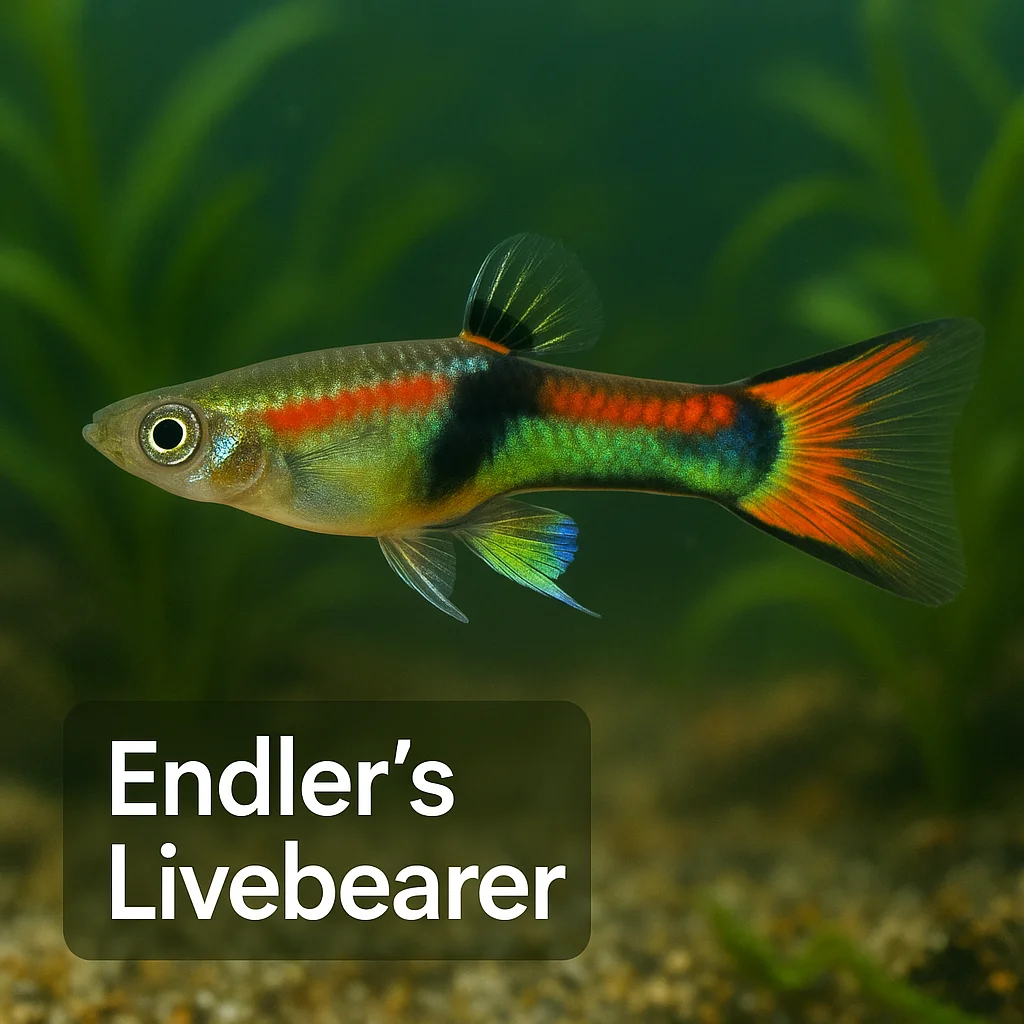
- Common names: Endler's Livebearer, Endler's Guppy
- Scientific name: Poecilia wingei
- Freshwater / Marine / Brackish: Freshwater
- Origin: Venezuela, specifically Laguna de Patos
- Typical adult size range: 1 to 1.5 inches (2.5 to 3.8 cm)
- Lifespan: Varies, usually 2 to 3 years
- Temperament: Peaceful
- Recommended tank size: Minimum 5 gallons (19 liters)
- Water temperature range: 72-82°F (22-28°C)
- pH / hardness: pH 6.7-8.5, prefers slightly hard water
- Diet type: Omnivore
- Activity zone: Middle to top
- Social needs: Schooling, usually kept in groups
- Beginner suitability: Easy
🔍 Identification
The Endler’s Livebearer is noted for its slender body and strikingly colorful males, which are more visually stunning than females. Males typically display vivid colorations with combinations of orange, green, blue, and black. The shape of their body is similar to a torpedo, aiding in their quick and agile swimming.
Fins are relatively short but can exhibit beautiful patterns. Females are generally larger, less colorful, and have rounder bodies. In distinguishing males from females, look for the bright coloration and the smaller, streamlined body of the male.
Endler’s Livebearers are often confused with guppies; however, their color patterns offer distinct differences. They are less likely to have the expanded and elaborate tail fins of the guppy.
- Body shape: Slender, torpedo-like
- Color patterns: Varied, often a bright mix of orange, green, blue, and black
- Fin shapes: Short, sometimes patterned
- Male vs Female: Males are smaller with brighter colors
- Common look-alikes: Guppies – look for body color and fin patterns
🌍 Origin & Natural Habitat
The Endler’s Livebearer is native to the fresh waters of Venezuela, specifically from Laguna de Patos in the northern part of the country. These waters are characterized by their warm temperatures and are rich in vegetation and organic matter, providing an ideal environment for these fish.
Their natural habitat includes areas with slow-moving water, plenty of hiding spots among plant roots and driftwood, and moderately hard water. There are seasonal variations in water levels and temperatures that these fish are adapted to.
Understanding the natural habitat of Endler’s Livebearers can aid in creating a similar environment in your home aquarium, promoting healthier and more active fish.
🧪 Tank Setup & Water Parameters
When setting up a tank for Endler’s Livebearers, providing ample space for swimming with dense areas of plants is ideal. A minimum tank size of 5 gallons is recommended for a small group, although larger setups are preferable to accommodate their active swimming nature.
Use gentle filtration that creates a moderate current, simulating their natural habitat. Maintain a consistent water temperature between 72°F and 82°F, with a pH that tolerates anything from 6.7 to 8.5. The substrate can be sand or fine gravel, with plenty of live plants for shelter and breeding sites.
Lighting should be moderate to mimic the natural daylight cycle, encouraging healthy plant growth and natural behaviors.
- Tank size: At least 5 gallons for a small group
- Filtration: Gentle, with moderate water flow
- Heating: Maintain temp 72-82°F (22-28°C)
- Substrate: Sand or fine gravel
- Decor: Live plants, driftwood, rocks
- Lighting: Moderate
🤝 Temperament & Compatibility
Endler's Livebearers are known for their peaceful and social nature, making them excellent choices for community tanks. They thrive in groups, with a preferred ratio of two or three females per male to manage male aggression during breeding.
These fish interact well during feeding and often exhibit social swimming patterns. While they're resilient, they are best kept with other peaceful species due to their small size making them susceptible to bullying by aggressive tank mates.
Potential tankmates include small tetras, rasboras, and bottom-dwelling species like Corydoras catfish.
- Schooling nature: Prefer groups
- Territoriality: Low
- Good tankmates: Tetras, rasboras, small catfish
- Risky tankmates: Larger, aggressive fish
- Feeding behavior: Active but non-competitive
🍽️ Diet & Feeding
In the wild, Endler’s Livebearers are omnivores, feeding on algae, plant matter, and small insects. In captivity, they thrive on a balanced diet that includes high-quality flake food, small live or frozen foods like brine shrimp or daphnia, and occasional plant matter.
Feed them small amounts two to three times daily, offering them varieties to ensure balanced nutrition. They are not typically picky eaters, but variety helps to keep them healthy and vibrant.
- Staple diet: High-quality flakes
- Live/frozen food: Brine shrimp, daphnia
- Feeding frequency: 2-3 times daily
- Special needs: Occasional plant matter
- Wild diet: Algae, insects, plant matter
🧬 Growth, Color Changes & Lifespan
Endler’s Livebearers exhibit vibrant color changes as they mature, with juveniles starting with muted colors that intensify with age. Males, in particular, develop striking patterns and bright hues as they reach adulthood.
Colors may also shift according to mood, with stressed fish showing dulled coloration and hiding more frequently. Relaxed, comfortable fish display vibrant hues and active behavior.
Their lifespan typically ranges from 2 to 3 years, influenced by water quality, diet, and overall care.
🪺 Breeding & Reproduction
Endler’s Livebearers are livebearers, meaning females give birth to free-swimming fry rather than laying eggs. Breeding occurs easily in home aquariums, often with little intervention. Ideal conditions include a stable temperature and plenty of hiding areas for fry.
Females can give birth every 23 to 30 days, with fry requiring a diet of finely crushed high-quality flake food or commercial fry feed. While adult Endler’s typically do not prey on their young as guppies do, a heavily planted tank offers vital refuge for fry.
🩺 Common Health Issues & Prevention
Endler’s Livebearers can face common fish health issues such as ich (white spot disease), fin rot, and parasitic infections. Maintaining clean water conditions and a balanced diet helps prevent these problems.
Quarantine new tank additions and keep tank stress levels low to enhance immunity. Avoid sudden changes in water parameters to prevent stress-related health issues.
- Common issues: Ich, fin rot, parasites
- Regular water changes: Crucial for water quality
- Avoid overfeeding: Helps maintain balance
- Quarantine new arrivals: Reduces disease risk
- Stable environment: Minimizes stress
🌱 Role in the Aquarium
Endler’s Livebearers contribute to the dynamic environment of a community aquarium. Their constant movement and vivid colors enhance the tank’s visual appeal, and they can also aid in minor algae control by grazing on soft algae.
While generally plant-safe, it's always wise to observe if they nibble on delicate plants. Sourcing from reputable breeders can ensure ethical aquarium practices and conservation of wild stocks.
📉 Conservation & Responsible Keeping
Due to habitat loss, the wild population of Endler’s Livebearer is under pressure, making captive-bred individuals preferable for aquarium hobbyists. Never release them into local waterways to avoid ecological disruption.
Rehoming through local aquarist communities is a viable option if they outgrow their environment or multiply beyond capacity.
- Buy captive-bred: Supports conservation
- Avoid wild release: Prevents ecological impact
- Rehome excess fish: Community support option
- Monitor population: Manage tank size
- Choose reputable sellers: Ensures quality
📌 Summary
- Identity: Colorful, related to guppies, slender body
- Origin: Venezuela’s Laguna de Patos
- Environment: Prefers small, planted tanks, mild currents
- Compatibility: Peaceful with small species, non-aggressive
- Diet: Omnivore, varied diet needed
- Difficulty: Beginner-friendly, easy care
- Breeding: Livebearer, frequent reproduction
- Health: Keep stable, clean environment