🐠 Ember Tetra
🧾 Quick Facts
The Ember Tetra is a small, vibrant fish known for its lively swimming behavior and stunning colors. These freshwater tropical fish are a popular choice among aquarium enthusiasts due to their peaceful nature and relatively easy care requirements. Here's a snapshot of what to know about Ember Tetras:
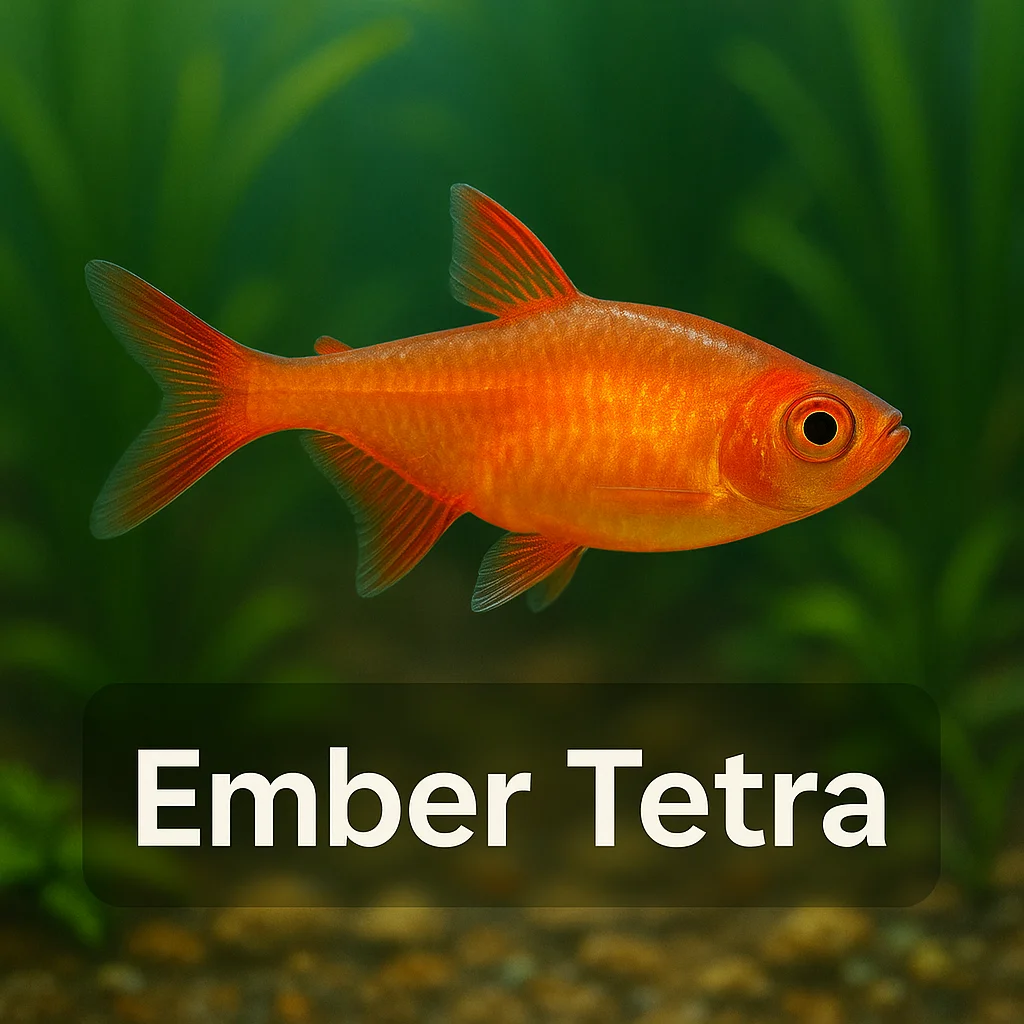
- Common names: Ember Tetra
- Scientific name: Hyphessobrycon amandae
- Freshwater / Marine / Brackish: Freshwater
- Origin: South America, specifically the Araguaia River basin in Brazil
- Typical adult size range: 1 – 1.5 inches (2.5 – 4 cm)
- Lifespan: 2 to 4 years
- Temperament: Peaceful
- Recommended tank size: Minimum 10 gallons
- Water temperature range: 70°F to 82°F (21°C to 28°C)
- pH / hardness guidance: pH 5.5 – 7.0, soft to moderately hard water
- Diet type: Omnivore
- Activity zone: Mid to top
- Social needs: Schooling, prefer groups of 6 or more
- Beginner suitability: Easy
🔍 Identification
The Ember Tetra is easily recognized by its small body and striking orange-red coloration. The body shape is streamlined with a slightly elongated silhouette, perfect for agile swimming. Fins are generally translucent, with the dorsal and anal fins edged slightly with deeper hues.
Coloration can vary with mood and age, with older or more dominant individuals displaying more intense hues. Identifying gender can be subtle; males are often slimmer and more vibrantly colored, while females tend to be fuller-bodied.
- Top ID Tips:
- - Small, streamlined body
- - Vibrant orange-red color
- - Translucent fins with slight color edging
- - Males are slimmer
- - Females are fuller-bodied
- - Best recognized in full-body, unobstructed views
- - No prominent markings or spots
🌍 Origin & Natural Habitat
Native to the warm waters of South America, the Ember Tetra hails from the Araguaia River basin in Brazil. These rivers are typically slow-moving with plenty of submerged vegetation and soft, sandy substrates. The natural habitats offer dappled sunlight, filtered through dense canopy and floating plants.
Understanding these environments helps in replicating conditions in a home aquarium, where a well-planted setup with soft substrates and gentle water flow can mimic their natural surroundings and contribute to their well-being.
🧪 Tank Setup & Water Parameters
Setting up an ideal tank for Ember Tetras involves paying attention to their need for space to school along with structured environments for exploration. A minimum 10-gallon tank is recommended, as they are active fish that appreciate horizontal space.
Utilize a gentle filter to maintain water quality without creating strong currents. The substrate can be sand or fine gravel, and the decor should include plenty of live plants, driftwood, and rocks to replicate a natural habitat and provide hiding spots.
-
Setup Checklist:
- - Minimum 10-gallon tank
- - Gentle filtration system
- - Sand or fine gravel substrate
- - Lots of live plants
- - Driftwood and rocks for structure
- - Consistent water temperature
- - Low to moderate lighting
- - Avoid strong water currents
🤝 Temperament & Compatibility
Ember Tetras are peaceful, schooling fish that thrive in groups of six or more, where they feel more secure and display better colors. They coexist harmoniously with other species of similar size and temperament, such as other small tetras, rasboras, and corydoras catfish.
During feeding and breeding, they may display slight dominance, but aggression is minimal. Avoid placing them with larger or aggressive fish that may pose a threat.
-
Compatibility Notes:
- - Best kept in groups
- - Peaceful, suitable for community tanks
- - Avoid larger, aggressive species
- - Coexists with other small tetras and rasboras
- - Minimal aggression during feeding
- - Individual behavior may vary
🍽️ Diet & Feeding
In the wild, Ember Tetras feed on small invertebrates, plant matter, and organic debris. In aquariums, they readily accept a varied diet including high-quality flake foods, micropellets, and occasional treats of live or frozen foods such as daphnia or brine shrimp.
Feed them small portions two to three times daily, ensuring they consume all food within a few minutes to maintain optimal water quality. Their uncomplicated dietary needs make them easy to care for.
-
Feeding Tips:
- - Offer varied diet: flakes, micropellets
- - Supplement with live/frozen foods
- - Feed small portions, 2-3 times daily
- - Avoid overfeeding to maintain water quality
- - Observe for picky eating behaviors
🧬 Growth, Color Changes & Lifespan
Ember Tetras do not undergo significant physical changes as they mature; however, their colors may intensify with proper care. Stress factors like poor water quality or overcrowding can lead to faded colors, clamped fins, or excessive hiding. They typically live 2 to 4 years in aquariums.
Good water quality, a balanced diet, and sufficient space are crucial in extending their lifespan and maintaining their vibrant appearance.
🪺 Breeding & Reproduction
Ember Tetras are egg scatterers. In a well-maintained aquarium, they may breed spontaneously, given optimal conditions like soft, slightly acidic water and a temperature of around 80°F (27°C). The parents do not care for their eggs or fry.
If breeding intentionally, a separate breeding tank with fine-leaved plants or breeding mops may increase success rates. Fry can be fed infusoria or finely crushed flake foods once they hatch.
Breeding in home tanks may be uncommon without deliberate efforts to simulate ideal conditions.
🩺 Common Health Issues & Prevention
While generally hardy, Ember Tetras can face health issues common to freshwater fish, such as ich (white spot), fin rot, and various parasitic infections. Maintaining stable water conditions, avoiding overcrowding, and ensuring good nutrition significantly reduce these risks.
Practice good tank management through regular water changes and tank maintenance to prevent outbreaks of disease. Always quarantine new fish before introducing them to the main aquarium.
-
Prevention Basics:
- - Maintain stable water conditions
- - Regular water changes and maintenance
- - Avoid overcrowding
- - Quarantine new arrivals
- - Provide a balanced diet
🌱 Role in the Aquarium
Ember Tetras add dynamic activity and a splash of color to community aquariums. They are plant-safe, making them suitable for lushly planted setups where they complement other peaceful species. Their schooling behavior contributes to a lively and cohesive aquarium environment.
Ethically, it is crucial to support sustainable practices; choose fish bred in captivity where possible to avoid impacting wild populations.
📉 Conservation & Responsible Keeping
Ember Tetras are often captive-bred, which helps alleviate pressure on wild populations. Captive-bred fish tend to be healthier and more adapted to aquarium life. Never release aquarium fish into the wild, as this can disrupt local ecosystems.
If the need arises to rehome Ember Tetras—due to tank capacity changes, or other reasons—explore local aquarium clubs, forums, or pet stores as potential relocation avenues.
-
Responsible Keeping Tips:
- - Choose captive-bred specimens
- - Never release into the wild
- - Rehome responsibly if necessary
- - Support sustainable fishkeeping practices
- - Regularly educate yourself on ethical aquarium keeping
📌 Summary
- - Small, vibrant orange-red fish
- - Originates from Brazil's Araguaia River
- - Requires a well-planted tank with gentle flow
- - Peaceful schooling behavior; excellent for community tanks
- - Omnivorous diet; eats flakes, pellets, live/frozen foods
- - Suitable for beginners with easy care needs
- - Breeding requires soft, acidic water conditions
- - Stress shows in faded color; indicated by water quality/space issues
- - Support captive-bred preferences for sustainable practices
- - Regular health maintenance critical for longevity