🐠 Dwarf Gourami
🧾 Quick Facts
The Dwarf Gourami, known for its vibrant coloring and peaceful nature, is a freshwater fish commonly found in aquariums around the globe. Its manageable size and temperament make it a favorite among beginner and seasoned aquarists alike.
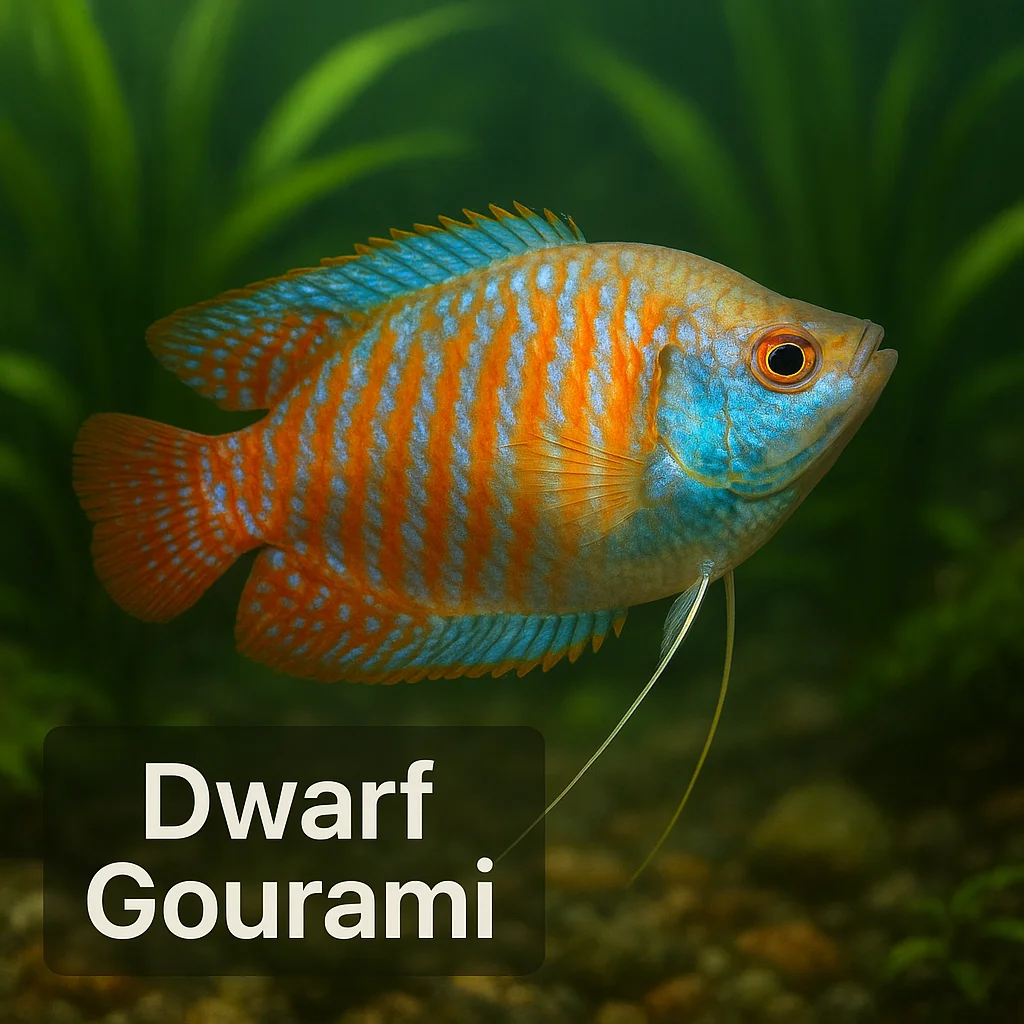
- Common names: Dwarf Gourami
- Scientific name: Trichogaster lalius
- Freshwater/Marine/Brackish: Freshwater
- Origin: South Asia, primarily India, Bangladesh, and Pakistan
- Typical adult size range: 2–3.5 inches
- Lifespan: 4–6 years
- Temperament: Peaceful
- Recommended tank size: Minimum 10 gallons, larger is better
- Water temperature range: 72–82°F
- pH / hardness guidance: pH 6.0–7.5; soft to moderately hard water
- Diet type: Omnivore
- Activity zone: Mid to top
- Social needs: Pair or small group
- Beginner suitability: Easy
🔍 Identification
Dwarf Gouramis are recognizable by their oval, laterally compressed bodies, which allow them to maneuver with ease through aquatic plants. They are known for their stunning coloration, typically featuring a brilliant blue with vertical red stripes running along the body.
- Body shape and silhouette: Oval, laterally compressed
- Key colors/patterns: Iridescent blue and red vertical stripes
- Fin shapes and notable traits: Long dorsal fin; pointed anal fin
- Male vs female cues: Males are more brightly colored; females are duller
- Common look-alikes: Larger Gourami species, but size and color differentiate them
- Vibrant coloration increases during spawning
- Entire fish visible, best shown with fins extended
- Look for vertical stripes to distinguish from other species
- Check for oval body and extended dorsal fin
- Notice the pointed anal fin in males
- Females generally have more subdued coloration
🌍 Origin & Natural Habitat
The Dwarf Gourami is native to the slow-moving waters of South Asia. Found primarily in India, Bangladesh, and Pakistan, they inhabit sluggish streams, ponds, rice paddies, and floodplains rich with vegetation. These regions experience distinct rainy seasons, increasing the depth of the waterways.
Understanding these natural habitats offers insights into creating ideal tank conditions, as the Dwarf Gourami thrives in environments that mimic these calm, plant-filled waters.
🧪 Tank Setup & Water Parameters
For Dwarf Gouramis, a well-planned tank environment is crucial. This starts with an adequately sized tank with plenty of horizontal swimming space and live plants to provide shelter and mimic their natural habitat. Avoid strong currents as they prefer calm waters.
- Tank size considerations: Minimum 10 gallons; larger for groups
- Filtration and flow preferences: Moderate filtration; low water flow
- Heating needs: Maintain 72–82°F
- Substrate and decor: Fine gravel or sand substrate; plants like Java Fern, Amazon Sword
- Lighting and hiding spots: Moderate lighting; provide caves or dense plant cover
- Choose fine gravel or sand for substrate
- Include live plants for shelter
- Use a gentle filter to prevent strong currents
- Provide moderate lighting
- Maintain water temperature of 72–82°F
- Regularly monitor water quality
- Avoid tanks smaller than 10 gallons
🤝 Temperament & Compatibility
Dwarf Gouramis are peaceful fish, making them suitable for community tanks. They generally coexist well with other non-aggressive species. However, males can display territorial behaviors, especially during breeding seasons. They thrive in pairs or small groups but avoid overcrowding, as it can escalate aggression and stress.
- Best paired with peaceful tankmates like tetras and rasboras
- Avoid aggressive or large fish that may bully them
- Males can be territorial during breeding
- Can be housed with invertebrates like shrimp
- Individual temperament may vary
🍽️ Diet & Feeding
Dwarf Gouramis are omnivorous, feeding on algae, small invertebrates, and insect larvae in the wild. In home aquariums, they thrive on a varied diet that can include high-quality flakes or pellets, frozen foods like bloodworms and brine shrimp, and occasional fresh vegetable treats.
- Feed a variety of flakes, pellets, and frozen food
- Offer live or frozen bloodworms as treats
- Include vegetable-based foods like peas or spinach
- Feed small portions 1–2 times daily
- Avoid overfeeding; maintain water quality
🧬 Growth, Color Changes & Lifespan
Juvenile Dwarf Gouramis are typically less vivid, gaining their full coloring as they mature. Color intensity can fluctuate with mood, health, and spawning conditions. Stress may manifest in pale colors and clamped fins, signaling a need for environmental improvements.
With optimal care, these fish can live for 4–6 years. Ensuring stable water conditions and a balanced diet significantly contributes to their lifespan.
🪺 Breeding & Reproduction
Dwarf Gouramis are bubble-nest builders, creating nests on the water surface for spawning. Males display vibrant colors during courtship to attract females. Post-spawning, males guard the eggs, which hatch in 12–26 hours, although fry survival rate may vary.
Breeding is possible in home aquariums, but requires separate breeding tanks to ensure fry safety and control environmental conditions.
🩺 Common Health Issues & Prevention
Common health problems in Dwarf Gouramis include ich (white spot disease), Velvet disease, and fin damage from unsuitable tankmates. Prevention starts with maintaining water quality, providing a stress-free environment, and proper quarantine of new tank additions.
- Implement a quarantine routine for new fish
- Maintain stable water parameters
- Ensure quality filtration
- Avoid overfeeding
- Organize regular tank cleaning
🌱 Role in the Aquarium
Dwarf Gouramis add vibrant colors and peaceful activity to community tanks. They help in controlling algae by grazing on it, albeit not as effectively as dedicated algae eaters. Ethically, it's essential to purchase these fish from reputable breeders and avoid wild-caught specimens due to potential impacts on natural populations.
📉 Conservation & Responsible Keeping
The popularity of Dwarf Gouramis has led to widespread captive breeding, reducing pressure on wild populations. It's crucial never to release them into local waters to prevent ecological disruptions. If needed, consider rehoming as a responsible alternative.
- Purchase from reputable breeders
- Avoid wild-caught whenever possible
- Never release fish into natural waterways
- Consider rehoming if rearing becomes unmanageable
- Educate on ecological impacts of wild release
📌 Summary
- Dwarf Gouramis are vibrant, peaceful freshwater fish suitable for community tanks.
- Native to slow-moving waters of South Asia, they thrive in planted aquariums.
- They can adapt to a range of water conditions within their preferences.
- Best paired with other peaceful species; avoid aggressive tankmates.
- Omnivorous diet; prefers a mix of flakes, pellets, and live foods.
- Breeding possible but requires controlled tank conditions.
- Watch for signs of stress, like color fading and fin clamping.
- Contribute to algae control and offer aesthetic value in tanks.
- Ensure ethical sourcing and consider responsibilities of fishkeeping.