🐠 Corydoras Catfish
🧾 Quick Facts
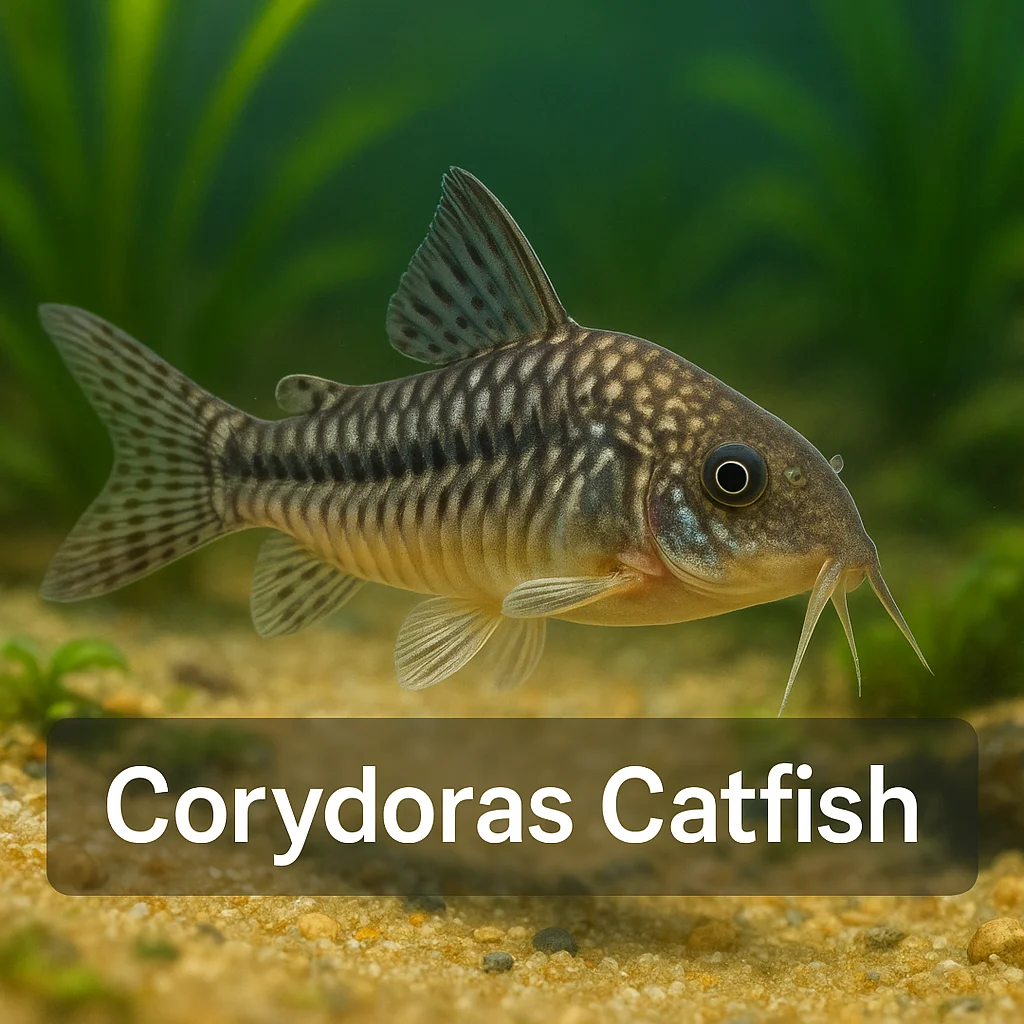
The Corydoras Catfish, often referred to simply as "Corys" or "Armored Catfish," is a popular and diverse group of freshwater aquarium fish known for their peaceful nature and interesting behavior. They belong to the genus Corydoras, which encompasses a wide array of species, each with their unique characteristics.
- Common names: Corydoras, Cory Catfish, Armored Catfish
- Scientific name: Varies (e.g., Corydoras paleatus, Corydoras aeneus)
- Freshwater / Marine / Brackish: Freshwater
- Origin: South America (Amazon Basin, rivers of Colombia, Peru, Brazil, and surrounding areas)
- Typical adult size range: 1 to 4 inches (2.5 to 10 cm)
- Lifespan: 5 to 10 years, varies by species and care
- Temperament: Peaceful
- Recommended tank size: Minimum 10 gallons for smaller species; larger for groups
- Water temperature range: 72°F to 79°F (22°C to 26°C)
- pH / hardness guidance: pH 6.5 to 7.5; soft to moderately hard water
- Diet type: Omnivore
- Activity zone: Bottom
- Social needs: Schooling
- Beginner suitability: Easy
🔍 Identification
Corydoras catfish feature a distinct elongated body with a flatter underside, allowing them to effectively scavenge at the bottom of the aquarium. The dorsally located fins are small, with a typical sickle shape, and their pectoral fins are fan-like, used for maneuvering along substrate. Most Corydoras are silver or bronze with slight iridescent hues, often displaying spots or stripes that vary by species. These patterns can change slightly with mood or stress. Distinguishing males from females is subtle and can vary among species, often depending on body size and shape.
- Corydoras have a wide, flat underside, ideal for bottom-scavenging activities.
- Look for the sickle-shaped dorsal fin and fan-like pectoral fins.
- Silver or bronze coloration with unique patterns depending on species.
- Subtle differences in size and girth can help identify females (typically larger and rounder).
- Easily mistaken with Brochis catfish, which are generally bulkier.
- Species such as Bronze Corydoras may display clearer greenish hues.
- Trait variations are highly notable among the approximate 165 species within the genus.
- Typically have two pairs of barbels near the mouth.
- Recognizable through their armored body plates covering the sides.
- Corydoras prefer remaining in groups and are best identified en masse, displaying synchronized schooling behavior.
🌍 Origin & Natural Habitat
Corydoras catfish naturally inhabit a range of freshwater environments across South America. They thrive in slow-moving to moderately flowing rivers, floodplains, and tributaries, favoring soft, sandy or muddy substrates. This habitat choice allows them to easily scavenger for food. They are adapted to warm tropical climates with seasonal fluctuations, often experiencing changes in water levels and availability of food sources associated with rainy and dry seasons.
Understanding Corydoras' natural environment can aid in recreating an effective tank setup, emphasizing the need for gentle water flows, suitable substrate, and well-oxygenated waters. Knowledge of these natural conditions translates to better health and activity levels among aquarium-housed Corydoras.
🧪 Tank Setup & Water Parameters
When setting up a tank for Corydoras catfish, emphasis should be placed on recreating their natural habitat. A spacious fish tank with enough horizontal swimming space is crucial, as these fish are active and enjoy swimming in groups. A 10-gallon tank can work for smaller species, though a larger tank may decrease stress and promote schooling behavior.
Filtration should not be overly vigorous; gentle flow mimicking streams will serve best. Heaters maintaining temperatures between 72°F and 79°F (22°C to 26°C) ensure optimal comfort. Fine sand is preferred for substrate as it is gentle on their sensitive barbels. Decor can include plants and driftwood, providing both aesthetic value and hiding spots without restricting swimming space. Moderate light fits well for observing their natural activity.
- Select a tank size permitting their dynamic schooling activity.
- Ensure well-filtered, oxygen-rich water with a gentle current.
- Aim for water temperature between 72°F and 79°F.
- Fine sand substrates prevent barbel damage and mimic natural habitats.
- Balance moderate lighting with hiding opportunities via plants and driftwoods.
- Facilitate a soft water environment with consistent pH levels around neutral.
- Allow for natural-style decorations that don’t encroach upon swimming areas.
- Provide a range of hiding spots to reduce stress through environmental enrichment.
🤝 Temperament & Compatibility
Corydoras catfish are notably peaceful and amicable, preferring the company of their own kind. They exhibit active foraging behavior at the tank bottom and display shoaling tendencies. Feeding sessions represent lively intervals when Corydoras may occur in buzzing clusters, competing for food particles.
Ideal tank mates include other peaceful fish like smaller tetras, rasboras, or dwarf cichlids. Avoid large, aggressive, or particularly boisterous species which can intimidate or outcompete Corydoras for food.
- Corys shoal actively and rarely display true territoriality.
- Choose tankmates of similar size and equally peaceful nature.
- Their social tendencies require groups of six or more.
- Compatibility may vary by specific species strains.
- May engage in feeding frenzies without aggression.
- Tolerant of various fish; avoid aggressive and large species.
- Exude positivity within community tanks through peaceful interactions.
- Capable of coexisting harmoniously with various other bottom dwellers.
🍽️ Diet & Feeding
Corydoras Catfish have omnivorous feeding habits, foraging on bottom detritus in the wild and deriving nutrition from various invertebrates, algae, and plant matter. In aquariums, they consume high-quality sinking pellets, flake foods, and frozen or live offerings like bloodworms or brine shrimp. Feeding should occur twice daily, providing only as much food as they can consume within a few minutes to prevent excess waste.
Note their foraging nature, wherein they actively explore the substrate for remaining food particles. Therefore, additional feeding considerations should ensure adequate distribution across both water column and substrate levels.
- Offer balanced sinking pellets adapted to bottom dwellers.
- Occasionally supplement diet with live or frozen food like bloodworms.
- Ensure food reaches substrate level favoring Corydoras feeding habits.
- Feed twice daily adjusting portions to prevent overfeeding.
- Integrate occasional vegetable matter or algae tablets.
- Monitor condition and adjust diet according to activity and environment.
- Engage their natural scavenging instincts with strategic food hiding.
- Avoid giving exclusively carnivorous diets to ensure balance.
🧬 Growth, Color Changes & Lifespan
Corydoras Catfish display adaptations aiding them during development stages: juveniles possess more distinct patterns, often showing more vibrant hues which can become subtler as they mature. Some species exhibit color shifts dependent on mood, shy demeanor resulting in slight paleness, while stress may appear as clamped fins or unusual activity patterns. Providing a stable environment impacts their lifespan favorably.
The lifespan reaches between five to ten years with proper care, where water quality, diet, and tank conditions play significant roles. Securing consistent and high water quality assures thriving Corydoras prolong their engaging presence in aquariums.
🪺 Breeding & Reproduction
Breeding Corydoras is a gratifying endeavor, marked by their egg-laying tendencies. Spawning can be triggered by simulating seasonal rains and introducing slight water changes that lower temperature slightly. Typical courtship includes "T-position" displays within schooling groups, followed by the release of eggs over plant leaves or smooth surfaces, which adhere naturally.
Parents do not guard deposited eggs, requiring aquarists to move them to separate tanks if survival rates are critical. For the fry, offering live or powdered food aids their growth after hatching within one week.
🩺 Common Health Issues & Prevention
While Corydoras generally possess resilient health, they remain susceptible to common freshwater ailments such as Ich, fin rot, and parasitic invasions. Effective prevention focuses on high-quality water conditions, quarantine of new introductions, stable environmental parameters, and avoiding overcrowding as determinants in disease resistance.
- Maintain pristine water conditions to minimize disease likelihood.
- Quarantine all new tank inhabitants to prevent pathogen introduction.
- Commit to frequent and appropriate water changes.
- Monitor for any sign of distress in activity or coloration.
- Avoid exposing Corydoras to sudden drastic parameter shifts.
- Minimize stressors such as aggressive tank mates.
- Ensure varied nutritional diet conducive to their immune health.
- Examine fish regularly to catch early signs of illegitimate growths.
🌱 Role in the Aquarium
Corydoras contribute positively within community tanks by gently scavenging leftover food, thereby preventing potential substrate decomposition. Their amiable nature balances tank dynamics, adding continued activity with subtlety. Freshwater tanks benefit from their plant-safe activities, ensuring vegetation isn’t harmed, while simultaneously fueling beginners’ engagement through visual appeal and active behaviors.
📉 Conservation & Responsible Keeping
Responsible keeping of Corydoras necessitates emphasis on acquiring captive-bred fish, supporting sustainable practices and preserving wild populations. Rehoming options should be explored without resorting to wild release should a tank become unsuitable. Awareness of source origins discourages ecologically damaging wild-capture practices and supports ethical aquaculture initiatives.
- Cherish captive-bred Corydoras for reliable sustainable keeping.
- Never release aquarium fish into non-native local water bodies.
- Prioritize finding new aquarist homes for excess fish.
- Research and support ethical breeding farms.
- Enhance personal practices aligning with conservation mindfulness.
- Engage community forums for potential fish exchange channels.
📌 Summary
- Corydoras are South American freshwater catfish with vast species variation.
- Distinct armored bodies, silver-bronze colorations with alluring patterns.
- Suitable tank setups include comfortable substrate and stable parameters.
- Peaceful, optimal tank mates include other similar-sized, gentle fish.
- Their omnivorous diet varies from specialized foods to plant-based supplements.
- Known for their easy suitability to beginner aquarists.
- Tasks within tanks include gentle scavenging without impacting plants.
- Considered for breeding invitations when replicating rainy season conditions.
- Maintain through preventative health measures and conscientious husbandry.
- Opt for captive-bred to ensure ecologically sound practices.