🐠 Celestial Pearl Danio (Galaxy Rasbora)
🧾 Quick Facts
The Celestial Pearl Danio, often referred to as the Galaxy Rasbora, is a popular freshwater fish known for its striking appearance and adaptability in home aquariums. This tiny fish is well-regarded by hobbyists for its peaceful nature and ease of care.
- Common Names: Celestial Pearl Danio, Galaxy Rasbora
- Scientific Name: Danio margaritatus
- Freshwater
- Origin: Southeast Asia, specifically Myanmar
- Typical Adult Size: 1-1.5 inches (2.5-3.8 cm)
- Lifespan: 3-5 years
- Temperament: Peaceful
- Recommended Tank Size: 10 gallons (38 liters) minimum
- Water Temperature: 72-78°F (22-26°C)
- pH Range: 6.5-7.5
- Diet: Omnivore
- Activity Zone: Mid-level
- Social Needs: Schooling; best in groups of 6 or more
- Beginner Suitability: Easy
🔍 Identification
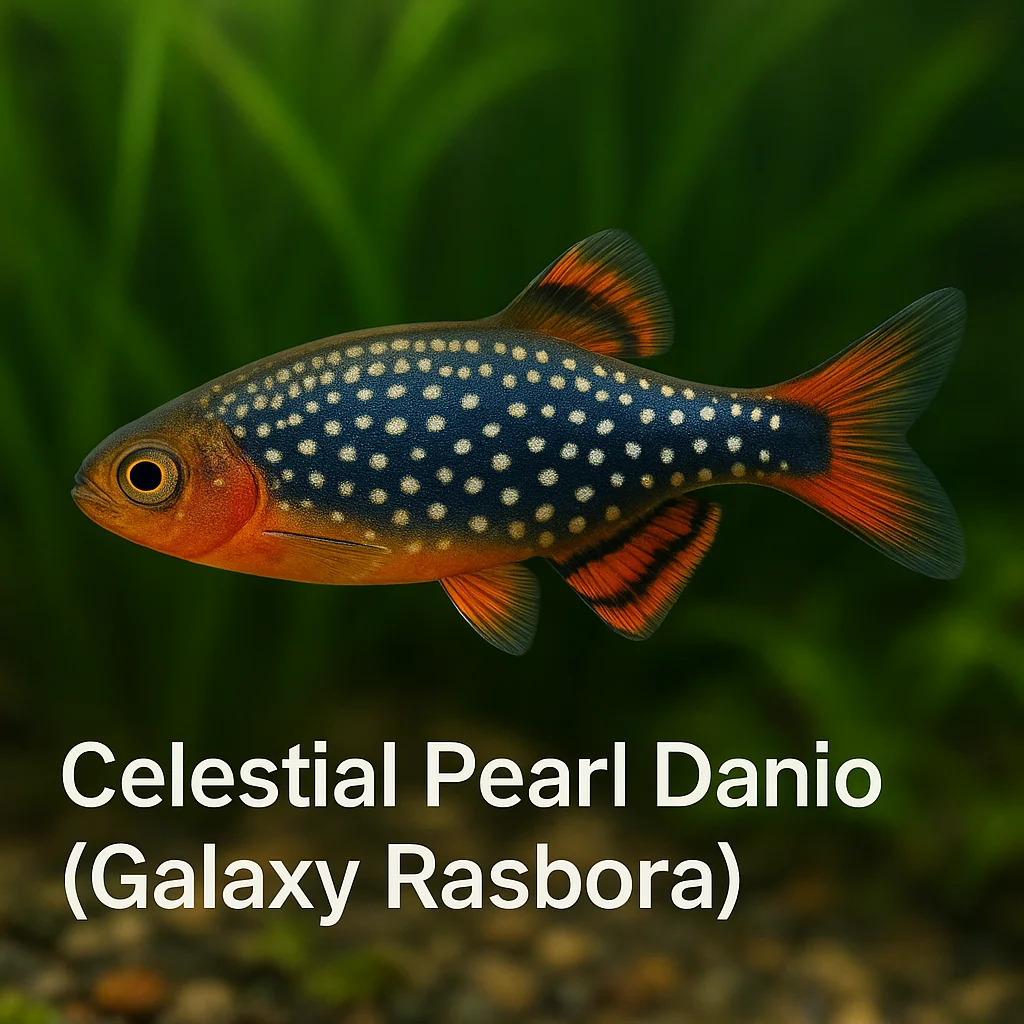
The Celestial Pearl Danio is easily recognized by its compact, elongated body and vibrant coloration. It displays an overall blue body with vibrant red spots reminiscent of a starry night, leading to its celestial moniker. The fins are often edged with red or orange, adding to its allure.
Male Celestial Pearl Danios tend to have more intense coloration than females and display brighter coloration during courtship.
- Body shape: Compact and elongated
- Key Colors: Blue body with red spots
- Fins: Distinct red or orange edging
- Male Identification: Brighter coloration
- Female Identification: Slightly rounder body, subtler colors
- Look-alikes: Other small danios, but easily distinguished by unique spot pattern
🌍 Origin & Natural Habitat
Native to Southeast Asia, the Celestial Pearl Danio is found in small, shallow freshwater pools and streams in Myanmar. These habitats have plenty of vegetation, providing cover and food. The climate is typically warm with significant rainfall, affecting the water levels and flow throughout the year.
Understanding its natural habitat helps aquarists replicate similar conditions in the aquarium, promoting its health and natural behavior.
🧪 Tank Setup & Water Parameters
To mimic its natural environment, the Celestial Pearl Danio enjoys a well-planted aquarium with ample space for swimming. A tank of at least 10 gallons is recommended to allow for proper schooling. Incorporate gentle filtration to avoid strong currents, as they are accustomed to still or slow-moving waters.
- Tank Size: Minimum 10 gallons for a small group
- Filtration: Gentle flow
- Temperature: Maintain 72-78°F (22-26°C)
- Substrate: Fine gravel or sand
- Decor: Live plants, rocks, driftwood
- Lighting: Moderate to bright
- Hiding Spots: Essential for security and reduced stress
🤝 Temperament & Compatibility
The Celestial Pearl Danio is a peaceful, social fish that thrives in groups. They are not territorial, making them excellent community fish. During feedings, they are active yet non-confrontational, usually darting in groups to secure food. Ideal tankmates include other peaceful species of similar size and temperament like tetras and guppies.
- Schooling: Best kept in groups of 6 or more
- Territoriality: Non-territorial
- Feeding Behavior: Quick, non-aggressive
- Ideal Tankmates: Other peaceful small fish
- Avoid: Larger or aggressive species
- Individual Behavior: Can vary slightly by environmental conditions
🍽️ Diet & Feeding
In their natural habitat, Celestial Pearl Danios consume small insects and zooplankton. In aquariums, their diet should be balanced with high-quality flake or mini pellet foods supplemented with live or frozen options like daphnia and brine shrimp. They should be fed small amounts two to three times a day.
- Staple Food: High-quality flakes
- Supplements: Live or frozen daphnia, brine shrimp
- Feeding Frequency: 2-3 times daily
- Portion Size: Small amounts, avoid overfeeding
🧬 Growth, Color Changes & Lifespan
Juvenile Celestial Pearl Danios are less vividly colored, developing their full spectrum of hues and spots as they mature. While generally hardy, stress can cause color fading or clamped fins, especially if water quality is poor or tankmates are aggressive. They typically live for 3 to 5 years, with a good diet and stable conditions being vital to longevity.
🪺 Breeding & Reproduction
The Celestial Pearl Danio is an egg layer, with breeding more common under optimal conditions. Spawning is often triggered by increased temperature and abundant food. The eggs are laid and scattered over plants, and while parents do not care for their young, moving the adults post-spawning can increase fry survival. The fry require infusoria or finely crushed flakes as their first food.
🩺 Common Health Issues & Prevention
Like many fish, the Celestial Pearl Danio can suffer from common health problems, such as ich or white spot, and fin rot. Prevention is key, which involves maintaining good water quality, properly quarantining new arrivals, and ensuring a balanced diet. Regular tank maintenance and cautious observation for early signs of stress can help mitigate health risks.
- Quarantine: Always for new fish
- Monitoring: Regularly check for signs of stress or illness
- Stable Parameters: Keep temperature and pH consistent
- Diet: Balanced to maintain health
- Filtration: Effective to remove waste
🌱 Role in the Aquarium
The Celestial Pearl Danio is a lively and visually striking addition to any community tank, offering activity and color. They are plant-safe and shy, keeping to themselves rather than disturbing other tank inhabitants. Ethically, these fish are best acquired from reputable captive-bred sources, as wild catching can impact local ecosystems adversely.
📉 Conservation & Responsible Keeping
The impact of Celestial Pearl Danios on native ecosystems needs care, making it imperative not to release them into the wild. Most available specimens are captive-bred, which is preferable over wild-caught due to sustainability concerns. Should they outgrow their tank or need rehoming, finding a local aquarium club or experienced hobbyist will ensure their continued care.
- Source Responsibly: Prefer captive-bred over wild-caught
- Do Not Release: Never place into non-native waters
- Rehoming: Use alternatives like aquarium clubs
- Limit Stocking: Avoid overcrowded tanks
📌 Summary
- Identification: Compact body, blue with red spots
- Origin: Southeast Asia, Myanmar
- Setup: Planted tank, gentle filtration
- Compatibility: Peaceful, best with similar-sized fish
- Diet: Omnivore, varied including live/frozen foods
- Care Level: Easy
- Breeding: Egg scatterer, moderate success by hobbyists
- Conservation: Prefer captive-bred, avoid wild release