🐠 Shubunkin Goldfish
🧾 Quick Facts
Shubunkin Goldfish are a popular choice among aquarium enthusiasts due to their hardy nature and vibrant colors. They are known for their unique patterns and colors that bring a splash of beauty to any freshwater setup. Here are some quick facts to guide potential Shubunkin Goldfish keepers:
- Common names: Shubunkin Goldfish
- Scientific name: Carassius auratus (varies)
- Freshwater
- Origin: China, Japan
- Typical adult size range: 7 to 12 inches (18 to 30 cm)
- Lifespan: 10 to 15 years (varies)
- Temperament: Peaceful
- Recommended tank size: Minimum 20 gallons
- Water temperature range: 65 to 72°F (18 to 22°C)
- pH guidance: 6.0 to 8.0
- Diet type: Omnivore
- Activity zone: Mid to bottom
- Social needs: Prefer groups
- Beginner suitability: Easy
🔍 Identification
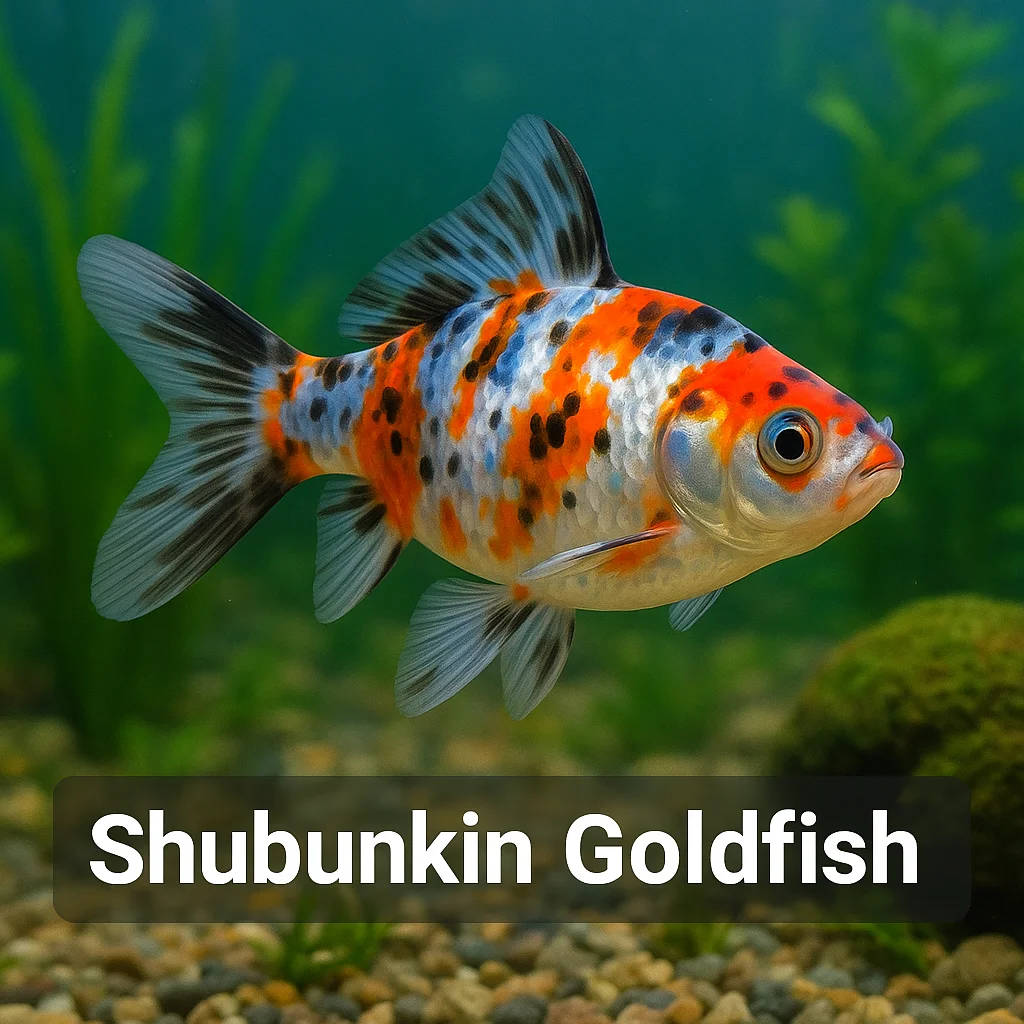
Recognizing a Shubunkin Goldfish involves looking for specific physical and color characteristics. These goldfish have a streamlined body similar to the common goldfish but come with a variety of vibrant colors.
- Body shape: Long and slender with a broad caudal peduncle.
- Colors/patterns: Blue background with a kaleidoscope of red, orange, black, yellow, and white; patterns can vary greatly between individuals.
- Fin shapes: Long, flowing fins with sharp edges; tail shape can vary between individuals.
- Male vs female: Subtle; males may have breeding tubercles on their gill covers during spawning.
- Common look-alikes: Calico Goldfish; distinguishable by their body shape and less delicate fins.
Top ID Tips:
- Look for the unique calico pattern covering their entire body.
- Note the streamlined body and long fins.
- Differentiate from butterflies and fantails by their body shape.
- Color patterns can shift with mood and age.
- Pay attention to fin and tail shapes; they are distinct.
- Watch for vibrant, mixed-color spots all over the body.
🌍 Origin & Natural Habitat
Shubunkin Goldfish originate from artificially bred variations of the common goldfish, which were domesticated in China over a thousand years ago. Shubunkins were developed in Japan for their impressive color patterns. They do not have a natural habitat, as they have been selectively bred for aquariums.
Understanding their laboratory origins highlights their adaptability and resilience in various water conditions. Shubunkins thrive in aquariums that simulate the stable environments they have been conditioned for through generations of captive breeding.
🧪 Tank Setup & Water Parameters
Creating a suitable environment for the Shubunkin Goldfish involves ensuring ample swimming space and appropriate water conditions. They are active swimmers and appreciate a well-filtered tank to mimic the calm but oxygen-rich water their wild ancestors would have preferred.
- Tank size considerations: Provide at least 20 gallons for a single adult; more space is beneficial.
- Filtration: Use a robust filtration system to ensure clean water and low ammonia levels.
- Heating: Generally not needed in typical home temperatures; however, maintain stable temperatures especially during seasonal shifts.
- Substrate: Soft sand or smooth gravel is preferred to prevent fin damage.
- Decor: Offer open swimming space with occasional hiding places like rocks or driftwood.
- Lighting: Moderate lighting will bring out the best of their colors.
Setup Checklist:
- Choose a tank with a capacity appropriate for their size.
- Install a high-quality filtration system.
- Include plants such as Java moss for natural nibbling.
- Ensure steady water flow without strong currents.
- Regularly test for ammonia, nitrites, and pH levels.
- Provide a varied tank décor for exploration.
- Utilize a gentle lighting setup to showcase colors.
🤝 Temperament & Compatibility
Shubunkin Goldfish are known for their peaceful nature and are excellent candidates for community tanks with other non-aggressive fish. They are sociable and enjoy being in groups, which also helps reduce stress.
Compatibility Notes:
- Best kept with other goldfish species or peaceful tank mates.
- Avoid housing with aggressive or fin-nipping fish.
- Suitable companions include species like White Cloud Mountain Minnows or Dojo Loaches.
- During feeding, watch for competition and ensure all receive food.
- Behavior may vary slightly with individual temperaments.
- Avoid tropical fish unless the tank can meet temperature needs of all species.
🍽️ Diet & Feeding
Shubunkin Goldfish are omnivorous and require a balanced diet comprising plant and animal matter. This flexibility makes them easy to feed in an aquarium setting.
- Staple foods: High-quality flakes and pellets designed for goldfish.
- Supplemental foods: Brine shrimp, bloodworms, and freeze-dried daphnia.
- Feeding frequency: Feed small amounts 1-2 times daily, ensuring they consume it within a few minutes.
- Special needs: May occasionally nibble on soft aquarium plants like Java moss.
Feeding Tips:
- Provide a varied diet to ensure balanced nutrition.
- Soak dry foods before feeding to prevent swim bladder issues.
- Monitor their feeding habits to adjust portion sizes.
- Incorporate greens such as blanched spinach or peas.
- Adjust feeding during colder periods as their metabolism slows.
🧬 Growth, Color Changes & Lifespan
As Shubunkin Goldfish mature, they undergo significant physical and color transformations. Young fish may appear more muted compared to adults, gaining intensity with age.
- Juvenile vs adult: Juveniles have more subdued coloration; colors intensify and patterns become distinct with maturity.
- Seasonal or mood changes: Color may deepen during breeding seasons or as an indication of health.
- Stress signs: Watch for clamped fins or faded colors when stressed; maintaining stable water quality helps prevent this.
- Lifespan influence: Good water quality, appropriate diet, and spacious living conditions extend lifespan.
🪺 Breeding & Reproduction
Breeding Shubunkin Goldfish is possible in home aquariums though requires attention to detail. They are egg layers with a seasonal breeding nature, often spawning in spring.
- Spawning triggers: Temperature increase and longer daylight hours often prompt breeding.
- Courtship: Males develop breeding tubercles and pursue females around the tank.
- Egg care: Shubunkins do not care for eggs; separating eggs from adults prevents them from being eaten.
- Fry care: Feed infusoria or finely crushed flake food once hatched.
Home breeding can be challenging due to space and ensuring proper fry survival.
🩺 Common Health Issues & Prevention
Shubunkin Goldfish are relatively hardy but susceptible to common aquarium ailments. Maintaining proper tank conditions is key to prevention.
- Common problems: Susceptible to ich, fin rot, and swim bladder disorder.
- Prevention: Encourage good hygiene through regular water changes and quarantine for new fish.
- Stable water parameters and avoiding overfeeding are vital for their health.
Prevention Basics:
- Perform regular partial water changes.
- Quarantine new additions before introducing them to the tank.
- Avoid overfeeding, which can deteriorate water quality.
- Watch for any changes in behavior or discoloration.
- Ensure filters are well-maintained and operating efficiently.
🌱 Role in the Aquarium
Shubunkin Goldfish bring activity and color to aquariums. They may not perform functions like algae control but are admired for their vibrant appearance.
While generally plant-safe, they may nibble on live plants, so selections should be sturdy or fast-growing to endure their curiosity.
Ethically, choosing captive-bred Shubunkins from reputable suppliers supports sustainable aquarium keeping. Avoid wild-caught specimens to protect ecosystems.
📉 Conservation & Responsible Keeping
Responsible keeping of Shubunkin Goldfish involves understanding their environmental needs and humane care. As domesticated species, they are best appreciated in home aquariums.
- Captive-bred strains ensure the best health and adaptability.
- Avoid releasing them into local waters due to ecological risks.
- Seek community or rescue groups for rehoming if needed.
- Be considerate of their growth potential when planning tank sizes.
- Engage in practices that prioritize the welfare of fish and environments.
Responsible Keeping Tips:
- Understand the long-term commitment of keeping goldfish.
- Buy from reputable breeders or retailers.
- Research before adding any new tank inhabitants.
- Ensure tank capacity can support adult sizes appropriately.
- Seek local fish societies for knowledge and rehoming options.
📌 Summary
- Shubunkin Goldfish are a colorful and peaceful addition to home aquariums.
- Originally bred for aquariums, they thrive in well-maintained freshwater tanks.
- Provide spacious tanks with filtering systems to ensure quality of water.
- Enjoy a diverse diet, balancing plant and animal-based foods.
- Understanding their needs enhances their lifespan and brilliant coloration.
- Recognize the ethical implications of responsible fishkeeping.
- Set up compatible community tanks to appreciate their sociable nature.
- Promote conservation by relying on captive-bred fish.
- Provide adequate care to prevent common health issues.
- Shubunkins stand out as centerpiece fish due to their intricate patterns.