🐠 Rosy Barb (cooler-water setup)
🧾 Quick Facts
The Rosy Barb is a popular freshwater aquarium fish known for its vibrant coloration and lively behavior. Although it thrives in cooler water compared to many tropical fish, it is adaptable and suitable for beginners willing to meet its specific needs.
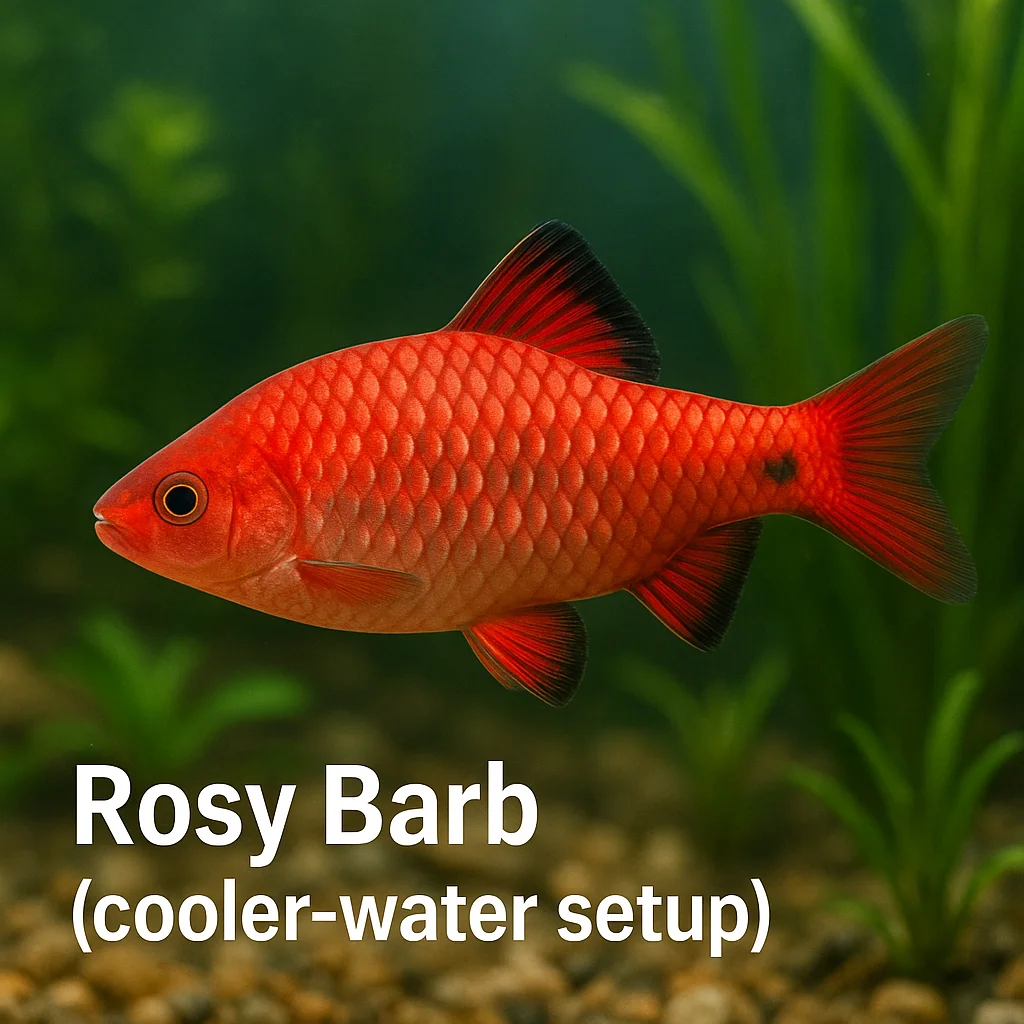
- Common names: Rosy Barb, Red Barb
- Scientific name: Pethia conchonius
- Freshwater / Marine / Brackish: Freshwater
- Origin: South Asia (India, Pakistan, Bangladesh)
- Typical adult size range: 5–6 inches (12–15 cm)
- Lifespan: 5–7 years; varies with care
- Temperament: Peaceful, but can nip fins
- Recommended tank size: Minimum 20 gallons; larger preferred for groups
- Water temperature range: 64–72°F (18–22°C)
- pH/hardness guidance: Slightly acidic to neutral; pH 6.5–7.5
- Diet type: Omnivore
- Activity zone: Mid to bottom
- Social needs: Schooling; best with groups of 5 or more
- Beginner suitability: Easy
🔍 Identification
Recognizing a Rosy Barb involves observing its streamlined, torpedo-shaped body and metallic sheen. Their coloration ranges from a pale gold to a vivid red, influenced by factors like mood, health, and environment. Males are generally more brightly colored, especially during the breeding season. The fins are slightly pointed, with the dorsal fin set back towards the tail.
While they resemble other barbs like the Cherry Barb, the Rosy Barb is notably larger and lustrous. Distinguishing males from females can be challenging, but males typically display more intense coloration.
- Body shape: Streamlined, torpedo-like
- Key colors/patterns: Pale gold to vivid red with metallic sheen
- Fin shapes: Slightly pointed, dorsal fin towards the tail
- Male vs female: Males more colorful, females plumper
- Common look-alikes: Cherry Barb, less vivid, smaller size
- Top ID Tips: Bright color, size, body shape, fin placement
🌍 Origin & Natural Habitat
Rosy Barbs originate from South Asia, commonly found in slow-moving rivers and floodplains. They inhabit waters with sandy or muddy substrates and plentiful aquatic vegetation. The seasonal climate includes monsoons, influencing water levels and flow, contributing to their adaptability.
Understanding their natural habitat aids in recreating similar tank conditions, improving health and behavior in captivity. The Rosy Barb's resilience makes it a suitable candidate for beginner aquarists.
🧪 Tank Setup & Water Parameters
A well-planned tank setup is crucial for Rosy Barbs. A minimum of 20 gallons is recommended, with a longer tank for ample horizontal swimming space. They prefer low to moderate water flow, mimicking their natural slow-moving habitats.
While they tolerate a range of substrates, sand or fine gravel with live plants creates a natural environment. Bright lighting encourages plant growth, offering hiding spots and comfort. Consider a good filter to maintain water quality, aiding stability.
- Minimum tank size: 20 gallons
- Horizontal swimming space: Important for movement
- Filtration: Moderate, stable flow
- Temperature: Maintain around 64–72°F
- Decor: Plants, rocks, subdued gravel
- Lighting: Bright, supports plant growth
🤝 Temperament & Compatibility
Rosy Barbs are generally peaceful, thriving in groups of five or more to reduce stress and prevent fin nipping behaviors. Observing social schooling enhances their natural behaviors, making them lively community fish.
Compatible tankmates include other peaceful barbs, danios, and small-to-medium non-aggressive fish. Avoid pairing them with species with long-flowing fins or aggressive types to prevent conflicts.
- Schooling behavior: Needs groups of 5+
- Feeding: Curious, competitive eaters
- Good tankmates: Danios, tetras, Corydoras
- Risky tankmates: Long-finned fish, aggressive species
- Behavior varies: Mood, stress can alter behavior
🍽️ Diet & Feeding
In the wild, Rosy Barbs feed on insects, plant matter, and small invertebrates. In captivity, they readily accept a varied diet, from high-quality flakes and pellets to live or frozen foods like brine shrimp and bloodworms.
Feed small portions twice daily, ensuring they consume the food within a few minutes to prevent waste buildup. Spirulina-enhanced foods support color enhancement and overall health.
- Varied diet: Flakes, pellets, live/frozen food
- Feeding frequency: Twice a day
- Portion control: Consume in minutes
- Special diet needs: Spirulina for color
- Wild diet: Insects, plant matter
🧬 Growth, Color Changes & Lifespan
Rosy Barbs' appearance changes with age and health. Juveniles are less colorful, gaining vibrance as they mature. Environmental cues like comfortable conditions encourage display of brighter colors.
Stress manifests as faded colors, clamped fins, and hiding behaviors. Maintaining optimal conditions prolongs their lifespan, generally 5–7 years, impacted by tank space, water quality, and diet.
🪺 Breeding & Reproduction
Rosy Barbs are egg layers, often breeding seasonally with an increase in water temperature or change in photoperiod. Spawning involves chasing and displaying, with females scattering eggs, which require separation to prevent predation.
Breeding requires adult-specific conditioning and separation of fry for growth, involving small, frequent feedings of infusoria or commercially available fry food.
🩺 Common Health Issues & Prevention
Rosy Barbs are susceptible to common ailments like ich, fin rot, and parasitic infections. Preventing issues involves maintaining stable water conditions, avoiding overcrowding, and cleaning regularly.
Observing quarantine practices for new arrivals minimizes disease spread. A balanced diet further enhances their immunity against health problems.
- Stable water: Key prevention
- Quarantine new fish: Minimize risk
- Overcrowding: Avoid to prevent stress
- Regular cleaning: Maintain hygiene
- Balanced diet: Strengthens immunity
🌱 Role in the Aquarium
Rosy Barbs contribute color and activity, and their plant-friendly nature helps in maintaining a balanced aquarium. They encourage natural behaviors in tankmates, offering a dynamic display.
Opt for captive-bred Rosy Barbs to support ethical aquaristics and avoid environmental impacts. They are a popular choice for their resilience and visual appeal.
📉 Conservation & Responsible Keeping
Many Rosy Barbs in the trade are captive-bred, reducing environmental stress. Supporting breeders ensures sustainability, avoiding the pitfalls of wild capture.
Rehome responsibly if space becomes an issue. Never release them into local waters, as they can negatively impact native ecosystems.
- Prefer captive-bred: Sustainable
- Avoid wild capture impact
- Rehome if needed: Avoid releasing
- Environment awareness
- Ethical sourcing: Key for sustainability
📌 Summary
- Identifiable by bright coloration and streamlined body
- Originates from slow-flowing South Asian waters
- Requires a minimum 20-gallon tank with plants
- Peaceful, best with similar barb or danio companions
- Omnivorous, needs a varied diet
- Easy care makes it great for beginners
- Breeds easily but fry need separation
- Captive-bred selection supports conservation
- Proper diet and clean conditions promote health
- Never release into wild; follow ethical practices