🐠 Oranda Goldfish
🧾 Quick Facts
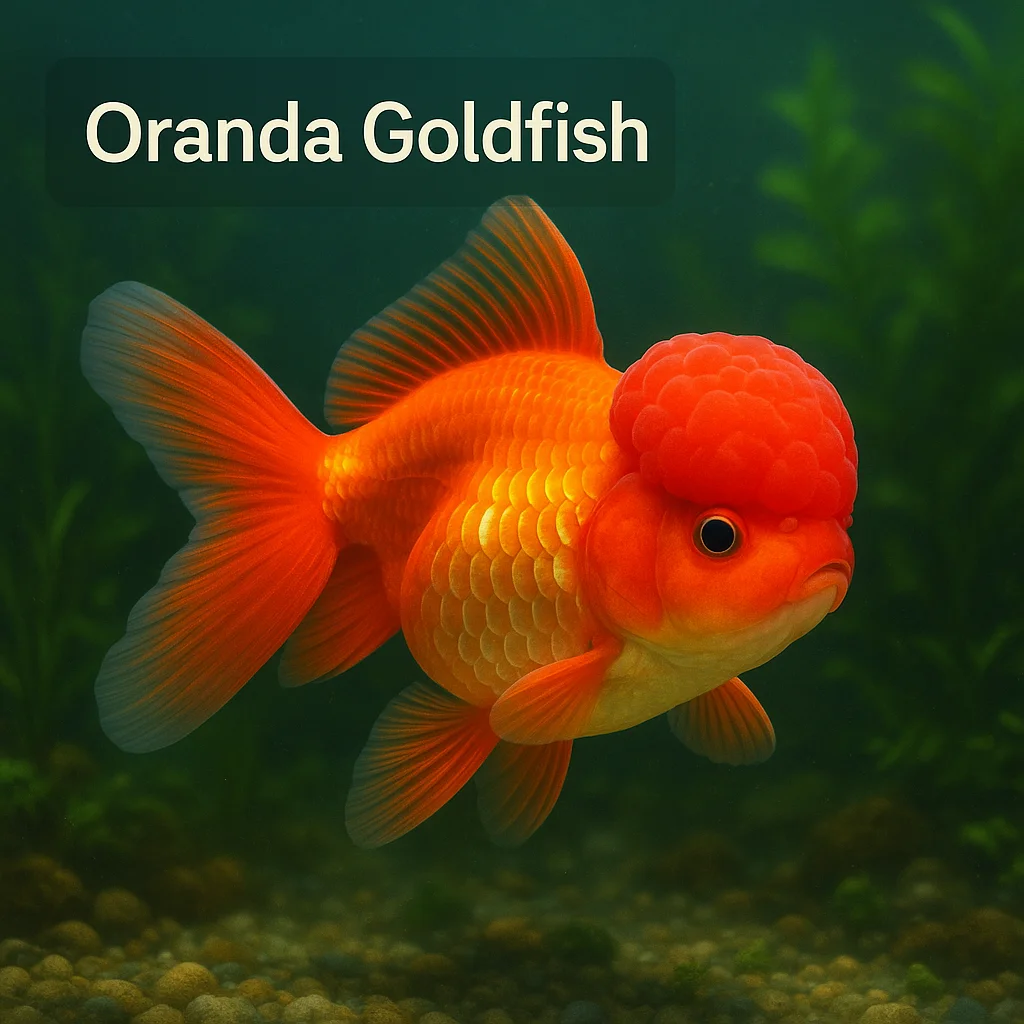
The Oranda Goldfish is one of the most popular ornamental fish in the world, known for its distinctive head growth and bright appearance. These freshwater fish are bred extensively in captivity, resulting in many color variations and slightly different forms.
- Common names: Oranda Goldfish, Redcap Oranda, Blue Oranda
- Scientific name: Varies (often listed as Carassius auratus)
- Freshwater / Marine / Brackish: Freshwater
- Origin: East Asia, originally from rivers and ponds
- Typical adult size range: 6-12 inches
- Lifespan: 10-15 years, varies with care
- Temperament: Peaceful
- Recommended tank size: Minimum 20 gallons per fish
- Water temperature range: 65-75°F
- pH / hardness: pH 6.5-7.5; moderate hardness
- Diet type: Omnivore
- Activity zone: Mid to bottom
- Social needs: Can be kept alone or in pairs/groups
- Beginner suitability: Easy to medium
🔍 Identification
Oranda Goldfish are recognizable by their rounded bodies and a unique fleshy growth on the top of their heads known as a wen. The wen varies in size and can sometimes be quite pronounced. Orandas come in a range of colors, including red, white, black, blue, and calico. Their fins are typically long and flowing, adding to their elegant appearance. Distinguishing between males and females can be subtle, often differing in the shape and size during breeding seasons.
- Rounded body with wen on the head
- Color variations include red, blue, and calico
- Long, flowing fins
- Wen size can change with age
- Females tend to be rounder than males
- Look-alikes: Other fancy goldfish like Lionhead
- Orandas have a larger wen compared to Lionheads
🌍 Origin & Natural Habitat
Oranda Goldfish originated from East Asia, specifically China and Japan, and have been bred for centuries in ponds and streams. As ornamental fish, they do not have a natural habitat in the wild. However, understanding their origins can help mimic their preferred environment; they thrive in moderate-flow waters with space to swim and plenty of oxygen. Seasonal changes are less influential due to their domesticated nature, but maintaining consistent water quality is crucial.
🧪 Tank Setup & Water Parameters
When setting up a tank for Oranda Goldfish, size is a key consideration. They need a spacious tank to accommodate their growth and activity levels. A good filtration system is critical to handle their bioload, and moderate water flow helps keep them healthy. Orandas enjoy a substrate they can sift, like smooth aquarium gravel. Decorations such as rocks and plants provide hiding spots and interest without damaging their delicate fins.
- Minimum 20 gallons per fish for healthy growth
- Use strong filtration to manage waste
- Maintain stable water temperatures
- Avoid sharp objects to protect fins
- Include aquatic plants for interest
- Provide open swimming spaces
🤝 Temperament & Compatibility
Oranda Goldfish are known for their peaceful temperament and generally do well in community tanks with other goldfish species. They are slow swimmers due to their body shape and flowing fins, which makes them unsuitable to pair with fast or fin-nipping fish. During feeding, they exhibit gentle behavior and might be outcompeted for food by more aggressive species. Best tankmates include other fancy goldfish, such as Ryukins or Black Moors.
- Prefer peaceful tankmates
- Avoid housing with fin-nippers
- Compatible with other fancy goldfish
- Prone to being outcompeted for food
- Observe individual variations in behavior
🍽️ Diet & Feeding
In an aquarium setting, Oranda Goldfish are fed an omnivorous diet that includes high-quality pellets, flakes, and occasional supplementary foods like brine shrimp and boiled vegetables. Providing varied foods helps prevent malnutrition and promotes vibrant color. Feed small amounts two to three times a day to avoid overfeeding and maintain water quality. They benefit from access to naturally growing algae, promoting natural grazing behavior.
- Pellet and flake as staple foods
- Supplement with fresh vegetables
- Introduce live or frozen treats occasionally
- Avoid overfeeding to maintain water quality
- Graze naturally on algae and small invertebrates
- Provide varied diet for optimal coloration
🧬 Growth, Color Changes & Lifespan
Oranda Goldfish exhibit significant growth in their first few years, often changing in color. Juveniles can start with bronze coloration, which transforms into brighter tones with age. Stress, water quality, and diet can impact color vibrancy and health. Well-maintained Orandas typically have a lifespan of 10-15 years, but this can vary based on care conditions.
- Juveniles often bronze; turn colorful with age
- Changes in color can indicate health issues
- Bright environment enhances color
- Stress may cause color fading or hiding
- Lifespan influenced by diet and tank conditions
🪺 Breeding & Reproduction
Breeding Oranda Goldfish in home aquariums is possible but requires specific conditions. They are egg layers, requiring careful temperature control and the presence of breeding mops or lush plants for egg deposition. Males chase females during courtship, and fertilization occurs externally. Once eggs are laid, adult fish should be moved to prevent them from eating the eggs. Fry require specialized feeding and stable parameters for successful rearing.
- Egg layers needing ideal conditions
- Use of breeding mops for egg laying
- External fertilization by males
- Remove adults post-spawning for egg safety
- Specialized food for developing fry
🩺 Common Health Issues & Prevention
Common health challenges for Oranda Goldfish include ich, fin rot, and swim bladder disorders. Prevention is the best strategy: maintain stable water conditions, avoid overfeeding, and quarantine new arrivals. Fin injuries from sharp tank decorations are also preventable with careful planning.
- Monitor for common illnesses like ich
- Quarantine new fish before introduction
- Avoid sudden water parameter changes
- Don’t overfeed to prevent digestive issues
- Use smooth decor to protect fins
🌱 Role in the Aquarium
Oranda Goldfish, with their vibrant colors and unique head growth, serve as captivating centerpieces in aquariums. They contribute to the aesthetic appeal, encouraging peaceful aquascapes. However, they aren’t great for plants as they may uproot or nibble them. Sourcing Oranda Goldfish from reputable breeders helps ensure ethical keeping.
- Adds color and visual interest to tanks
- Despite elegance, not ideal for planted tanks
- Ethically source from breeders, not the wild
📉 Conservation & Responsible Keeping
Oranda Goldfish are bred in captivity, reducing pressure on wild populations. However, as they grow, they may outgrow small setups. Rehoming them responsibly is crucial to avoid potential ecosystem impacts if released into the wild. Always choose captive-bred individuals and responsibly plan for their care for life.
- Prefer captive-bred over wild-caught
- Avoid releasing into non-native waters
- Plan for long-term tank size needs
- Consider rehoming options if outgrown
- Support sustainable and ethical breeding
📌 Summary
- Oranda Goldfish are notable for their wen and vibrant colors
- Originated from East Asia, now bred worldwide
- Best kept in tanks of 20 gallons or more
- Compatible with other fancy goldfish, not fast or aggressive fish
- Omnivorous diet requiring varied feeding for best health
- Beginner-friendly, though some care expertise needed
- Prevent health issues with good water quality and diet
- Breeding requires specific conditions and protective measures for fry