🐠 Fantail Goldfish
🧾 Quick Facts
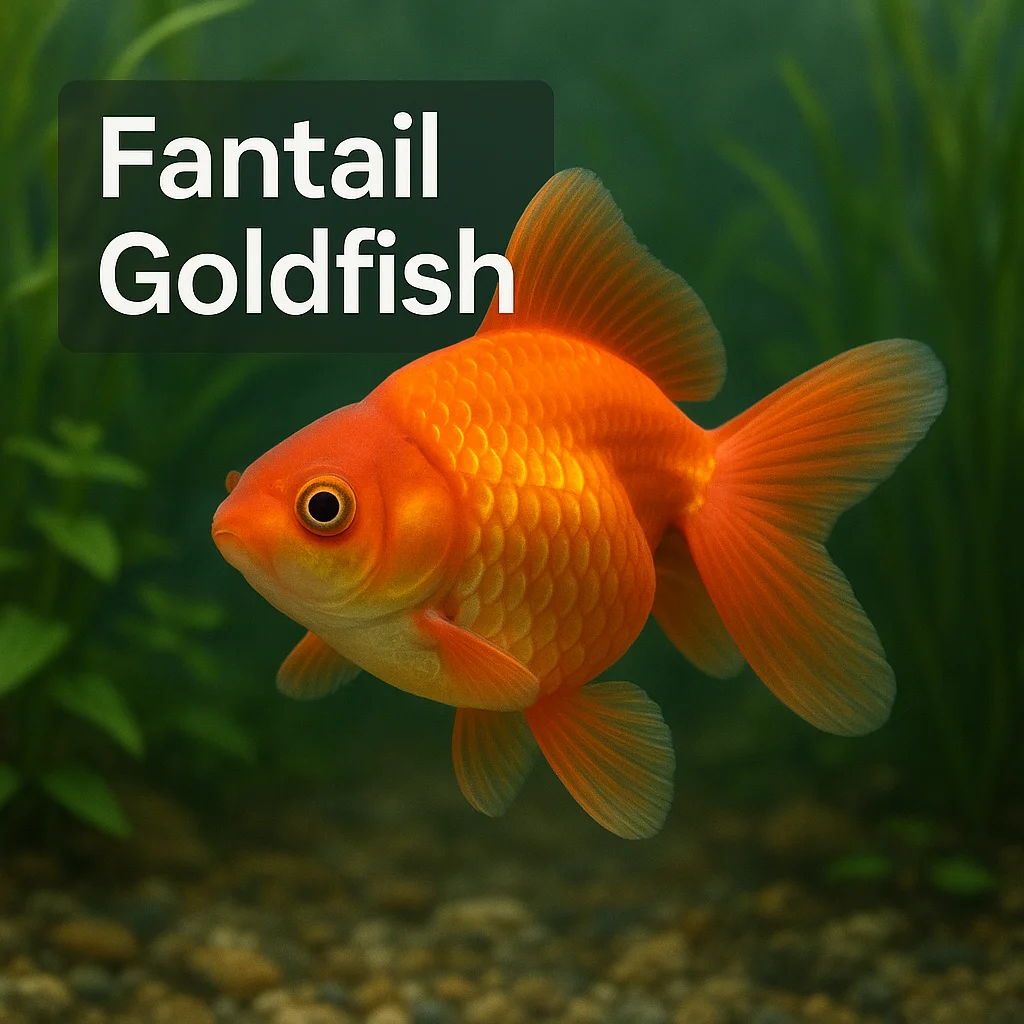
The Fantail Goldfish is a popular variety within the goldfish family known for its flowing, double-finned tail and peaceful demeanor. This freshwater fish, often referred to by several common names, is a great choice for both novice and experienced aquarists due to its hardiness and visual appeal.
- Common names: Fantail Goldfish
- Scientific name: Carassius auratus
- Freshwater
- Origin: Eastern Asia, originally bred in China
- Typical adult size range: 6 to 8 inches
- Lifespan: 10 to 15 years, varies
- Temperament: Peaceful
- Recommended tank size: At least 20 gallons, larger is better
- Water temperature range: 65°F to 72°F (18°C to 22°C)
- pH/Hardness: 6.5 to 7.5; moderate hardness
- Diet type: Omnivore
- Activity zone: Mid to bottom of the tank
- Social needs: Better in pairs or small groups
- Beginner suitability: Easy
🔍 Identification
The Fantail Goldfish features a distinctive body shape, with a rounded belly and a split, flowing tail that sets it apart from other goldfish varieties. Its body is generally shorter and more compact with a double anal and caudal fin. The color spectrum ranges from orange, red, white, and combinations thereof, which can change slightly as the fish ages or if it experiences stress.
- Rounded body with a double-finned tail
- Variety of colorations: orange, red, white
- Tail and anal fins are doubled, giving a fan-like appearance
- Subtle color changes due to age, mood, or environment
- Look-alikes: Veiltail Goldfish; distinguishable by the shorter tail of the Fantail
- Male vs female cues are subtle, typically size or vent differences
🌍 Origin & Natural Habitat
The Fantail Goldfish does not occur naturally in wild habitats, as it is a domesticated form developed from wild carp found in Eastern Asia, specifically China. This region's natural waters include slow-moving rivers, ponds, and lakes. Knowledge of original habitats aids aquarists in creating optimal, stable tank environments with gentle water currents and plenty of swimming space.
🧪 Tank Setup & Water Parameters
For a Fantail Goldfish, ensure a spacious tank to accommodate its growth and desire for movement. A minimum of 20 gallons is recommended to maintain water quality and provide enough swimming space. Use efficient filtration to manage waste and maintaining water flow, and incorporate soft substrates with rounded pebbles to prevent injury. Decorations should include live or artificial plants for cover, leaving open swimming areas in the center.
- Minimum tank size: 20 gallons
- Reliable filter with gentle flow
- Aquarium heater to maintain stable temperature
- Soft, rounded substrate to prevent injury
- Lush vegetation for aesthetic and cover
- Maintain good lighting but avoid too much direct sunlight
🤝 Temperament & Compatibility
Fantail Goldfish are peaceful and generally make good community residents. They appreciate companionship, so keeping them in pairs or small groups can enhance their quality of life. They are slow swimmers with long fins, making them unsuitable with fast, fin-nipping species. Ideal tankmates include other types of goldfish and peaceful, similarly-sized freshwater fish.
- Peaceful, social creatures that like partners
- Avoid housing with aggressive or fast swimmer species
- Compatible with other goldfish varieties
- May become stressed around more agile tankmates
- Feeding behavior is calm, usually non-competitive
🍽️ Diet & Feeding
Fantail Goldfish are omnivores with a varied diet. In the wild, they might consume plants, insects, and small crustaceans. In captivity, a balanced diet including high-quality flake food, pellets, and occasional fresh or blanched vegetables (e.g., peas, spinach) is ideal. Feeding frequency should be controlled to twice daily in small portions they can eat within a few minutes.
- Offer a mixed diet of flakes, pellets, and fresh vegetables
- Blanched vegetables, like peas, aid digestion
- Avoid overfeeding to prevent waste buildup
- Feed small portions twice a day
- Variety in diet can prevent nutritional deficiencies
🧬 Growth, Color Changes & Lifespan
Fantail Goldfish begin as small juveniles and, within a few years, can reach full size under optimal conditions. Their color can deepen or lighten with changes in environment or health status, and stress might manifest through dull coloration and clamped fins. Given proper care, their lifespan can extend well over a decade, heavily reliant on diet, space, and water quality.
🪺 Breeding & Reproduction
Breeding Fantail Goldfish can be achieved in home aquariums, although it is not common due to the requirement of optimal conditions. They are egg layers; breeding is often triggered by warmer temperatures and longer daylight hours, initiating courtship behavior. The parents do not care for the eggs, which should be separated soon after spawning to prevent predation by adult fish.
🩺 Common Health Issues & Prevention
Fantail Goldfish are robust, but like all fish, they can suffer from common aquarium ailments like ich, fin rot, and potential parasitic infections. Prevention is preferential and involves good water quality, regular tank maintenance, and quarantining new additions. Reducing stress can also play a significant role in maintaining health.
- Quarantine new fish before tank introductions
- Conduct regular water changes
- Avoid overstocking the aquarium
- Look for signs of stress and address timely
- Manage water parameters diligently
🌱 Role in the Aquarium
In a community tank, Fantail Goldfish can be a centerpiece due to their graceful movements and vivid colors. While not contributing significantly to algae control, they add visually pleasing dynamics. Being gentle on plants, they make good cohabitants in planted tanks when sourced from reputable breeders, improving the sustainability and ethics of the hobby.
📉 Conservation & Responsible Keeping
Fantail Goldfish are predominantly captive-bred, decreasing the demand for wild capture. Still, responsible aquarists ensure tanks are suitable for adult sizes and do not release fish into local waterways due to ecological disruptions. If rehoming is necessary, find knowledgeable keepers or aquarium societies.
- Ensure adequate tank size before purchasing
- Purchase from reputable breeders
- Do not release into local water bodies
- Contact local aquarium clubs for rehoming
- Secure lids to prevent accidental escapes
📌 Summary
- Fantail Goldfish are known for their dual-finned tails and vibrant colors.
- Originated from domesticated Chinese carp, suitable for freshwater aquariums.
- Require at least a 20-gallon tank with good filtration and moderate lighting.
- Compatible with other goldfish; avoid aggressive or fast tankmates.
- Feed a varied, balanced diet including flakes, pellets, and veggies.
- Easy for beginners, provided water quality and space are monitored.
- Ethically source fish, avoiding wild-caught specimens.
- Potential health issues can often be mitigated through preventative care.
- Provide sufficient swimming space and social companionship for wellbeing.