🐠 Dojo Loach (Weather Loach)
🧾 Quick Facts
The Dojo Loach, also commonly referred to as the Weather Loach, is a freshwater species popular in the aquarium hobby for its fascinating behavior and adaptability. While one of the most identifiable species is the Misgurnus anguillicaudatus, this group may include variations. Known for their response to atmospheric pressure changes, these loaches are excellent for beginner aquarists.
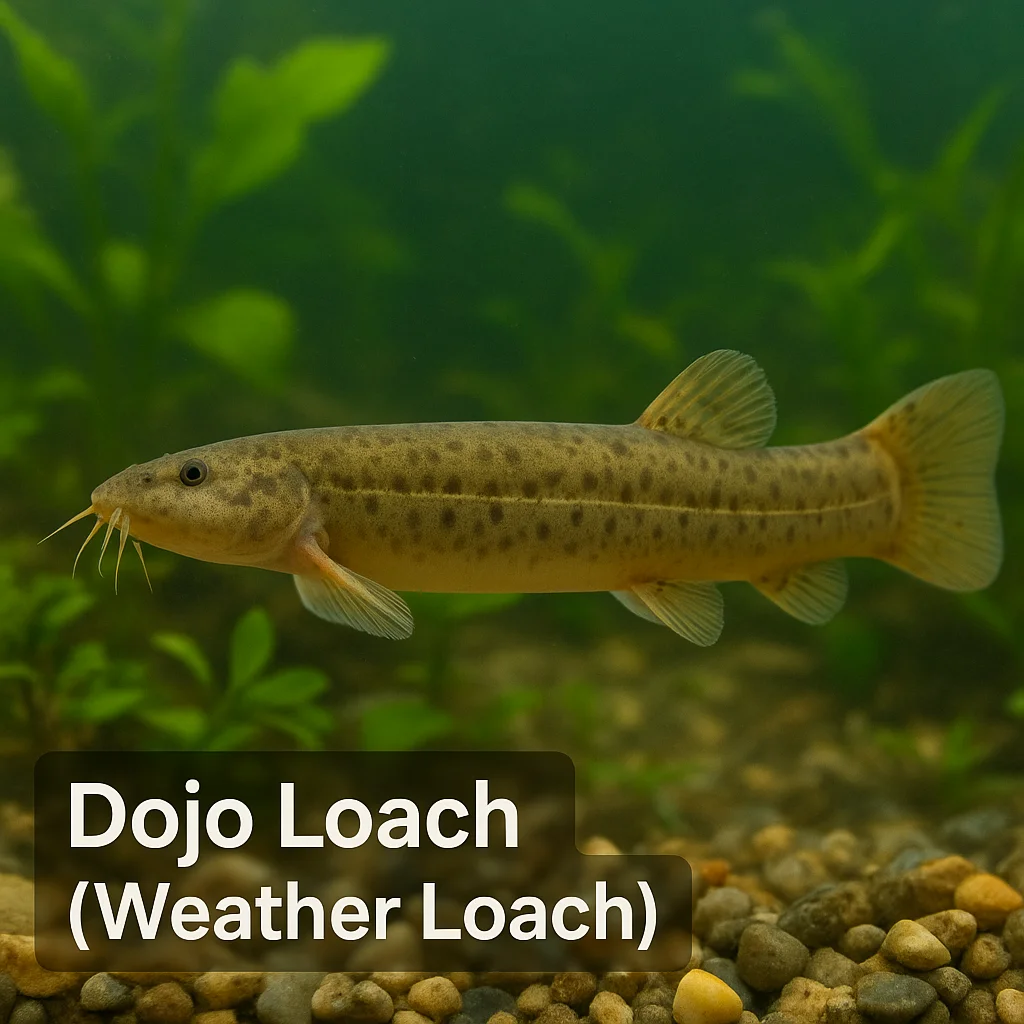
- Common names: Dojo Loach, Weather Loach
- Scientific name: Often listed as Misgurnus anguillicaudatus
- Freshwater
- Origin: Asia, primarily in Japan, China, and Korea
- Typical adult size range: 8–12 inches (20–30 cm)
- Lifespan: Typically 7–10 years; varies with care
- Temperament: Peaceful
- Recommended tank size: Minimum 55 gallons; larger tanks preferred
- Water temperature range: 59–77°F (15–25°C)
- pH: 6.5–8.0; prefers soft to moderately hard water
- Diet type: Omnivore
- Activity zone: Bottom
- Social needs: Social but not strictly schooling
- Beginner suitability: Easy
🔍 Identification
Identifying a Dojo Loach includes noticing its elongated, almost eel-like body and its small, rounded fins. This loach's coloration ranges from olive to sandy brown with variable patterning, which may fade or intensify depending on its mood or health. Notable is the array of barbel-like appendages around the mouth. Male and female identification is subtle, often at best recognized by slight body size differentiation. The Kuhli Loach is a common look-alike, but is distinguished by its slender build and distinctly banded pattern.
- Top ID Tips
- Whole fish in frame with elongated, eel-like body
- Olive to sandy brown color with mottling
- Noticeable barbels around mouth
- Small rounded fins
- Full-body with no marked color bands
- Slender form compared to similar species
- Males slightly more streamlined than females
- Fish's entire length from snout to tail visible in tank
🌍 Origin & Natural Habitat
The Dojo Loach hails from the cool, slow-moving waters of Asia, often found in rice paddies, rivers, and lakes with abundant vegetation and soft substrates. In nature, these fish experience a range of temperatures and seasonal changes that influence their behavior, particularly their noted reaction to pressure changes. Understanding their natural habitat helps aquarists replicate similar conditions, aiding in their health and longevity in a home aquarium.
🧪 Tank Setup & Water Parameters
Creating a suitable environment for the Dojo Loach involves providing a spacious tank with ample horizontal swimming area. A tank of at least 55 gallons is recommended, with maximum emphasis on water quality and circulation, achieved through robust filtration. A soft, sandy substrate protects the fish's delicate barbels, and hiding spots created with driftwood or smooth rocks ensure a sense of security. Moderate lighting and subtle temperature control enhance their welfare.
- Setup Checklist
- Minimum 55-gallon tank
- Robust filtration system
- Sandy substrate
- Rocks, caves, and driftwood decor
- Moderate lighting
- Ensure entire fish visible within tank
- Hiding spots to reduce stress
- Maintain consistent water temperature
- Abundant swimming space
🤝 Temperament & Compatibility
The peaceful Dojo Loach thrives in community tanks where it can interact with non-aggressive tankmates such as Tetras, Corydoras, and small Barbs. Their tendency to sift through the substrate means they are interactive but non-territorial, hence do not disrupt other species during feeding. They can coexist with various small and medium-sized fish, provided personal space and social needs are respected. However, keep them away from aggressive or fin-nipping species, which could stress this sociable fish.
- Compatibility Notes
- Peaceful with like-sized, non-aggressive fish
- Avoid fin-nippers or large predators
- Compatible with small Barbs and Corydoras
- Thrives in a group but not in a shoal
- Feed during peaceful tank moments
- Ensure whole fish visible for observation of interactions
- Monitor for stress signs around aggressive species
🍽️ Diet & Feeding
In the wild, the Dojo Loach is an opportunistic feeder, consuming insects, crustaceans, and plant matter, making it an omnivore. In captivity, balanced meals include high-quality flake or pellet foods, frozen foods such as bloodworms and brine shrimps, and occasional fresh vegetables. Feeding should occur once or twice daily in quantities they can consume within minutes. These loaches benefit from a varied diet ensuring nutritional completeness.
- Feeding Tips
- Feed high-quality flake or pellet
- Incorporate frozen foods regularly
- Supplement with vegetable matter
- Avoid overfeeding; adjust portion size accordingly
- Observe feeding to ensure all fish get access to food
- Use sinking foods to reach bottom dwellers
- Ensure entire fish visible during feeding
- Adjust diet with seasonal and behavioral changes
🧬 Growth, Color Changes & Lifespan
Dojo Loaches experience noticeable growth transformations from juveniles, starting at a diminutive size and reaching lengths up to 12 inches in adulthood under optimal conditions. Their color may adapt based on stress or mood, showing a more pallid or vibrant shade. Stress indicators include clamped fins or frequent hiding. Lifespan is typically 7–10 years, significantly influenced by environmental conditions, space, and quality of diet.
🪺 Breeding & Reproduction
Breeding Dojo Loaches in home aquariums remains a challenge and is relatively uncommon. When breeding does occur, they are egg layers, and females scatter eggs over substrate or plants. Courtship rituals are minimal, and little parental care follows after spawning. Raising fry demands precise feeding strategies, with infusoria or commercially prepared fry foods recommended to ensure growth.
🩺 Common Health Issues & Prevention
Common health problems for Dojo Loaches include ich, fin rot, and external parasites, typically arising from poor water quality or stress. Prevention focuses on stable water parameters, careful feeding practices, and quarantine protocols for new fish introductions. Ensuring good tank hygiene and filtration is essential to maintaining Loach health.
- Prevention Basics
- Maintain stable water temperature and quality
- Implement a robust filtration system
- Regularly check for disease signs
- Quarantine new fish before tank introduction
- Ensure entire fish visible for health inspection
- Avoid overcrowding to reduce stress
- Avoid rapid water parameter changes
🌱 Role in the Aquarium
The Dojo Loach adds character to a community aquarium with its playful behavior and active nature. It occupies the bottom zones, aiding in substrate cleaning by stirring debris while searching for food. This loach is plant-safe, contributing positively to an ecological balance without damaging vegetation. Always seek reputable, captive-bred sources to prevent ecological strain from wild capture.
📉 Conservation & Responsible Keeping
Locale variations influence the availability of wild-caught vs. captive-bred Dojo Loaches. Captive breeding is preferred to protect native populations. Never release them into local waterways, as they can disrupt ecosystems. If a fish outgrows its tank, rehoming through aquarium groups or forums is advisable.
- Responsible Keeping Tips
- Prioritize captive-bred sources
- Avoid wild-caught specimens whenever possible
- Never release into non-native waters
- Ensure proper tank space to prevent outgrowth
- Act responsibly, rehoming through appropriate channels
- Keep accurate ownership records
- Educate others about responsible fishkeeping
📌 Summary
- ID: Elongated body, olive color, barbels around mouth
- Origin: Rivers, lakes, and rice paddies in Asia
- Tank setup: 55+ gallons, sandy substrate, robust filtration
- Compatibility: Peaceful, avoid aggressive tankmates
- Diet: Omnivore; flakes, pellets, live and frozen foods
- Difficulty: Easy for beginners with proper setup
- Caution: Prevent stress by minimizing rapid changes
- Policy: Never release into local ecosystems