🐠 Common Goldfish
🧾 Quick Facts
The Common Goldfish is a popular and well-known aquarium fish, beloved for its bright appearance and relatively easy care. They are freshwater fish with an intriguing history of selection and breeding, resulting in a wide variety of forms.
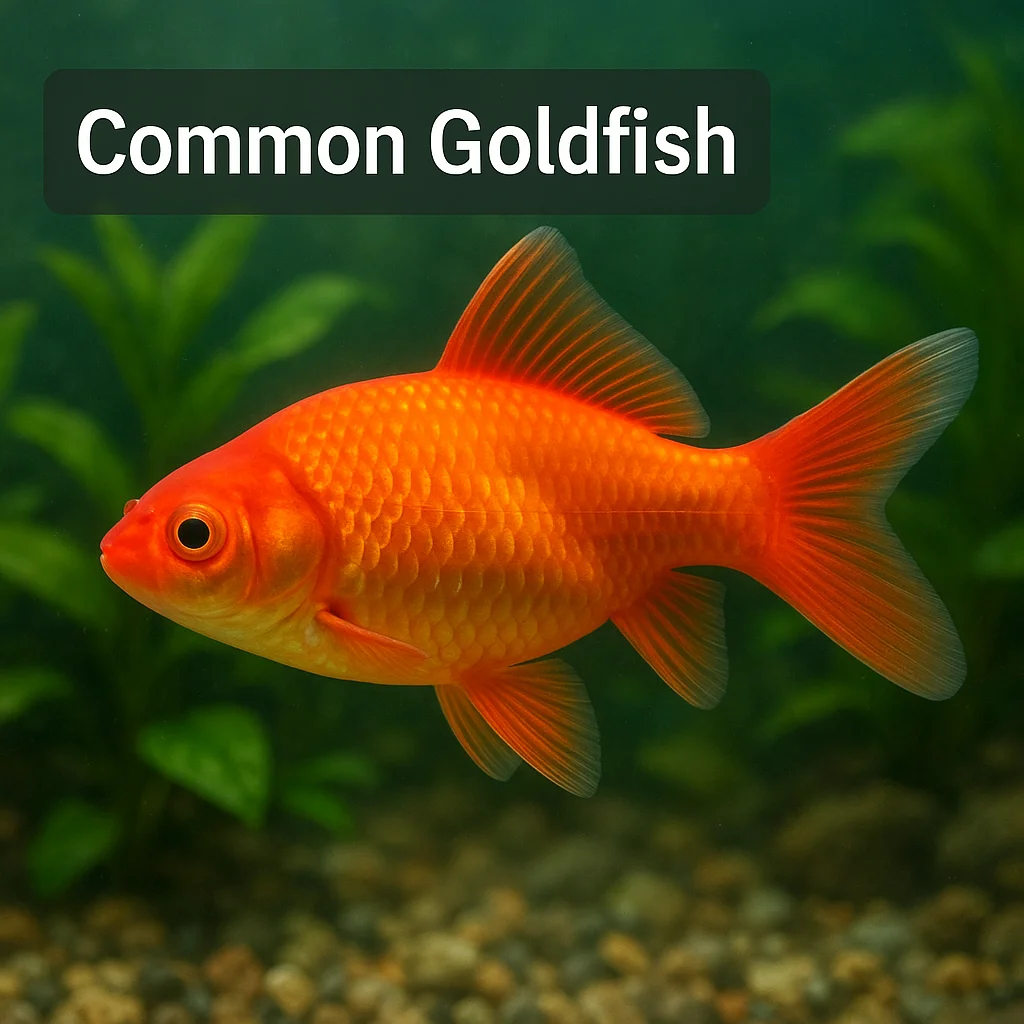
- Common names: Common Goldfish, Goldfish
- Scientific name: Carassius auratus
- Freshwater / Marine / Brackish: Freshwater
- Origin: East Asia, primarily China
- Typical adult size range: 4-12 inches, depending on care
- Lifespan: Typically 10-15 years, can exceed 20 years with optimal care
- Temperament: Peaceful
- Recommended tank size: At least 20 gallons for a single fish, 10 gallons for each additional fish
- Water temperature range: 65-75°F (18-24°C)
- pH / hardness: Neutral to slightly alkaline (pH 7.0-8.0), moderate hardness
- Diet type: Omnivore
- Activity zone: Bottom to mid-level
- Social needs: Enjoys company of its own kind but also fine solo
- Beginner suitability: Easy
🔍 Identification
Common Goldfish can be identified by their elongated body shape and flowing fins. They typically have an orange or gold coloration, although variations such as white, red, black, and combinations exist. They have a dorsal fin, a deeply forked tail, and no barbels. In females, the belly may be rounder, whereas males sometimes develop tubercles on the gill covers during breeding.
- Top ID Tips:
- Elongated, streamlined body
- Dorsal fin present
- Orangish-golden coloration most common
- Deeply forked caudal fin
- No barbels present
- Look-alikes include koi and shubunkins, which have longer bodies
🌍 Origin & Natural Habitat
The Common Goldfish originates from East Asia, specifically China, where it was bred over centuries from the Prussian carp. In the wild, they inhabit slow-moving waters with plenty of vegetation such as ponds, lakes, and rivers. Understanding their natural habitat helps recreate conditions that promote active and healthy fish.
🧪 Tank Setup & Water Parameters
Creating the ideal environment for Common Goldfish involves providing space and good water quality. They thrive with adequate filtration and space to swim. Providing a natural substrate and decor mimics their natural environment and encourages natural behavior.
- Setup Checklist:
- Minimum 20 gallons per goldfish
- Robust filtration to handle bio-load
- Consistent water changes
- Gravel or sand substrate
- Temperate water heater if needed
- Ample swimming space
- Natural plants for coverage
- Moderate lighting
- Rock or log structures
🤝 Temperament & Compatibility
Goldfish are generally peaceful and social, preferring to swim in groups. They can coexist with other peaceful fish that thrive in similar water conditions. Avoid aggressive fish or those that may nip their fins. Due to their robust nature and size, Goldfish can create noticeable waste, impacting water quality if not managed properly.
- Compatibility Notes:
- Best kept with other goldfish
- Avoid fin-nipping tankmates
- Peaceful community fish are compatible
- Watch for bullying during feeding
- Provide generous space to prevent stress
🍽️ Diet & Feeding
In the wild, goldfish are omnivorous, feeding on aquatic plants, small crustaceans, and insects. In captivity, a balanced diet of high-quality flakes or pellets, supplemented with plant matter and occasional protein, helps maintain their health. Feed them enough to eat in a few minutes once or twice a day.
- Feeding Tips:
- Use high-quality flakes or pellets as staples
- Supplement with vegetables like peas or spinach
- Occasionally provide protein such as brine shrimp
- Avoid overfeeding to prevent water quality issues
- Ensure varied diet for optimal nutrition
🧬 Growth, Color Changes & Lifespan
Common Goldfish can grow significantly when provided with ample space and proper nutrition. Juveniles are typically a dull bronze, maturing into vibrant colors as they age. Environmental stress can cause clamped fins or muted colors, which usually improve with conditions.
🪺 Breeding & Reproduction
Goldfish are egg layers, frequently spawning in the right conditions. Spawning is encouraged by increased temperatures and frequent water changes. Parents do not care for eggs, so using a separate breeding tank can protect fry from being eaten. Fry can be fed infusoria or finely crushed flakes.
🩺 Common Health Issues & Prevention
Goldfish are prone to common aquatic ailments such as ich and fin rot. Maintaining stable, clean water and proper quarantine practices for new fish significantly reduce the risk of illness. Regular observation of behavior and appearance helps catch potential issues early.
- Prevention Basics:
- Quarantine new fish
- Regular water changes
- Monitor water parameters
- Avoid overcrowding
- Feed a varied, balanced diet
🌱 Role in the Aquarium
Common Goldfish are often a centerpiece in the aquarium due to their striking appearance and size. They play a role in keeping aquatic plants tidy through grazing but can be destructive if overly hungry. Selecting ethically sourced fish from reputable breeders supports responsible aquarium practices.
📉 Conservation & Responsible Keeping
Being largely captive-bred, goldfish are generally available without impacting wild populations. Releasing them into the wild is harmful to both the fish and local ecosystems. Consider rehoming options if they outgrow your capacity to maintain a healthy environment.
- Responsible Keeping Tips:
- Source fish from reputable breeders
- NEVER release into local waterways
- Upgrade tank size as fish grow
- Consider rehoming rather than overcrowding
- Stay informed on fishkeeping best practices
📌 Summary
- Identifiable by streamlined shape, dorsal fin, and golden hue
- Originates from China, adapted to various aquatic environments
- Requires spacious tank with robust filtration
- Peaceful swimmers, suitable with other similar fish
- Balanced omnivorous diet crucial for health
- Generally easy care but requires commitment to tank maintenance
- A/A suitable for beginners but demands responsibility
- Monitor for common health issues and maintain consistent care