🐠 Comet Goldfish
🧾 Quick Facts
The Comet Goldfish is an appealing and widely loved freshwater fish, ideal for beginner aquarium enthusiasts. Known for its vibrant colors and flowing fins, the Comet Goldfish is a popular choice for both indoor aquariums and outdoor ponds.
- Common names: Comet Goldfish, Comet Tail Goldfish
- Scientific name: Carassius auratus
- Freshwater
- Origin: East Asia, particularly China
- Typical adult size range: 10 to 12 inches (25 to 30 cm)
- Lifespan: 10 to 15 years, varies by care
- Temperament: Peaceful
- Recommended tank size: Minimum 30 gallons per fish
- Water temperature range: 65 to 75°F (18 to 24°C)
- pH guidance: 6.5 to 7.5
- Diet type: Omnivore
- Activity zone: Middle to bottom
- Social needs: Enjoy social groups but do not require schooling
- Beginner suitability: Easy
🔍 Identification
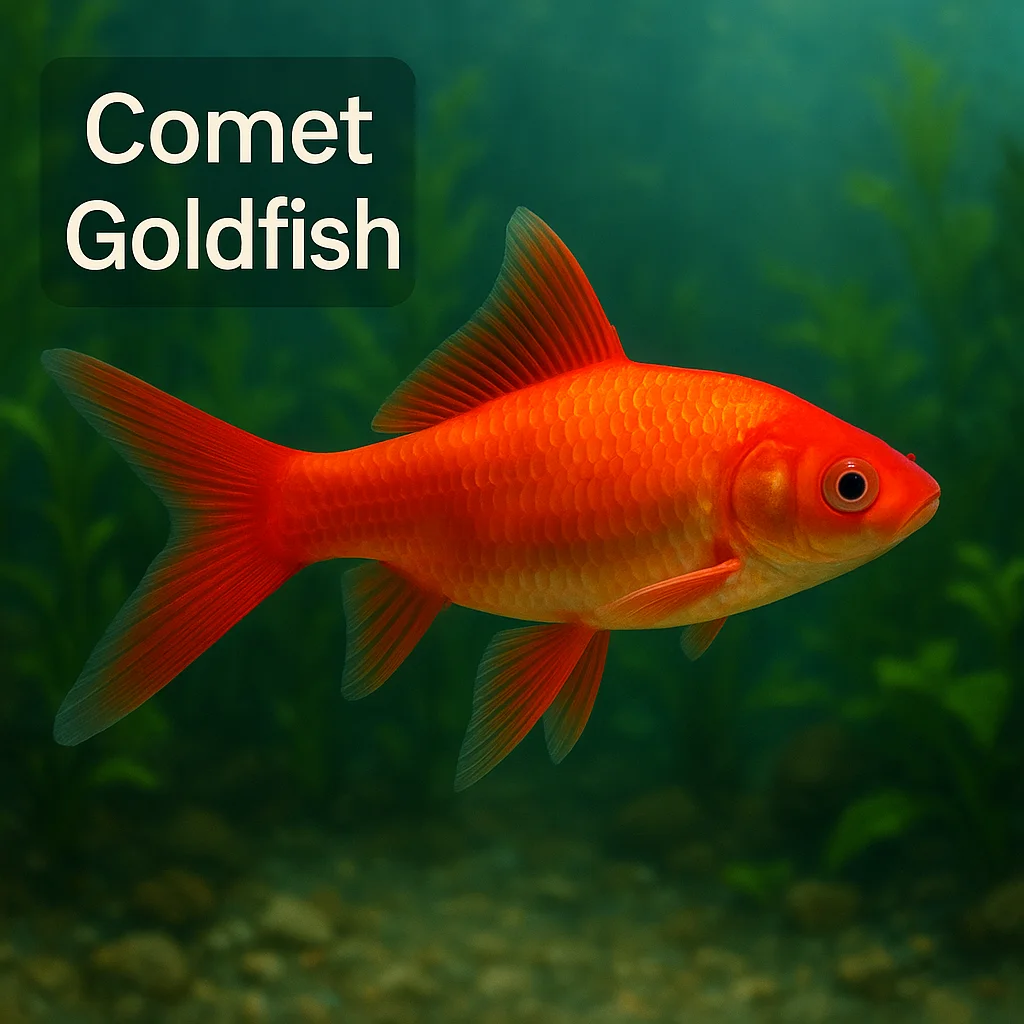
Comet Goldfish are easily recognized by their elongated bodies and tail fins. They often exhibit a range of colors, including orange, yellow, red, and white. As they mature, they display long, flowing fins, with males and females being difficult to differentiate due to subtle differences.
- Elongated body with streamlined shape
- Vibrant colors: typically orange, red, or yellow
- Long, deeply forked tail fin
- Subtle male vs female differences
- Whole fish in frame shows elegant silhouette
- Distinct from Fantail and Shubunkin goldfish by slimmer body and longer tail
🌍 Origin & Natural Habitat
Originating from East Asia, particularly China, Comet Goldfish are descendants of the wild Prussian carp. They are typically found in calm, slow-moving waters such as lakes and ponds. These environments are characterized by a regular water flow with ample vegetation and a soft substrate.
The understanding of their natural habitat aids aquarists in recreating similar conditions in captive environments, supporting their health and well-being.
🧪 Tank Setup & Water Parameters
To best care for Comet Goldfish, a spacious tank is essential to accommodate their growth and swimming habits. High-quality filtration and moderate water movement help maintain clean conditions. While they can thrive in various substrates, sand or fine gravel is preferred. Providing decorations like rocks and hardy plants can enhance the aquarium environment.
- Minimum tank size of 30 gallons per fish
- Effective filtration system recommended
- Moderate water flow
- Substrate: sand or fine gravel
- Include rocks and hardy plants
- Maintain stable temperatures between 65°F and 75°F
🤝 Temperament & Compatibility
Comet Goldfish are peaceful creatures that typically do well in community tanks. However, their active swimming habits should be considered when choosing tankmates. They coexist best with other non-aggressive fish that can tolerate similar environmental conditions.
- Peaceful in nature; avoid aggressive or fin-nipping species
- Good tankmates include other goldfish varieties
- Avoid small and delicate species
- Active during feeding times but not overly competitive
- Behavior may vary by individual
🍽️ Diet & Feeding
Comet Goldfish are omnivores and require a balanced diet. In the wild, they consume various insects, plants, and detritus, whereas in aquariums, a mix of high-quality flake or pellet foods supplemented with vegetables like peas and spinach should be provided. Feeding should be moderate, typically once or twice daily, allowing them to consume food within a few minutes.
- Balanced diet of flakes, pellets, and vegetables
- Offer small live or frozen foods occasionally
- Avoid overfeeding to prevent health issues
- Feed once or twice a day
- Watch for leftover food to adjust portions
🧬 Growth, Color Changes & Lifespan
Comet Goldfish exhibit noticeable growth and vibrant color changes as they mature. Stress, often from poor water quality or lack of space, can cause clamped fins and color fading. These resilient fish live 10 to 15 years, depending on the care provided, highlighting the importance of environmental enrichment.
🪺 Breeding & Reproduction
Breeding Comet Goldfish at home is challenging due to the need for specific conditions that replicate seasonal changes in their natural habitat. They are egg layers that may require cooler temperatures to trigger spawning. Fry are generally resilient but benefit from being isolated and fed with fine-quality fry foods.
🩺 Common Health Issues & Prevention
Like many fish, Comet Goldfish can experience common issues like ich or fin rot, often linked to inadequate tank conditions. Preventative care, such as maintaining stable water quality, appropriate filtration, and not overfeeding, is crucial. Quarantine new additions to prevent disease transmission.
- Regularly test water quality
- Quarantine new fish before introduction
- Avoid overcrowding
- Ensure high-quality and stable parameters
- Balance diet and avoid overfeeding
🌱 Role in the Aquarium
Beyond their vivid coloration, Comet Goldfish contribute to a lively aquarium atmosphere. Suitable for both community tanks and standalone displays, their active nature and easy care make them an appealing choice. However, purchasing from reputable breeders is vital to ensure sustainable and ethical aquarium practices.
📉 Conservation & Responsible Keeping
In terms of conservation, Comet Goldfish represent a captive-bred success. However, their release into local ecosystems is discouraged due to potential disruption. Adequate tank space reduces the likelihood of rehoming needs, but responsible exit strategies, like offering to reputable aquarists or educational centers, support ethical keeping.
- Choose reputable breeders
- Do not release into wild habitats
- Ensure adequate living space
- Consider rehoming options if needed
- Prioritize sustainability and responsible practices
📌 Summary
- Elongated body with vibrant colors and long, flowing fins
- Originates from East Asia, thriving in ponds and calm waters
- Requires roomy tanks with stable water conditions
- Peaceful and compatible with similarly tempered species
- Omnivorous diet includes flakes, pellets, and vegetables
- Ideal for beginners due to easy care requirements
- Monitor for common health issues; prevention is key
- Contributes positively to community tanks with active behavior