🐠 Vampire Shrimp
🧾 Quick Facts
The Vampire Shrimp, a fascinating addition to freshwater aquariums, is often sought after for its unique appearance and peaceful demeanor. Here are some quick facts to help you get acquainted:
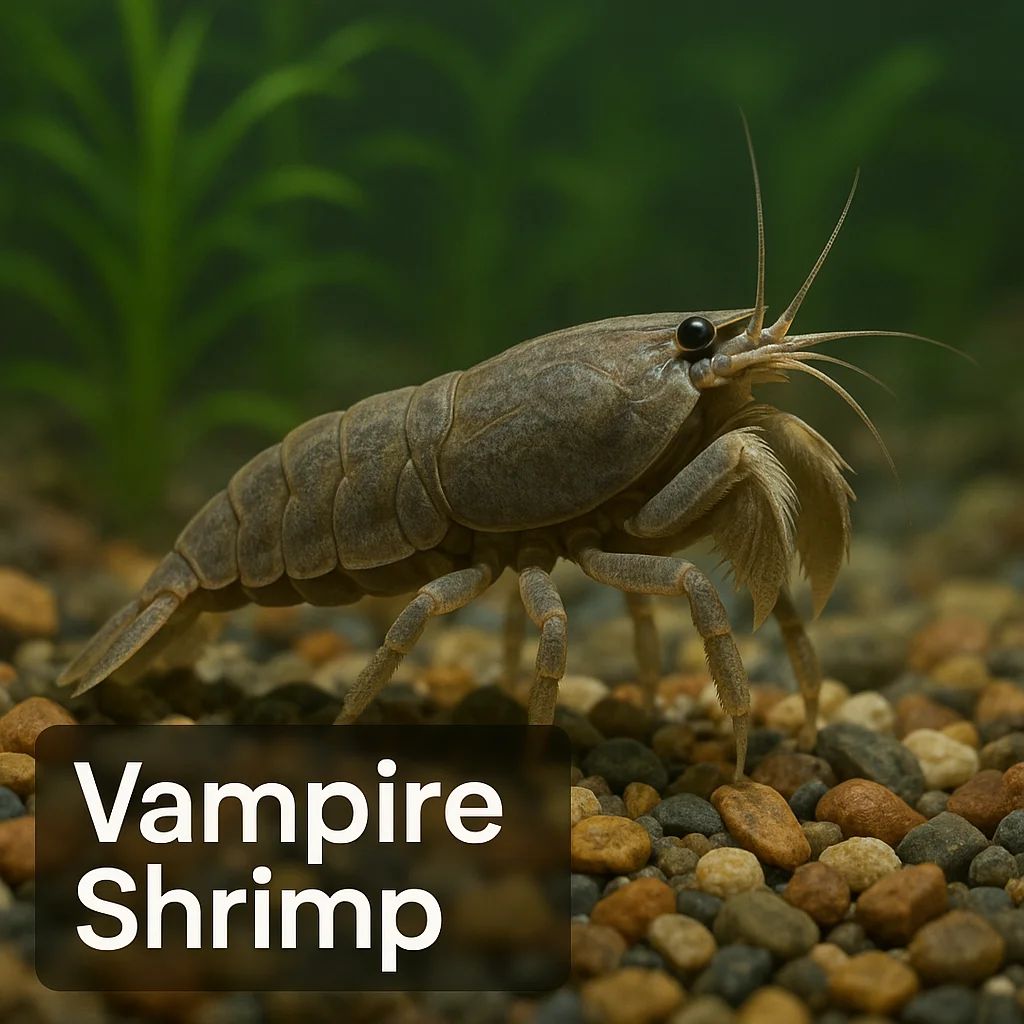
- Common names: Vampire Shrimp, African Filter Shrimp, Ghanian Filter Shrimp
- Scientific name: Atya gabonensis
- Freshwater / Marine / Brackish: Freshwater
- Origin: West Africa, from Senegal to Democratic Republic of the Congo
- Typical adult size range: 4 to 6 inches (10–15 cm)
- Lifespan: Approximately 5 years; varies depending on care
- Temperament: Peaceful
- Recommended tank size: Minimum of 20 gallons, though larger is preferable
- Water temperature range: 75 to 82°F (24 to 28°C)
- pH / hardness guidance: pH 6.5 to 7.5, soft to moderately hard water
- Diet type: Omnivore
- Activity zone: Bottom
- Social needs: Can be kept singly or in groups; social but non-schooling
- Beginner suitability: Medium; requires specific water conditions
🔍 Identification
Recognizing Vampire Shrimp can be rewarding due to their unique characteristics. Their body shape is robust and somewhat stocky, presenting an elongated translucent form that often displays earthy tones varying from off-white to brownish hues, accentuated by a bluish sheen. These colors can change slightly with mood and age. The fins are modest and not prominent, while their forelimbs are adapted into fan-like appendages used for filter feeding.
Males and females can be difficult to differentiate; distinctions are often not apparent to the casual observer. For those familiar with freshwater crustaceans, potential look-alikes include the Bamboo Shrimp, but Vampires can be distinguished by their overall size and robustness.
- Stocky, elongated body
- Translucent with earthy and bluish tones
- Fan-like appendages for filtering
- Subtle sex differences, often varies by individual
- Larger and stockier than Bamboo Shrimp
- Entire shrimp visible in images for accurate ID
🌍 Origin & Natural Habitat
The natural habitat of Vampire Shrimp spans across West Africa, from Senegal through to the Congo basin, typically found in freshwater rivers and streams. These waterways feature a moderate to strong current, where substrate layers are comprised of sand and rocks, often surrounded by lush vegetation.
Understanding the habitat is beneficial for setting up a suitable aquarium environment. Knowledge of the seasonal variations, including changes in flow rate during wet and dry seasons, is essential as it impacts their natural rhythms and behaviors.
🧪 Tank Setup & Water Parameters
Aquarium care for Vampire Shrimp requires attention to several key factors. A tank of at least 20 gallons is recommended. Filtration should aim to mimic the moderate current they enjoy, making canister filters with spray bars ideal. They thrive with moderate heat maintenance between 75°F to 82°F.
A substrate of sand or fine gravel is preferred, complemented by rocks and driftwood to create hiding spots mimicking their natural environment. Live plants can enhance the setup, providing cover and maintaining water quality.
- Minimum 20-gallon tank
- Effective filtration creating moderate flow
- Temperature maintained between 75-82°F
- Sand or fine gravel substrate
- Rocks and driftwood for hiding
- Live plants for enhanced cover
- Avoid overly bright lighting
🤝 Temperament & Compatibility
Vampire Shrimp are peaceful and work well in community tanks with compatible species. While they do not school, they exhibit social behaviors and can coexist with other non-aggressive tank mates like tetras, rasboras, and peaceful bottom dwellers. It's essential to avoid aggressive fish that may nip at their delicate appendages.
Behavior can vary between individuals, and they may show increased activity during feeding times, coming out from hiding when they sense mouths on the tank's surface being fed.
- Peaceful and community-friendly
- Compatible with non-aggressive species
- Avoid aggressive, fin-nipping fish
- Social but do not need to school
- Tend to hide, but social in groups
- Individual behavior can vary
🍽️ Diet & Feeding
In the wild, Vampire Shrimp are filter feeders, consuming microorganisms and suspended particles. In aquariums, replicating this diet involves providing powdered foods, micro-wafers, and fine shrimp foods. They may also benefit from occasional treats of live micro crustaceans or infusoria.
Feeding frequency should align with a gentle current and filtered water area, where their fans can effectively capture floating particles. Care should be taken to avoid overfeeding as they are slow eaters.
- Feed powdered and fine particle foods
- Supplement diet with micro-wafers
- Live food treats such as micro crustaceans
- Monitor residue to avoid water quality decline
- Encourage feeding on naturally available biofilm
- Offer small amounts multiple times weekly
🧬 Growth, Color Changes & Lifespan
Vampire Shrimp typically grow up to 6 inches. Juveniles are often paler with less distinct colors, which solidify as they mature. Color may also change slightly with mood or health; a healthy shrimp displays vibrant hues, while stress or poor water conditions may lead to fading or clamped appendages.
Their lifespan in captivity ranges from 4 to 5 years when kept under optimal conditions, with water quality and diet playing significant roles in longevity.
🪺 Breeding & Reproduction
Breeding Vampire Shrimp in home aquariums is challenging and rare, as they require specific environmental triggers and conditions found in their natural habitat, including particular water flow and chemistry not easily replicated.
As egg layers, their larvae demand brackish water phases before maturing to juveniles, adding complexity to successful breeding. Thus, intentional breeding is uncommon in captivity.
🩺 Common Health Issues & Prevention
While generally hardy, Vampire Shrimp may encounter health issues like fungal infections and parasites, often stemming from stress or poor water conditions. Regular tank maintenance, stable water parameters, and a good diet are key preventive measures. Quarantining new additions and avoiding aggressive tank mates also help maintain shrimp health.
- Stable water parameters
- Good filtration, mimicking flow
- Regular tank maintenance
- Avoid overcrowding
- Quarantine new additions
- Provide balanced, high-quality nutrition
🌱 Role in the Aquarium
Vampire Shrimp contribute to a balanced and peaceful community aquarium. As active filter feeders, they help maintain water clarity by consuming fine particulate matter. Though not algae cleaners, they promote a healthy ecosystem by interacting with other species and adding diversity.
It is important to source from ethical suppliers and avoid wild-caught specimens if it harms their native ecosystems, and they should be a conscious choice contributing to sustainable aquarium practices.
📉 Conservation & Responsible Keeping
Captive-bred Vampire Shrimp are generally preferable to preserve natural populations. Releasing them into local ecosystems is strongly discouraged as it can disrupt local biodiversity.
If a shrimp outgrows its environment, rehoming to a suitable habitat or larger aquarium is recommended over release.
- Opt for captive-bred sources
- Never release into the wild
- Consider rehoming practices
- Maintain ethical sourcing
- Educate on sustainable aquarium practices
📌 Summary
- Easily identifiable by their stocky, translucent bodies with fan-like appendages
- Originating from West African river systems
- Minimum 20-gallon tank with moderate flow preferred
- Compatible with peaceful, non-nipping species
- Diet primarily includes fine particle foods
- Breeding in captivity is rare due to specific environmental needs
- Maintain consistent water quality to prevent health issues
- Serve vital ecological roles by consuming suspended particles
- Ensure responsible keeping and sourcing practices