🐠 Siamese Algae Eater
🧾 Quick Facts
The Siamese Algae Eater is a popular freshwater fish among aquarists for its effective algae-eating habits and peaceful nature. Known for its industrious behavior, it's a great choice for those looking to manage algae in community tanks.
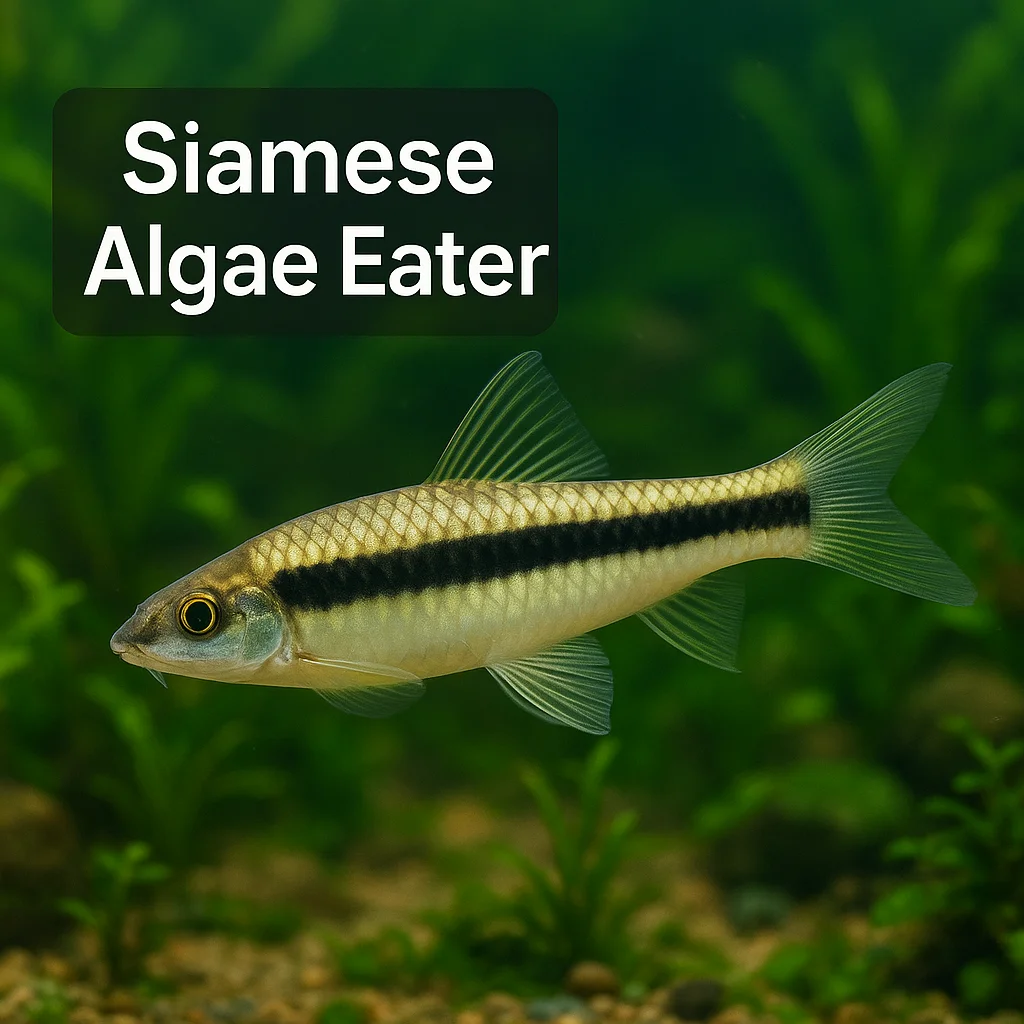
- Common names: Siamese Algae Eater, SAE
- Scientific name: Crossocheilus oblongus (varies)
- Water type: Freshwater
- Origin: Southeast Asia (Thailand, Malaysia, Indonesia)
- Typical adult size range: 5 to 6 inches
- Lifespan: Approximately 5 to 7 years
- Temperament: Peaceful
- Recommended tank size: Minimum 30 gallons
- Water temperature range: 75°F to 79°F (24°C to 26°C)
- pH guidance: 6.5 to 7.5
- Diet type: Omnivore
- Activity zone: Bottom to mid-level
- Social needs: Prefers to be in small groups of 3 or more
- Beginner suitability: Medium
🔍 Identification
The Siamese Algae Eater can be recognized by its slender, torpedo-shaped body and signature coloration. It typically has a horizontal black stripe running from its nose to the tip of its forked tail. The body may exhibit hints of gold or brown, depending on lighting and mood.
- Body shape: Long and slender, perfect for easy maneuvering
- Colors/patterns: Horizontal black stripe, gold or brown hues
- Fin shapes: Transparent fins with no distinct markings
- Male vs female: Subtle differences; females are often slightly plumper
- Look-alikes: Can be confused with the Flying Fox, which has a more pronounced stripe and additional colors on its fins
Top ID Tips:
- Look for the unbroken black stripe from nose to tail.
- Check the fins; they should be clear without spots.
- Observe the body shape; it should be slender and streamlined.
- Note behavior; a true Siamese Algae Eater will often graze on algae.
- Pay attention to the overall size; they're typically larger than similar species.
- Watch for a single pair of barbels instead of multiple pairs, which some look-alikes have.
🌍 Origin & Natural Habitat
Siamese Algae Eaters originate from Southeast Asia, particularly in waters that range from the Chao Phraya River in Thailand to streams in Malaysia and Indonesia. They thrive in densely vegetated streams and flooded areas with moderate current and plenty of hiding spots among rocks and fallen logs.
Understanding their natural habitat helps create an ideal environment in home aquariums, allowing the fish to utilize their natural behaviors and stay healthy.
🧪 Tank Setup & Water Parameters
Siamese Algae Eaters prefer tanks with plenty of swimming space and moderate flow, mimicking streams. A tank setup should provide ample room and have structures such as rocks, driftwood, or artificial caves for hiding.
They do best in a planted tank, which not only offers habitat enrichment but also helps control algae growth naturally. Filtration should be efficient to maintain water quality.
- Tank size: At least 30 gallons with a wider footprint for swimming
- Filtration: Moderate to strong, ensuring good water quality
- Temperature: Keep steady between 75°F and 79°F
- Substrate: Sand or fine gravel to allow natural foraging
- Decor: Use rocks, driftwood, and plenty of plants
- Lighting: Moderate; too much light can increase algae growth, which may be beneficial
- Hiding spots: Include caves and dense plant areas
- Water changes: Regular partial water changes to keep parameters stable
🤝 Temperament & Compatibility
Generally peaceful, Siamese Algae Eaters are well-suited for community tanks. They are social creatures, preferring the company of their own kind or other suitable species. While they aren't aggressive, they can become territorial if space is insufficient.
These fish are known for their active algae-eating habits, making them popular in tanks with moderate algae growth.
- Schooling: Best kept in small groups
- Feeding: Active foragers that contribute to algae control
- Good tankmates: Tetras, gouramis, barbs, catfish
- Risky tankmates: Avoid large or aggressive species
- Behavior: Generally peaceful but may become territorial in tight spaces
- Individual variability: Some may be more social than others
🍽️ Diet & Feeding
Siamese Algae Eaters primarily feed on algae in the wild, but they also accept a variety of foods in captivity. It's important to supplement their diet with quality plant-based flakes, pellets, and occasional live or frozen foods like brine shrimp or bloodworms.
Ensuring a balanced diet helps maintain their health and vitality.
- Staple foods: Algae wafers, spirulina-based dry foods
- Occasional treats: Blanched vegetables like zucchini or cucumber
- Feeding frequency: 1 to 2 times daily in small amounts
- Monitor algae levels: Insufficient algae may require supplementation
- Avoid overfeeding: Can lead to water quality issues
- Special needs: Ensure variety to prevent nutritional deficiencies
🧬 Growth, Color Changes & Lifespan
Juvenile Siamese Algae Eaters often display a more subdued coloration, which intensifies as they mature. Stress, insufficient diet, or poor water conditions may cause color fading or clamped fins.
They can live for 5 to 7 years given the right care, emphasizing the importance of a suitable environment and variety in their diet.
🪺 Breeding & Reproduction
Breeding Siamese Algae Eaters in home aquariums is uncommon due to specific spawning triggers that are difficult to replicate. They are egg layers, and natural conditions in the wild often involve seasonal floodings, which aren't easy to simulate.
Therefore, most available specimens are captured from the wild or bred in captivity under controlled conditions.
🩺 Common Health Issues & Prevention
Siamese Algae Eaters are generally hardy, but like all fish, they can face health challenges. Common problems include ich, fin rot, and stress-related ailments, usually arising from poor water quality, overcrowding, or inadequate diet.
Prevention is key, focusing on maintaining stable water parameters and a balanced diet.
- Regular water changes: Maintain optimum water quality
- Stable parameters: Avoid sudden temperature or pH changes
- Quarantine new arrivals: Prevent introducing diseases
- Avoid overcrowding: Provide adequate swimming space
- Monitor diet: Ensure nutritional variety without overfeeding
- Close observation: Watch for abnormal behaviors or appearance changes
🌱 Role in the Aquarium
In the aquarium, Siamese Algae Eaters play an essential role in controlling algae growth, thus contributing to the overall health and aesthetics of the tank. They are plant-safe, making them excellent candidates for planted aquariums.
Responsible sourcing is advised, as wild-caught specimens can impact natural populations. Opt for captive-bred options whenever possible to ensure sustainability.
📉 Conservation & Responsible Keeping
While not endangered, Siamese Algae Eaters are often caught from the wild, which can affect local populations. It's important never to release them into native waters, as released species can disrupt local ecosystems. If they outgrow your tank, consider rehoming them to another aquarist or aquarium club.
- Choose captive-bred: Minimize demand for wild-caught fish
- Avoid local releases: Prevent ecosystem disruptions
- Rehome responsibly: Network with local fish keepers or clubs
- Research before buying: Understand species needs and growth potential
- Support sustainable practices: Buy from ethical suppliers
📌 Summary
- Identification: Black horizontal stripe distinguishes them easily
- Origin: Native to Southeast Asia's flowing waters
- Tank setup: Require a minimum of 30 gallons with moderate flow
- Compatibility: Peaceful and ideal for community tanks
- Diet: Omnivorous with a need for varied foods
- Beginner-friendly: Medium difficulty due to size and care needs
- Key cautions: Avoid overcrowding and ensure a secure cover
- Contributions: Effective algae control adds to tank health
- Responsible practices: Prefer captive-bred over wild-caught