🐠 Ramshorn Snail
🧾 Quick Facts
The Ramshorn Snail is a popular addition to many freshwater aquariums due to its peaceful nature and ability to help keep tanks clean. Known for their spiral-shaped shells, these snails are often used in planted aquariums due to their algae-eating habits. Here's a quick overview of their characteristics:
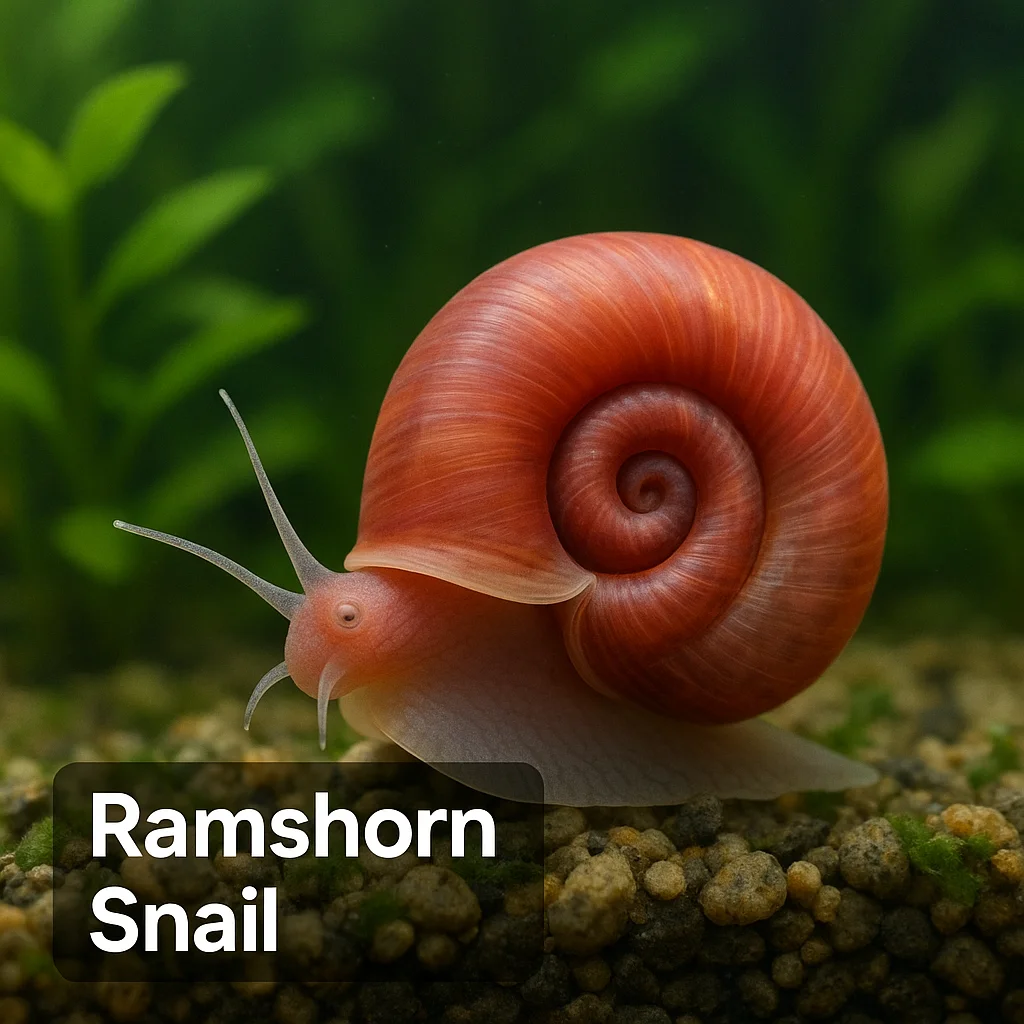
- Common names: Ramshorn Snail
- Scientific name: Varies (commonly Planorbidae family)
- Water type: Freshwater
- Origin: Widely found in Europe, Asia, and the Americas in slow-moving streams and ponds
- Typical adult size range: 1-3 cm (0.4-1.2 inches)
- Lifespan: 1-2 years
- Temperament: Peaceful
- Recommended tank size: 5 gallons minimum
- Water temperature range: 18-28°C (64-82°F)
- pH / hardness: pH 6.5-8.0, medium hardness
- Diet type: Omnivore
- Activity zone: Bottom of the tank
- Social needs: Solitary or in groups
- Beginner suitability: Easy
🔍 Identification
Ramshorn Snails are easily recognizable due to their unique spiral-shaped shells, which resemble a ram's horn. Their shells can vary in color, commonly seen in shades of red, brown, or black. The body of the snail, or the "foot," is usually a contrasting color and can display stripes or spots.
- Spiral-shaped shell with several whorls
- Shell colors: red, brown, or black
- Body ("foot") can have stripes or spots
- Males and females look similar
- May be confused with similar aquarium snails like Pond Snails
- Key difference from Pond Snails: side of shell opening
🌍 Origin & Natural Habitat
Ramshorn Snails are native to freshwater habitats across many continents including Europe, Asia, and the Americas. They are often found in slow-moving or still waters such as ponds, lakes, and streams where there is plenty of organic matter and plant life. These environments typically have a soft substrate of mud or detrital material and are often rich with algae.
Understanding their natural habitat helps aquarists replicate similar conditions, ensuring their snails thrive by providing plenty of plant material and maintaining water conditions conducive to their survival.
🧪 Tank Setup & Water Parameters
Setting up a tank for Ramshorn Snails is relatively straightforward given their adaptability. A small tank with minimal equipment is often sufficient:
- Minimum 5-gallon tank size
- Moderate water flow; snail-safe filtration
- No heating required if room temperature is managed
- Sandy or mixed substrate with live plants or algae growth
- Low to moderate lighting helps with algae growth
- Hiding spots: driftwood, rocks, and dense plants
🤝 Temperament & Compatibility
Ramshorn Snails are peaceful and generally get along with most fish and other tank inhabitants. They are non-aggressive and can cohabit with small to medium-sized fish that won't view them as food.
- Compatible with community fish and small invertebrates
- Avoid snail-eating fish like Loaches or larger Cichlids
- Observes algae control by foraging behavior
- Gentle cleaners without harmful feeding on plants
- Active both day and night, avoiding fish territory
🍽️ Diet & Feeding
Ramshorn Snails are omnivores and will consume a wide variety of foods in the aquarium. They are natural algae grazers and also feed on uneaten fish food, decaying plant material, and any biofilm that develops in the tank.
- Algae wafers and pellets as a mainstay
- Benefit from fresh vegetables like spinach or cucumbers
- Requires minimal specific feeding due to tank cleaning roles
- Feeding daily or alternate days is sufficient
- Observe diet for equal opportunity in a mixed tank
🧬 Growth, Color Changes & Lifespan
Ramshorn Snails start small and quickly grow to their full size in suitable conditions. Juvenile snails have lighter, more translucent shells, which deepen in color with age and diet.
Though generally resilient, they can show signs of stress such as sluggishness or retraction within their shell. Regularly monitoring water quality can prevent stress-related issues.
Their lifespan typically ranges from 1-2 years, with stable water parameters and nutrition greatly increasing longevity.
🪺 Breeding & Reproduction
These snails are prolific breeders under optimal conditions, laying clusters of eggs in the aquarium that hatch into fully formed snails. They do not require special conditions for breeding, although controlling the population may be necessary if they become too numerous.
Feed juveniles with algae and plant matter for healthy growth. Breeding is common even in home aquariums without intervention.
🩺 Common Health Issues & Prevention
Common problems in Ramshorn Snails include poor shell development due to nutritional deficiencies and parasites. Prevention involves maintaining clean and stable water conditions and a balanced diet.
- Quarantine new snails to prevent parasite introduction
- Provide calcium-rich diets for shell health
- Regularly clean the tank to prevent debris and nitrate accumulation
- Monitor for invasive parasitic diseases
- Stable pH and temperature guard against stress
🌱 Role in the Aquarium
The Ramshorn Snail contributes significantly to the health and aesthetics of a freshwater aquarium. Their grazing habits help control algae and they serve as a clean-up crew by consuming uneaten food and decaying plant matter. They are generally plant-safe in well-maintained tanks with enough nutrition.
Ethically, they are often captive-bred, limiting ecological impact. It's advisable to avoid breeding without consideration for overpopulation and responsibly source your snails from reputed vendors.
📉 Conservation & Responsible Keeping
Ramshorn Snails are usually captive-bred, minimizing the demand for wild-caught individuals, which can disrupt local ecosystems. Never release aquarium species into the wild, as this can introduce diseases and unwanted competition for native species.
- Avoid wild-caught specimens unless sustainably culled
- Check local laws regarding invasive species regulations
- Rehome excess snails to fellow aquarists or shops
- Control breeding in closed systems to avoid large populations
- Ensure tanks have a sustainable population and balance
📌 Summary
- Ramshorn Snail: Freshwater, spiral shell, peaceful
- Native to slow-moving waters; widespread globally
- Low-maintenance tank with moderate lighting and flow
- Compatible with many fish but avoid snail predators
- Omnivorous, aiding tank cleanliness
- Prolific breeders in captivity; manage populations
- Suits beginners; easy-care and beneficial tankmate
- Never release into the wild; captives are the best choice