🐠 Nerite Snail
🧾 Quick Facts
Nerite Snails are popular and versatile creatures in the aquarium hobby, suitable for a variety of tank environments and known for their algae-eating abilities.
- Common names: Nerite Snail, Zebra Nerite, Tiger Nerite, Olive Nerite
- Scientific name: Varies by species
- Environment: Freshwater and Brackish
- Origin: Coastal regions of East Africa, Southeast Asia, Caribbean
- Typical adult size: 1–1.5 inches (2.5–3.8 cm)
- Lifespan: 1–3 years
- Temperament: Peaceful
- Recommended tank size: Minimum 5 gallons (19 liters)
- Water temperature range: 72–78°F (22–26°C)
- pH range: 7.0–8.4
- Diet type: Herbivore
- Activity zone: Bottom
- Social needs: Solitary or small groups
- Beginner suitability: Easy
🔍 Identification
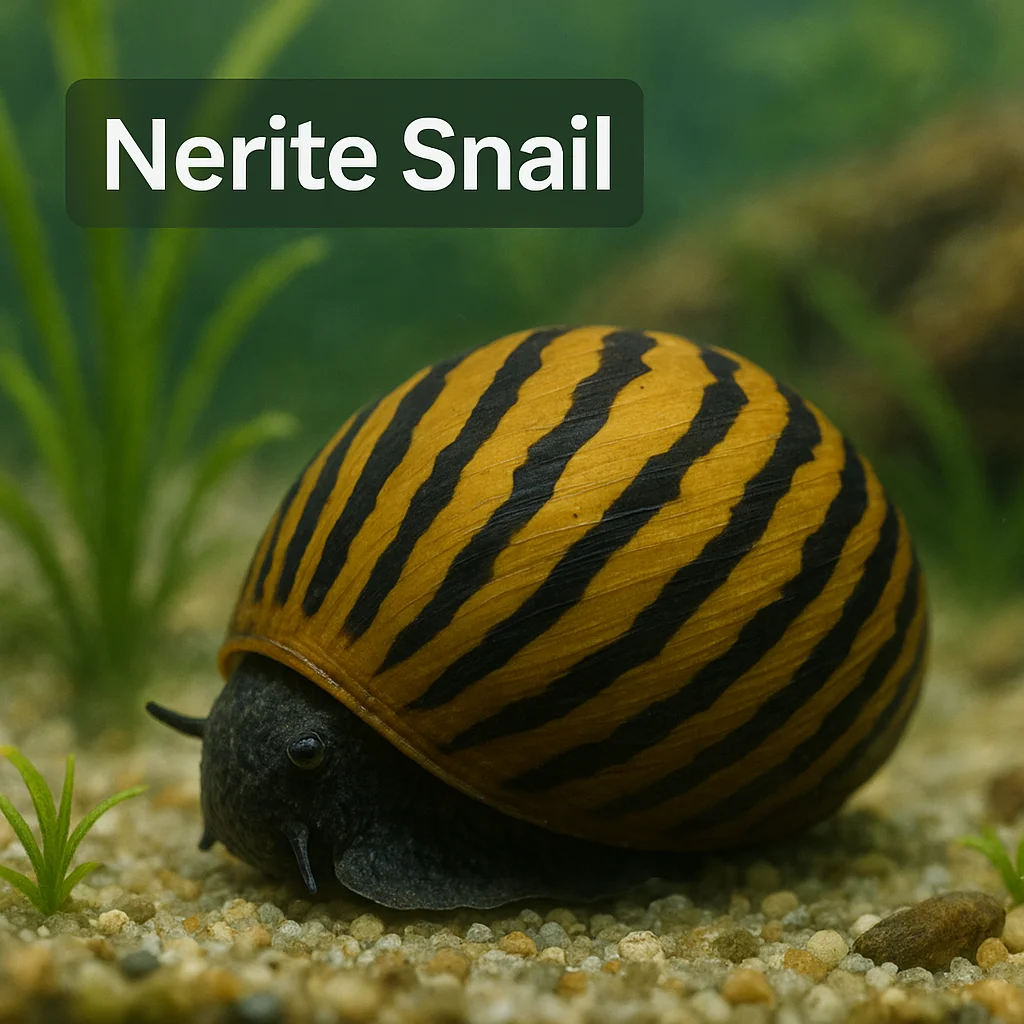
Nerite Snails are immediately recognizable by their smooth, rounded shells that exhibit a variety of intricate patterns and colors. The shell pattern and color can be distinctive and range from striped patterns to solid hues.
- Body shape: Smooth, rounded shell
- Key colors/patterns: Stripes, spots, or solid colors that change minimally with mood or age
- Fin shapes: None, as they are snails
- Male vs female: Subtle differences, typically not distinguishable by hobbyists
- Common look-alikes: Other algae-eating snails like the Mystery Snail
- Top ID Tip: Look for distinctive patterns on the shell
- Identify by color variations related to species type
- Rounded shell shape is a defining trait
- Generally found attaching to hard surfaces
- Watch their movement; they glide smoothly along surfaces
- Subtle variations in mark width and color
- Shells not as pointed as those of other snail species
🌍 Origin & Natural Habitat
Nerite Snails hail from the coastal regions of East Africa, Southeast Asia, and parts of the Caribbean. They are typically found in brackish water environments such as estuaries, mangroves, and tidal rivers. These environments offer a mix of fresh and saltwater, which is ideal for their development and reproduction.
Their preferred habitats are often adorned with rocky substrates and abundant algae, which form a significant part of their diet. The seasonal changes, such as monsoons and tidal shifts, influence their habitat, but they adapt well due to their hardy nature. Understanding these natural conditions helps aquarists replicate suitable tank environments.
🧪 Tank Setup & Water Parameters
Nerite Snails thrive in tanks that offer algae to graze on and stable water conditions. While small, they are active and their algae-eating prowess makes them a beneficial addition for managing algae growth in your aquarium.
- Minimum tank size: 5 gallons (19 liters), with sufficient surface area
- Filtration: Moderate flow, emphasizes good water quality
- Heating: Necessary if room temperature falls outside 72–78°F (22–26°C)
- Substrate: Sand or smooth gravel, mimic tidal softly sloped environments
- Decor: Rocks, driftwood for hiding and grazing
- Setup Checklist:
- Clean substrate ready for algae accumulation or added algae wafers
- Stable water temperature within the ideal range
- Moderate water flow not too harsh for their movement
- Lighting that encourages algae growth
- Ensure secure lid to prevent escape
- Placement of decorative elements for enhanced tank aesthetics
🤝 Temperament & Compatibility
Nerite Snails are peaceful tank residents and get along well with a variety of other non-aggressive tank mates. They are non-territorial and will quietly roam the tank, feeding on algae and biofilm.
- Schooling: Prefer solitary conditions but can coexist with multiple Nerites
- Feeding: Mainly active grazers on tank surfaces
- Tankmates: Suitable with small, non-aggressive fish or shrimp
- Risky companions: Larger or aggressive fish like cichlids
- Compatibility Notes:
- Safe with most peaceful community fish
- Compatible with shrimp and other non-predatory snails
- Avoid fish known for nipping or eating snails
- Typically indifferent to other tank inhabitants
- Behavior can vary; watch for stress signs when introducing new tank mates
🍽️ Diet & Feeding
In the wild, Nerite Snails consume algae and biofilm, which are readily available in their native habitats. In an aquarium setting, they can be supplemented with algae wafers and vegetable matter if algae levels aren't sufficient enough.
- Wild diet: Naturally feed on algae, biofilm
- Aquarium diet: Algae wafers, blanched vegetables like zucchini and cucumber
- Feeding frequency: Can be continuous due to constant grazing nature
- Special needs: Adequate algae presence for grazing
- Feeding Tips:
- Supplement diet with sinking wafers if algae is insufficient
- Avoid overfeeding; monitor algae growth as a natural food source
- Let vegetables partially sink before adding to the tank
- Consider rotating food options to prevent nutrient deficiencies
- Observe feeding behavior to adjust dietary needs as necessary
🧬 Growth, Color Changes & Lifespan
Nerite Snails exhibit minor changes from juvenile to adult stages, mainly growing slightly in shell size. They are known for their patterns remaining largely consistent throughout their lives, with stress sometimes visible through retraction into their shell.
- Juvenile vs adult: Subtle size increase, consistent pattern
- Stress signs: Retraction into the shell or lack of movement
- Lifespan: Generally 1–3 years, influenced by diet and water quality
🪺 Breeding & Reproduction
Breeding Nerite Snails in home aquariums is rare, primarily due to the requirement of brackish water conditions for egg hatching and juvenile development. They lay eggs underwater, but the eggs often do not hatch without proper conditions.
- Eggs: Laid underwater, appearing as small white spots
- Hatch conditions: Necessitate brackish conditions for survival
- Breeding success: Typically low in freshwater tanks
🩺 Common Health Issues & Prevention
Nerite Snails are generally hardy and pose few health challenges when kept in stable environments. The main issues stem from poor water conditions or lack of algae.
- Common problems: Shell erosion, poor health from lack of algae, sensitivity to poor water quality
- Prevention: Consistent water changes, avoid accumulating detritus
- Monitor: Shell condition and activity level to detect health issues
- Prevention Basics:
- Implement regular water changes and parameter checks
- Quarantine new fish to avoid introducing diseases
- Avoid exposing Nerite Snails to medications with copper
- Ensure sufficient algae growth or dietary supplements
- Regularly clean tank and avoid overcrowding
🌱 Role in the Aquarium
Nerite Snails play a significant role in controlling algae within the aquarium environment. Their presence is beneficial for maintaining balance without harming plants or other tank residents. Opting for captive-bred Nerite Snails from reputable sellers helps maintain ecological balance and supports responsible aquaculture practices.
📉 Conservation & Responsible Keeping
With many Nerite Snail species being wild-caught, it's crucial to choose captive-bred options whenever available to avoid contributing to ecosystem depletion. Never release Nerite Snails into local waterways as they can disrupt local ecosystems.
- Buy from reputable sources focusing on captive breeding
- Consider local laws regarding non-native species
- Never release unwanted snails into nature
- Explore rehoming options if tank conditions change
- Focus on long-term housing solutions and tank compatibility
📌 Summary
- Identification: Smooth, rounded shells with distinctive patterns
- Origin: Found in brackish coastal waters of Africa, Asia, and the Caribbean
- Tank Setup: Require stable conditions and abundant algae for best health
- Compatibility: Peaceful and compatible with non-aggressive tank mates
- Diet: Primarily algae and biofilm, supplemented with vegetable matter
- Difficulty: Easy to care for, making them suitable for beginners
- Breeding: Rare due to specific conditions needed for egg hatching
- Conservation: Opt for captive-bred specimens to avoid ecological impact