🐠 Mystery Snail
🧾 Quick Facts
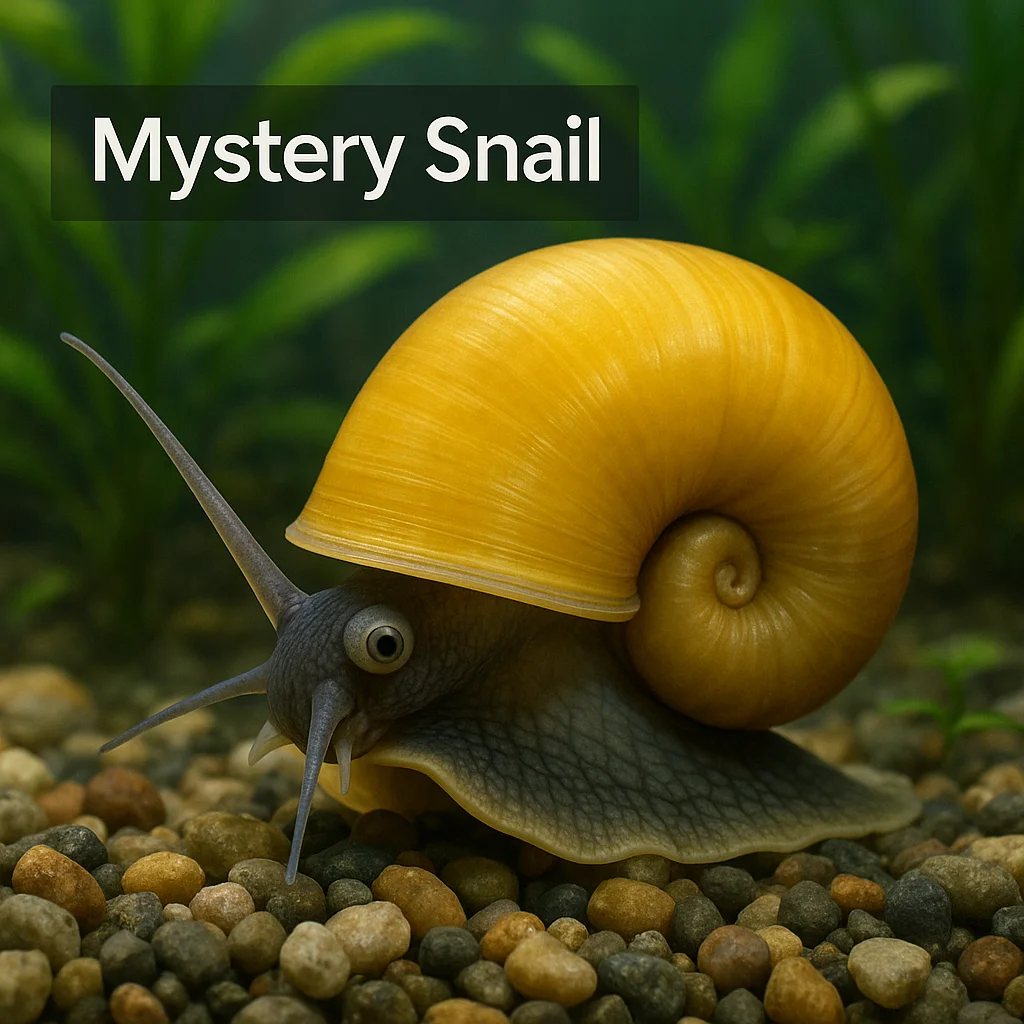
The Mystery Snail is a popular choice among aquarium enthusiasts due to its striking appearance and utility as an efficient algae eater. Known for its peaceful demeanor, it is a delight for both novice and experienced aquarists.
- Common names: Mystery Snail, Apple Snail
- Scientific name: Pomacea bridgesii, Pomacea diffusa (varies)
- Freshwater / Marine / Brackish: Freshwater
- Origin: South America, particularly the Amazon River Basin
- Typical adult size range: 1.5 to 2 inches (3.8 to 5 cm) shell diameter
- Lifespan: 1 to 3 years (varies)
- Temperament: Peaceful
- Recommended tank size: 10 gallons minimum; more is better
- Water temperature range: 68°F to 82°F (20°C to 28°C)
- pH / hardness guidance: pH 7.0 to 8.0, moderately hard
- Diet type: Herbivore
- Activity zone: Bottom
- Social needs: Solitary; can cohabit with other peaceful organisms
- Beginner suitability: Easy
🔍 Identification
The Mystery Snail is known for its distinctive large, rounded shell and vibrant colors ranging from gold, brown, to blue and even purple. It features a spiral shell that is smooth to the touch and a body with a pair of long, tactile tentacles.
- Body shape and silhouette: Large round shell with a smooth spiral
- Key colors and patterns: Shells are often golden, brown, blue, or purple
- Fin shapes and notable traits: N/A for snails
- Male vs female cues: Subtle, often varies; females slightly larger
- Common look-alikes: Apple Snail (larger size generally distinguishes)
- Distinctive rounded shell
- Various vibrant shell colors
- Long, graceful tentacles
- Operculum (trapdoor) closes opening when retracted
- Slightly larger females
- Subtle body color variations
🌍 Origin & Natural Habitat
Native to the slow-moving waters of the Amazon River Basin, Mystery Snails thrive in environments abundant with aquatic plants and decomposing vegetation. Their habitats are typically characterized by high biodiversity and seasonal variations in water levels and flow.
Understanding their habitat can aid aquarists in providing optimal conditions in captivity, highlighting the importance of rich plant life and stable water conditions to mimic natural settings.
🧪 Tank Setup & Water Parameters
Careful attention to tank setup ensures the health and happiness of Mystery Snails. A spacious tank with enough room for movement and growth is ideal. Reliable filtration systems are crucial to maintain clean water and moderate flow.
- Tank size considerations: Minimum 10 gallons, allowing for space to explore
- Filtration and flow preferences: Moderate flow; avoid excessive turbulence
- Heating needs: Maintain water temperatures within 68°F to 82°F
- Substrate and decor: Soft substrates with plentiful aquatic plants are preferred
- Lighting and hiding spots: Moderate lighting; provide nooks and crannies
- Minimum 10-gallon tank
- Moderate water flow
- Soft substrates
- Aquatic plant decorations
- Stable water parameters
🤝 Temperament & Compatibility
Mystery Snails are generally peaceful and cohabit well with other non-aggressive tank mates. They are best housed with species that require similar tank conditions.
Social interactions are mostly limited to foraging and occasional antennal duels but pose no harm.
- Compatible with other non-aggressive species
- Ineffective with aggressive species
- Forages peacefully
- Occasional harmless tentacle interaction
🍽️ Diet & Feeding
Mystery Snails are typically herbivores, feeding on biofilm and detritus. In captivity, they readily accept a wide range of greens supplemented with calcium-enriched foods.
Feeding should be controlled to prevent overfeeding, usually small portions at regular intervals.
- Diet in the wild: detritus, biofilm, plant material
- Staple foods: leafy greens, algae wafers, blanched vegetables
- Feeding frequency: Twice a day in small quantities
- Offer various greens
- Supplement with calcium
- Monitor to avoid overfeeding
- Supply blanched vegetables
🧬 Growth, Color Changes & Lifespan
Mystery Snails display consistent growth from juvenile to adult stages, maintaining vibrant colorations which may temporarily fade during stress.
Typically living for around 1 to 3 years, they thrive in well-maintained environments with consistent care.
🪺 Breeding & Reproduction
Mystery Snails are egg layers, with females known to lay clusters of eggs above the water line. Successful breeding often requires certain environmental conditions such as stable temperature and ample calcium.
Breeding in home aquariums can be challenging without proper preparation and appropriate tank conditions.
🩺 Common Health Issues & Prevention
Common health concerns for Mystery Snails include parasites and shell erosion. Prevention focuses on regular water changes, stable environments, and appropriate dietary supplements to maintain shell integrity.
- Regular water changes
- Monitor for parasites
- Stable environmental conditions
- Adequate calcium in the diet
- Proper acclimatization
🌱 Role in the Aquarium
Mystery Snails contribute significantly to aquarium health by controlling algae growth and diversifying the aesthetic. Their presence enhances the ecological balance without aggressive interactions.
Always source responsibly to ensure ecosystem sustainability and avoid ecosystem disruptions through irresponsible release.
📉 Conservation & Responsible Keeping
Mystery Snails should always be sourced from reputable breeders to minimize ecosystem impact. In the event that they outgrow their home, rehoming is advised over release into wild habitats.
- Avoid wild-caught snails
- Rehome if outgrowing the tank
- Do not release into wild
- Encourage captive-bred purchasing
📌 Summary
- Distinguished by vibrant shell colors
- Native to South America
- Mild water flow preferable
- Compatible with peaceful tank mates
- Simple herbivore diet
- Easy for beginners to care for
- Avoid wild captures; buy captive-bred