🐠 Crystal Red Shrimp (Caridina)
🧾 Quick Facts
The Crystal Red Shrimp, a popular choice for aquarium hobbyists, is a selectively bred variant of the Bee Shrimp. Known for its striking red and white coloration, this shrimp is a freshwater species highly prized for its aesthetic appeal and relatively straightforward care requirements. Here are some key details:
- Common names: Crystal Red Shrimp, CRS
- Scientific name: Caridina cantonensis
- Freshwater / Marine / Brackish: Freshwater
- Origin: Selectively bred in Japan from species native to China and Taiwan
- Typical adult size range: 1.2 to 1.6 inches (3-4 cm)
- Lifespan: 1.5 to 2 years
- Temperament: Peaceful
- Recommended tank size: 5 gallons minimum
- Water temperature range: 68°F to 78°F (20°C to 25.5°C)
- pH / hardness guidance: pH 6.2 to 7.2; soft to moderately hard water
- Diet type: Omnivore
- Activity zone: Bottom
- Social needs: Social; best in groups
- Beginner suitability: Medium
🔍 Identification
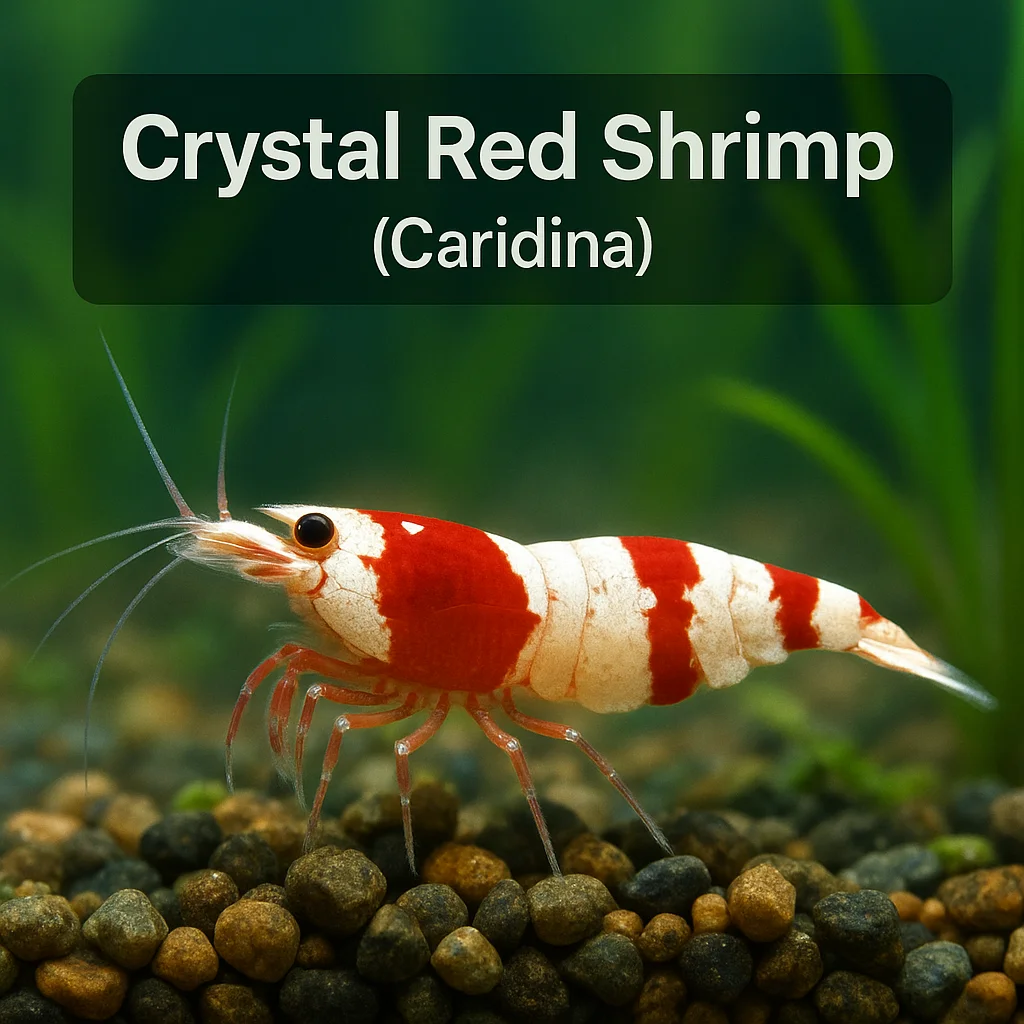
Identifying Crystal Red Shrimp is relatively easy due to their distinct color pattern. They have a slender, elongated body covered with alternating bands of white and red, a result of selective breeding. The balance between these colors may vary among individuals, especially across different grades.
The shrimp have two pairs of antennae and numerous legs, all of which are important for feeding and motion. Their eyes are prominent, and males are generally slimmer compared to females, who have a more pronounced underbelly when ready to breed. Although subtle, the distinctions between males and females are noticeable to keen observers. Common look-alikes include other Caridina species like the Crystal Black Shrimp, differentiated by their black instead of red pigmentation.
- Top ID Tips:
- Look for alternating white and red bands on the body.
- Check for a slender, elongated shape.
- Noticeably bright, clean white bands are more valuable in the hobby.
- Males are slimmer compared to females.
- Observe the prominence of the eyes and antennae length.
- Be aware of similar species like the Crystal Black Shrimp.
🌍 Origin & Natural Habitat
The Crystal Red Shrimp traces its origins back to selective breeding efforts conducted in Japan from the wild Bee Shrimp, Caridina cantonensis, commonly found in stream ecosystems in China and Taiwan. These streams are characterized by clean, mineral-rich waters with a gentle flow and an abundance of rocks and leaf litter. The natural habitat provides ample cover in the form of aquatic plants and submerged wood, which are critical for their survival.
Understanding their natural habitat helps aquarists replicate similar conditions within their tanks, providing a faster acclimation period and healthier shrimp. Setting up an aquarium that mimics these attributes can significantly improve the shrimp's chances of thriving and even breeding.
🧪 Tank Setup & Water Parameters
To successfully keep Crystal Red Shrimp, aquarists should prepare a tank that mirrors their natural environment. A minimum of 5 gallons is recommended to provide enough space and ensure water quality stability. A gentle filtration system helps maintain the soft water conditions these shrimp prefer.
The substrate should cater to plant growth and mimic a streambed with fine gravel or sand, while decorations like rocks, caves, and driftwood are ideal for creating hiding spots. Soft lighting is optimal, and aquatic plants not only complement their beauty but also assist in maintaining water quality.
- Setup Checklist:
- Use a tank of at least 5 gallons.
- Ensure a gentle filtration system is in place.
- Maintain a water temperature between 68°F-78°F.
- Choose a substrate suitable for plants and burrowing.
- Use driftwood and rocks for decor and hiding spots.
- Maintain pH between 6.2 and 7.2.
🤝 Temperament & Compatibility
Crystal Red Shrimp are peaceful and social creatures, thriving best in groups where they can establish a communal environment. They exhibit interesting social behaviors, including foraging in groups and engaging in frequent, peaceful interaction.
Good tankmates include other small, peaceful species like certain small rasboras, danios, and tetras. It's best to avoid large, aggressive fish that may view them as food. During feeding, they may display increased activity, scurrying about to scavenge for food in different areas of the tank.
- Compatibility Notes:
- Keep with small, non-aggressive fish.
- Avoid large or predatory fish species.
- Shrimp thrive in groups of their own kind.
- Ideal partners include small rasboras and tetras.
- May cohabit with other Caridina species carefully.
🍽️ Diet & Feeding
In the wild, Crystal Red Shrimp are scavengers, feeding on algae, biofilm, and detritus. In captivity, they require a varied diet that includes quality shrimp pellets, blanched vegetables like spinach and zucchini, and occasional protein treats like bloodworms.
Feeding should be controlled to prevent overfeeding, which can pollute the water. Small portions twice a day are sufficient, ensuring any uneaten food is removed to maintain water quality.
- Feeding Tips:
- Provide a diet rich in varied nutrients.
- Offer high-quality pellets and blanched vegetables.
- Include occasional protein-rich treats.
- Feed in small, manageable portions.
- Remove uneaten food to prevent water quality issues.
🧬 Growth, Color Changes & Lifespan
Crystal Red Shrimp show modest growth, reaching their full size within a few months. Juveniles appear less vibrant than adults and gradually develop their characteristic red and white coloration.
Color intensity can fluctuate based on mood and environmental conditions. Stress, such as poor water quality or rapid environmental changes, can lead to dulling colors but correcting these issues usually restores their vibrancy. Maintaining stable conditions supports their typical lifespan of 1.5 to 2 years.
🪺 Breeding & Reproduction
Crystal Red Shrimp are egg layers, with females ready to breed when they display a prominent underbelly. Spawning might be triggered by stable temperatures and optimal water conditions. Females carry eggs under their abdomen, fanning them regularly for about 20 to 30 days until they hatch into tiny replicas of adults.
Breeding in home aquariums can be challenging due to the specific water requirements needed for egg development but is entirely possible with experience and patience.
🩺 Common Health Issues & Prevention
Crystal Red Shrimp, like many aquatics, can be susceptible to issues like fungal infections, bacterial diseases, and parasites. Ensuring shrimp are introduced to well-established, appropriate environments helps mitigate many common health challenges. Maintaining optimal water quality and stable environmental conditions is vital for their well-being.
- Prevention Basics:
- Quarantine new shrimp before adding to the tank.
- Consistently monitor water parameters.
- Avoid overfeeding and remove uneaten food.
- Use high-quality water filtration.
- Regularly check for signs of stress or infection.
🌱 Role in the Aquarium
Crystal Red Shrimp serve as excellent algae controllers, consuming detritus and biofilm that can cloud an aquarium’s attractiveness. Their beauty makes them a sought-after centerpiece in nano tanks. They are plant safe, and choosing captive-bred specimens from reputable breeders helps protect wild populations.
📉 Conservation & Responsible Keeping
While Crystal Red Shrimp are not found in the wild, selecting captive-bred individuals is important for ecological balance. Releasing any aquarium species into local waters is harmful and must be avoided. If keeping these shrimp becomes unmanageable, consider rehoming through aquarist communities or local aquariums.
- Responsible Keeping Tips:
- Always opt for captive-bred shrimp.
- Rehome through aquarist networks if needed.
- Never release into non-native waters.
- Support sustainable breeding practices.
- Encourage careful population management.
📌 Summary
- Crystal Red Shrimp are identified by their stunning red and white patterns.
- Originating from selective breeding, they are now widespread in aquariums.
- Tank setups should include gentle flow and soft substrates with ample hiding places.
- Compatible with small, peaceful fish; avoid large or aggressive species.
- Maintain a varied, balanced diet of pellets and vegetables.
- Shrimp are relatively easy to care for but require stable water conditions.
- Breeding can be achieved but with attention to water quality.
- Keep stress low for vibrant color and avoid drastic environment changes.
- Select captive-bred over wild-caught to promote sustainability.