🐠 Cherry Shrimp (Neocaridina)
🧾 Quick Facts
Cherry Shrimp, belonging to the genus Neocaridina, is one of the most popular choices for freshwater aquarium enthusiasts due to their vibrant colors and ease of care. These shrimp are ideal for beginners and experienced aquarists alike, flourishing in a wide range of environments. Here's a quick look at some important facts:
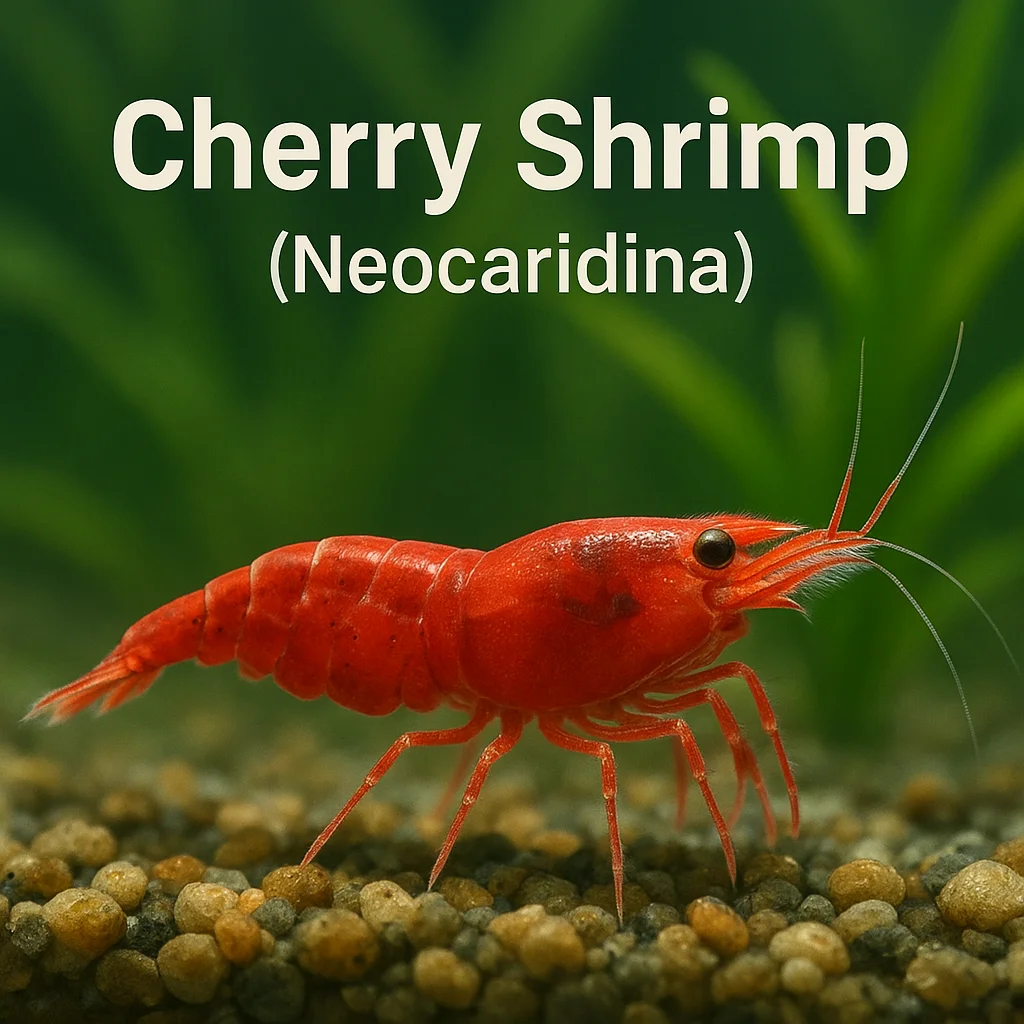
- Common names: Cherry Shrimp, Red Cherry Shrimp
- Scientific name: Neocaridina davidi
- Water type: Freshwater
- Origin: Primarily found in Taiwan and China
- Typical adult size range: 2.5 to 4 cm (1 to 1.6 inches)
- Lifespan: Typically 1 to 2 years, varies by care and environment
- Temperament: Peaceful
- Recommended tank size: Minimum 5 gallons
- Water temperature range: 22-28°C (72-82°F)
- pH / hardness: pH 6.5-8.0; Hardness 4-8 dKH
- Diet type: Omnivore
- Activity zone: Bottom to mid-level
- Social needs: Generally kept in groups to observe natural behavior
- Beginner suitability: Easy
🔍 Identification
Identifying Cherry Shrimp involves looking at their unique coloration and physical traits. Cherry Shrimp have a small, slender body and are renowned for their striking red coloration, although variations exist depending on breeding and strain quality. Older shrimp or more dominant ones tend to display deeper red hues.
Their fins are small and closely aligned with their body's size, often transparent or faintly colored. Males are usually slimmer and less intensely colored compared to the more robust, vibrantly-colored females. Although Cherry Shrimp are occasionally confused with other Neocaridina species, their distinct coloration often sets them apart.
- Top ID Tips:
- Look for vibrant red coloration across the body.
- Males are generally lighter and smaller than females.
- Generally small and slender build.
- Females may have a saddle-shaped marking under the back when ready to breed.
- Observe for variations in hue linked to breeding quality.
- Note translucent legs that may appear faintly red.
- Remember that coloration can change based on mood.
- Check for well-segmented body parts typical of shrimp.
🌍 Origin & Natural Habitat
The Cherry Shrimp hails mainly from waterways in Taiwan and China. In these regions, they inhabit clear freshwater streams and ponds characterized by slow-moving water. The substrate is typically a mix of sand and gravel, often with an abundance of leaf litter and aquatic plants that offer ample hiding spots.
These aquatic environments have moderate climates with distinct dry and wet seasons, indicating that Cherry Shrimp are used to thriving amidst natural habitat changes. Understanding these natural conditions assists aquarists in replicating similar settings in an aquarium, ensuring the shrimp's health and vibrancy.
🧪 Tank Setup & Water Parameters
Setting up a tank for Cherry Shrimp is relatively straightforward, considering their adaptability. However, maintaining stable water conditions is paramount. A modest 5-gallon tank can house a small group, provided there is ample horizontal space to wander. A sponge filter is recommended for gentle filtration that ensures water quality without causing undue stress.
Heating may be necessary to maintain temperatures within the ideal range, especially in colder climates. A substrate of sand or fine gravel coupled with live plants like Java moss and Anubias can create a comfortable environment, sprinkled with wood or rocks for enrichment.
Lighting can be moderate; enough to support plant growth without stressing the shrimp. Providing numerous hiding spaces will also allow individual shrimp to retreat when they feel threatened.
- Setup Checklist:
- 5-gallon tank minimum for starter colony
- Sponge filter for gentle filtration
- Water heater to maintain consistent temperature
- Sandy or fine gravel substrate
- Live aquatic plants for natural cover
- Wood or decorative rocks as enrichment
- Avoid bright, intense lighting
- Frequent water changes for optimal health
- Consider using leaves like Indian Almond for tannin benefits
🤝 Temperament & Compatibility
Cherry Shrimp exhibit peaceful temperaments, often spending their time foraging within the tank. They thrive in groups, where their fascinating social dynamics can be appreciated. Males may spar lightly over resources, but serious aggression is rare.
During feeding and breeding, they remain active without disrupting other tank inhabitants. Recommended tankmates include small, non-aggressive fish like tetras and guppies. While they generally cohabit peacefully with bottom-dwellers, challenges arise with larger fish that may see shrimp as prey.
- Compatibility Notes:
- Keep in groups for natural social behavior
- Avoid housing with large, predatory fish
- Safe with tetras, danios, and rasboras
- Consider snail species for cleanup crew
- Exhibit natural behavior with plant-based decor
- May coexist with other peaceful shrimp varieties
- Watch for interspecies aggression in close quarters
- Individual behavior may vary within species
🍽️ Diet & Feeding
In the wild, Cherry Shrimp are omnivorous scavengers, grazing on biofilm, algae, and vegetable matter. Recreating this diet in the aquarium involves providing a balanced diet of high-quality shrimp pellets, occasional blanched vegetables, and algae wafers.
Feeding should be done sparingly, ideally a few times a week, ensuring they consume offered food within a few hours. Adjust feeding based on the presence of natural algae or biofilm in the tank.
- Feeding Tips:
- Supplement with pellet foods designed for shrimp
- Provide blanched vegetables like zucchini and spinach
- Offer algae wafers as part of their diet
- Monitor water quality to avoid fouling
- Encourage natural foraging through biofilm
- Feed sparingly to prevent overfeeding
- Observe shrimp behavior to adjust food variety
🧬 Growth, Color Changes & Lifespan
Throughout their life cycle, Cherry Shrimp undergo noticeable color and size changes. Juveniles often appear less pigmented and grow more vibrant with age and optimal care. Breeding can influence color intensity dramatically.
Mood and environmental conditions can affect coloration; stressed shrimp may appear paler, which normalizes once conditions improve. The typical lifespan ranges from one to two years, largely dictated by water quality and diet.
🪺 Breeding & Reproduction
Cherry Shrimp are prolific breeders under the right conditions, laying eggs rather than live-bearing. Female shrimp carry fertilized eggs under their abdomen, visible as a green or yellow patch termed a 'saddle'. Proper breeding exhibits require stable conditions, with mating frequently initiated without any special triggers.
The female tends the eggs until hatching, whereupon juvenile shrimp are independent. Fry require no special diet initially and will feed on biofilm and algae within the tank.
🩺 Common Health Issues & Prevention
Common health concerns in Cherry Shrimp include issues such as bacterial infections, parasites, and water quality-related illnesses like molting issues. Maintaining stable, clean water conditions is crucial for prevention.
Prevention Basics involve quarantining new arrivals, avoiding rapid parameter swings, and keeping the tank free of decomposing organic matter.
- Quarantine new shrimp before tank introduction.
- Maintain stable temperature and pH levels.
- Ensure efficient filtration to prevent waste buildup.
- Regular water changes prevent nitrate spikes.
- Avoid introducing predatory species inadvertently.
- Observe daily for signs of stress or illness.
- Feed a balanced diet to enhance immunity.
🌱 Role in the Aquarium
In an aquarium, Cherry Shrimp contribute significantly to algae control and ecological balance. They are adept at consuming detritus and keeping surfaces clean, vital for preventing nuisance algae growth.
In freshwater tanks, they are safe with plants and add dynamic interest with their bright colors and active behavior. Ethically, it is vital to purchase shrimp from reputable breeders that practice humane care and avoid capturing wild specimens.
📉 Conservation & Responsible Keeping
As with many ornamental species, responsible keeping practices with Cherry Shrimp involve choosing captive-bred individuals, which reduces pressure on wild populations. Never release aquarium shrimp into natural waterways to prevent ecological disruption.
- Responsible Keeping Tips:
- Opt for captive-bred shrimp over wild-caught specimens.
- Consider rehoming if the tank becomes overcrowded.
- Support sustainable breeding programs.
- Never release shrimp into local ecosystems.
- Regularly assess tank conditions to avoid population booms.
- Educate others on ethical shrimp keeping practices.
📌 Summary
- Identify Cherry Shrimp by their vibrant red color, small size, and peaceful nature.
- Native to Taiwan and China, thriving in slow-moving freshwater habitats.
- Easy to care for in a 5-gallon tank with a basic setup, gentle filtration, and stable parameters.
- Compatible with small, non-aggressive fish and invertebrates.
- Omnivorous diet, functioning as natural algae controllers.
- Due to ease of care, highly suited to beginner aquarists.
- Prolific breeders in stable aquarium environments.
- Practice responsible keeping by choosing captive-bred individuals.
- Never release into the wild to protect natural ecosystems.
- Contribute to community balance and provide a lively, colorful addition to tanks.