🐠 Bristlenose Pleco
🧾 Quick Facts
The Bristlenose Pleco is a popular choice for freshwater aquariums, known for its algae-eating capabilities and distinctive bristles on its face. Here are some quick facts:
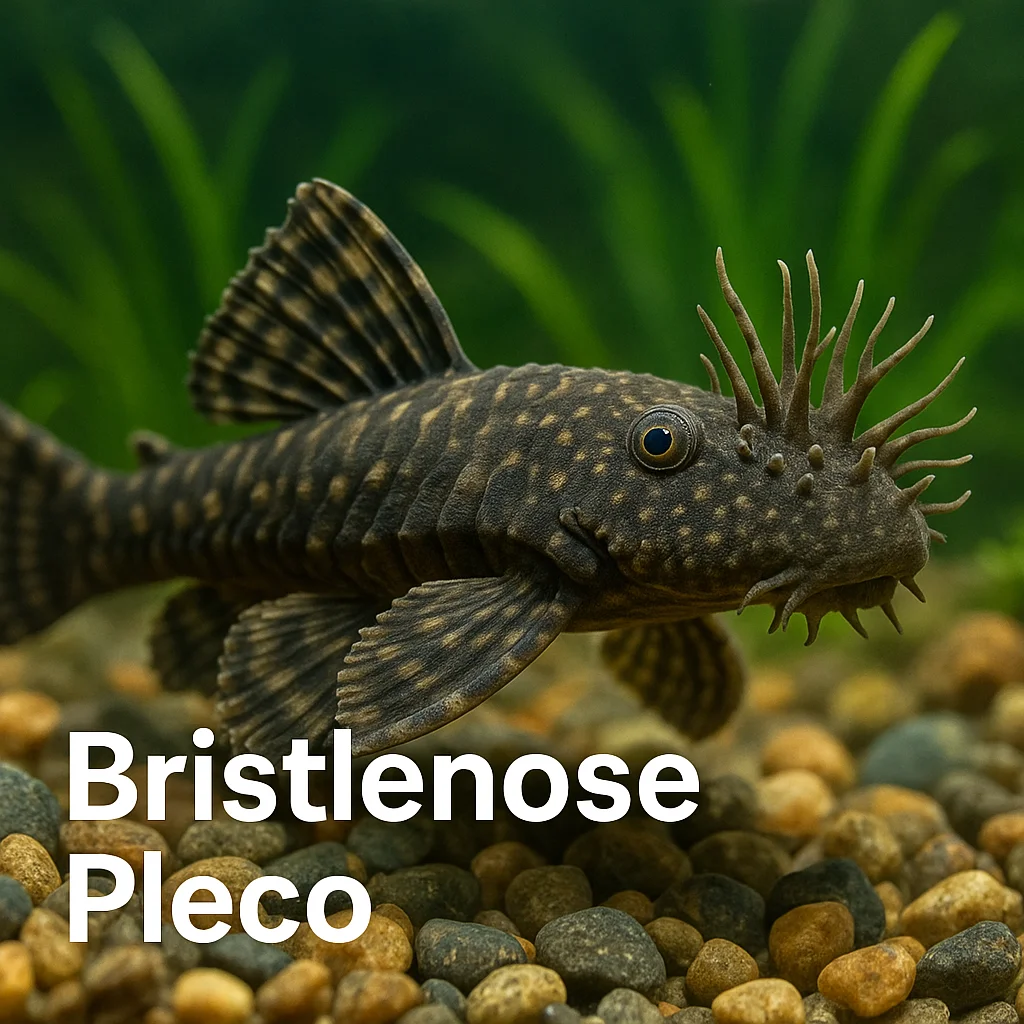
- Common names: Bristlenose Pleco, Bushynose Pleco
- Scientific name: Ancistrus sp. (varies by species)
- Freshwater
- Origin: South America, primarily Amazon Basin
- Typical adult size range: 3 to 6 inches
- Lifespan: 5 to 10 years
- Temperament: Peaceful
- Recommended tank size: Minimum 20 gallons
- Water temperature range: 60°F to 80°F
- pH: 6.5 to 7.5, moderate hardness
- Diet type: Herbivore with some omnivorous tendencies
- Activity zone: Bottom
- Social needs: Generally solitary but can be kept with similar-sized peaceful tankmates
- Beginner suitability: Easy
🔍 Identification
The Bristlenose Pleco is easily identified by its distinctive face bristles, which are more pronounced in males. Its flattened body shape and suckermouth make it well-adapted to cling to surfaces. Typically, its coloration ranges from brown to dark olive with lighter spots or mottling. As it matures, these patterns may faint or change slightly with environmental conditions or stress.
Fin shapes are standard for plecos, with a large dorsal fin that can be erected when the fish is startled or excited. The caudal fin is rounded.
Male vs female cues: Females usually have fewer bristles than males. In terms of behavior, males may guard territories more fiercely.
This pleco can be mistaken for other Ancistrus species, but detailed examination of bristle arrangements and coloration can help distinguish them.
- Body shape: Flattened, elongated
- Color: Brown to dark olive with lighter spots
- Fin shapes: Large dorsal, rounded caudal
- Male bristles are more developed than female
- Mottling changes with stress
- Commonly confused with other plecos
🌍 Origin & Natural Habitat
Bristlenose Plecos originate from the rivers and streams of the Amazon Basin in South America. They inhabit slow to moderately flowing waters with plenty of driftwood, rocks, and leaf litter. Vegetation is sparse in their natural settings, and they thrive in areas with well-oxygenated water and stable conditions. Seasonal changes are less pronounced in these regions, but it’s essential to maintain stable water conditions in aquariums to mimic their natural habitat, contributing to their health and longevity.
🧪 Tank Setup & Water Parameters
A well-set-up tank for Bristlenose Plecos should prioritize space for hiding and grazing. They prefer a tank with ample horizontal swimming space, ample filtration, and a moderate current. The substrate can be sandy or fine-graveled to mimic their natural habitat, with driftwood providing necessary fibers for their diet.
Lighting should not be overly bright, and a combination of plants and caves can provide hiding spots. Regular maintenance and stable water parameters are critical.
- Minimum tank size: 20 gallons
- Provide hiding spots: Caves, plants, driftwood
- Use sand or fine gravel substrate
- Moderate water flow with good filtration
- Maintain water temperature: 60°F to 80°F
- Keep pH levels between 6.5 and 7.5
- Provide moderate, not excessive, lighting
🤝 Temperament & Compatibility
Bristlenose Plecos are peaceful and do well in community tanks with similar-sized species. They are solitary but tolerate other bottom-dwellers. Their territorial nature becomes apparent during breeding, especially among males.
Feeding behavior is docile, generally not competing aggressively for food. They are compatible with peaceful tetras, guppies, and Corydoras, but might clash with other plecos or aggressive cichlids.
- Peaceful with similar-sized fish
- Tolerates other bottom-dwellers
- Territorial during breeding
- Compatible with tetras, guppies, Corydoras
- Avoid housing with aggressive cichlids
- Potential clashes with other plecos
🍽️ Diet & Feeding
In the wild, Bristlenose Plecos graze on algae and plant matter, occasionally consuming small insects. In aquariums, they thrive on a diet consisting mainly of algae wafers, supplemented with fresh vegetables like zucchini, cucumber, and peas. They appreciate occasional protein enrichments, such as brine shrimp or bloodworms.
Feed them once or twice a day, ensuring that food is available on the tank floor where they naturally forage. Avoid overfeeding.
- Base diet: Algae wafers
- Supplement with fresh vegetables
- Occasional live or frozen protein treats
- Feed once or twice daily; avoid overfeeding
- Ensure food reaches the tank bottom
- Monitor for dietary fulfillment
🧬 Growth, Color Changes & Lifespan
Juveniles boast more vibrant patterns, which can become less pronounced as they mature. Mood and stress can influence color intensity; stressed individuals may appear paler and have clamped fins. They usually live between 5 to 10 years, with longevity influenced by diet, tank size, and water quality. Ideal conditions promote full growth and help maintain color vibrancy.
🪺 Breeding & Reproduction
Bristlenose Plecos are egg-layers, often breeding successfully in home tanks. Spawning usually occurs in a secluded cave, with the male guarding the eggs until they hatch. Warm temperatures and good water quality can trigger breeding. Fry feed initially on yolk sacs, later transitioning to the same diet as adults with smaller portions.
Breeding can be encouraged with optimal tank conditions, although not necessary for all hobbyists.
🩺 Common Health Issues & Prevention
Bristlenose Plecos are generally hardy, but common issues include ich, fin rot, and parasitic infections mostly due to poor water quality or stress. Prevention is key: maintain stable water conditions, avoid overcrowding, and quarantine new arrivals.
- Maintain stable, clean water conditions
- Quarantine new fish before introduction
- Avoid overfeeding; monitor behavior
- Ensure excellent filtration and aeration
- Regularly clean tank and change water
- Keep an eye on stress indicators
🌱 Role in the Aquarium
The Bristlenose Pleco contributes significantly to aquarium health by controlling algae growth, reducing the need for human intervention. Its peaceful demeanor adds harmony to community tanks. Ethically, it’s vital to source them from reputable breeders to avoid contributing to ecosystem disturbances through wild capture.
When keeping these fish, it's important to avoid them in tanks with delicate plants, as they might uproot them while foraging.
📉 Conservation & Responsible Keeping
Bristlenose Plecos are generally captive-bred, reducing impacts on wild populations. Avoid releasing them into local waters, as they may disrupt ecosystems. If they outgrow the tank, consider rehoming through local aquarium groups or stores.
- Choose captive-bred specimens
- Never release into the wild
- Research local rehoming options
- Avoid supporting wild-capture practices
- Understand breeding vs non-breeding practices
📌 Summary
- Identifiable by its distinctive face bristles
- Originates from South America's Amazon Basin
- Requires tanks with ample hiding spots
- Peaceful, thrives with similar-sized tankmates
- Prefers a diet rich in algae and vegetables
- Easy for beginners with proper setup
- Provides natural algae control in aquariums
- Choose captive-bred; avoid wild-capture
- Never release into local waterways