🐠 Bamboo Shrimp
🧾 Quick Facts
Bamboo Shrimp, also known by various other names, are popular among aquarium enthusiasts for their unique appearance and fascinating feeding behavior. These freshwater invertebrates contribute to the ecological balance of aquariums and are suitable for both beginner and intermediate hobbyists.
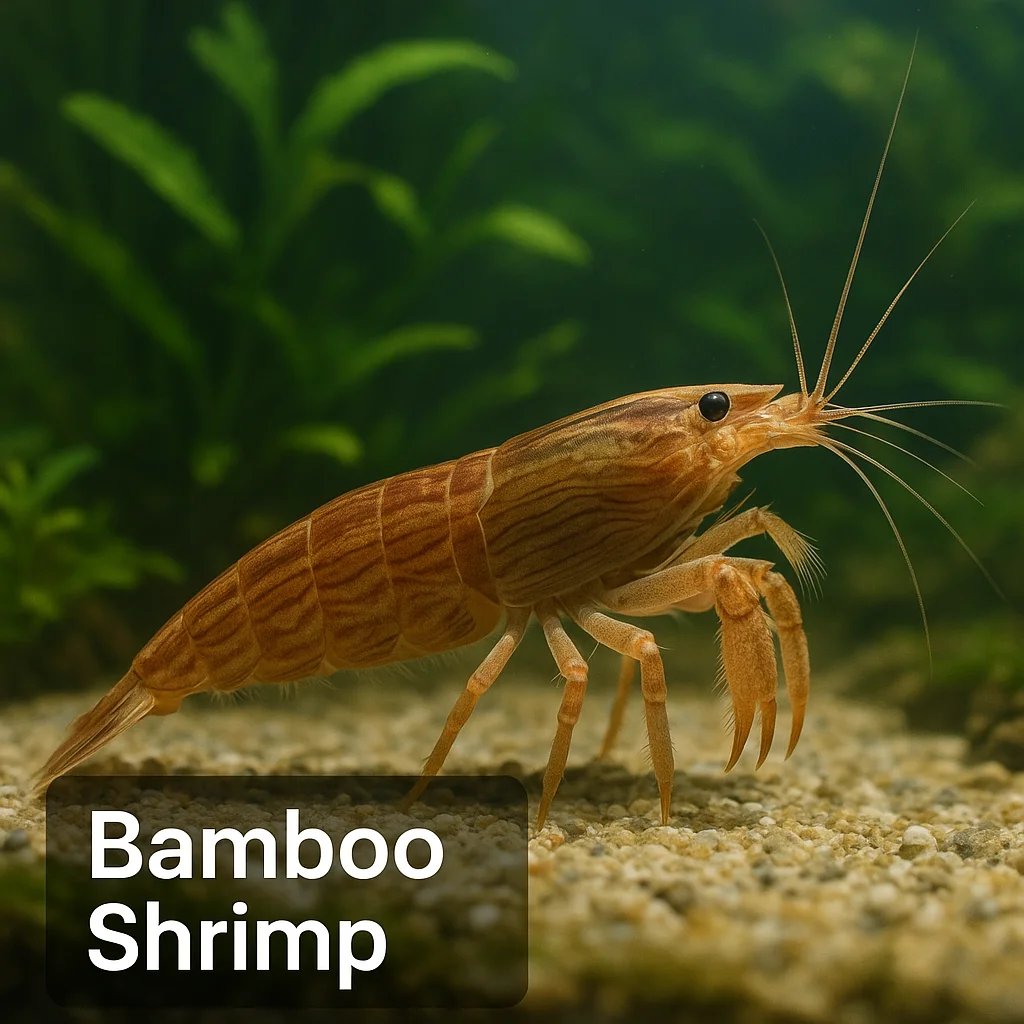
- Common Names: Bamboo Shrimp, Wood Shrimp, Singapore Flower Shrimp
- Scientific Name: Atyopsis moluccensis
- Freshwater / Marine / Brackish: Freshwater
- Origin: Southeast Asia, primarily found in streams and rivers of Indonesia and Thailand
- Typical Adult Size Range: 2 to 3 inches (5 to 7.5 cm)
- Lifespan: Up to 2 years; may vary with conditions
- Temperament: Peaceful
- Recommended Tank Size: 20 gallons minimum; larger preferred for stability
- Water Temperature Range: 72°F to 82°F (22°C to 28°C)
- pH / Hardness: pH 6.5 to 7.5; moderately soft to moderately hard water
- Diet Type: Omnivore, filter feeder
- Activity Zone: Mid to bottom
- Social Needs: Social, can be kept in groups
- Beginner Suitability: Easy to intermediate
🔍 Identification
Bamboo Shrimp are notable for their slender, elongated bodies and specialized fan-like appendages used for filter feeding. They are typically reddish-brown with subtle banding and may display color changes based on their environment or stress levels. Identifying males and females can be challenging, as the differences are subtle and often not apparent visually.
- Body is elongated with a smooth surface.
- Primarily reddish-brown with translucent bands along the body.
- Fins are small and not prominently displayed.
- Possesses fan-like appendages for feeding, distinct in appearance.
- Subtle differences exist between males and females.
- Often confused with other filter-feeding shrimp; distinct fan appendages help differentiate.
- Color can vary and may darken under stress or poor water quality.
- Whole fish visible from snout to tail tip in proper identification images.
- Calm demeanor with slow, methodical movement patterns.
Top ID Tips:
- Look for fan-like appendages, unique to their feeding style.
- Check the body for smooth, elongated shape.
- Note reddish-brown coloration with banding.
- Observe behavior; they are peaceful and non-aggressive.
- Ensure whole fish is visible for accurate identification.
- Recognize stress signs in color changes and behavior.
🌍 Origin & Natural Habitat
Bamboo Shrimp originate from the clear streams and rivers of Southeast Asia, specifically Indonesia and Thailand. They thrive in environments with moderate to strong currents, which facilitate their filter-feeding lifestyle. These shrimp prefer rocky substrates with ample hiding spots formed by natural debris and plant cover.
Their natural habitat experiences seasonal changes, with variations in water flow during rainy seasons. Understanding these conditions helps aquarium hobbyists replicate optimal environments, promoting the well-being and longevity of Bamboo Shrimp in captivity.
🧪 Tank Setup & Water Parameters
Creating a suitable environment for Bamboo Shrimp involves providing a tank with ample hiding spaces and steady water flow. A minimum tank size of 20 gallons is recommended, with larger setups being preferable for maintaining water stability. Ensure the tank design includes rocky features, driftwood, and live plants to simulate natural conditions.
ll>Setup Checklist:🤝 Temperament & Compatibility
Bamboo Shrimp are known for their peaceful nature and ability to coexist with a variety of other tank inhabitants. They do well in community tanks, provided their tankmates do not exhibit aggressive behavior. Their feeding behavior during times of food availability is gentle, as they extend their fans to capture nutrients flowing in the water.
l>Compatibility Notes:🍽️ Diet & Feeding
In the wild, Bamboo Shrimp are filter feeders, consuming microorganisms and particles floating in the water. In aquariums, they can be supplemented with powdered foods and liquid feeds designed for filter feeders. Offering a mix of plankton, algae, and crushed flakes ensures they receive a balanced diet.
l>Feeding Tips:🧬 Growth, Color Changes & Lifespan
Bamboo Shrimp begin as small, less colorful juveniles, gradually developing their characteristic coloration as they mature. They do not exhibit significant seasonal color changes, but stress can lead to a duller appearance and lethargic behavior. Their lifespan generally ranges up to 2 years, influenced by diet, water quality, and environmental stability.
Stress signs include hiding more frequently, faded colors, or slow movement. Providing a stable environment with consistent care helps ensure their continued health and longevity.
🪺 Breeding & Reproduction
Breeding Bamboo Shrimp in home aquariums is rare and poses challenges due to their specific reproductive needs. They are egg layers, with spawning usually triggered by changing environmental conditions. Eggs hatch into larvae that require brackish conditions to mature into shrimp. The complexity of these requirements means hobbyists seldom achieve successful breeding outcomes in typical setups.
🩺 Common Health Issues & Prevention
While Bamboo Shrimp are generally hardy, they can be susceptible to common aquarium health issues such as stress-related problems or parasites. Prevention focuses on maintaining stable water parameters, regular filtration, and avoiding overfeeding. Quarantining new tank additions and ensuring good hygiene helps reduce the risk of diseases.
- Maintain consistent water quality and temperature.
- Perform regular water changes to avoid toxin buildup.
- Quarantine new tank additions before introducing them.
- Avoid placing with aggressive or incompatible species.
- Ensure a balanced diet to prevent nutritional deficiencies.
- Monitor shrimp for signs of stress or disease regularly.
🌱 Role in the Aquarium
Bamboo Shrimp play a crucial role in maintaining ecological balance within aquariums. Their filter-feeding behavior helps keep water clear by removing particulates. Additionally, they are fascinating to observe and serve as a community-friendly inhabitant. Ethically, choosing captive-bred individuals supports conservation efforts and discourages wild-caught specimens from ecologically vital habitats.
📉 Conservation & Responsible Keeping
While Bamboo Shrimp are not currently endangered, responsible keeping is important. Opting for captive-bred shrimp over wild-caught varieties supports sustainable practices and reduces pressure on natural populations. If they outgrow your tank or require rehoming, consider networks within the aquarium community instead of releasing them into local water bodies.
- Support captive breeding whenever possible.
- Never release aquarium shrimp into local ecosystems.
- Plan for adequate space to accommodate growth or group additions.
- Engage with established aquarium groups for rehoming options.
- Seek reputable sources to ensure ethical purchases.
- Educate fellow hobbyists about sustainable practices.
📌 Summary
- Bamboo Shrimp are easily identified by their fan-like appendages.
- Found in Southeast Asia's rivers and streams with moderate currents.
- Need tanks with water flow, hiding spots, and stable conditions.
- Peaceful and social, compatible with non-aggressive fish.
- Filter feeders, requiring special dietary supplements in captivity.
- Juveniles are less colorful, with color changes under stress.
- Breeding in home tanks is uncommon due to complex requirements.
- Health issues are preventable with stable water and hygiene practices.
- Play an integral role in community tanks by maintaining water clarity.
- Encourage responsible keeping and choose captive-bred options.