🐠 Assassin Snail
The Assassin Snail, often referred to by its mesmerizing scientific name, Clea helena, is highly appreciated in the aquarium hobby for its unique diet and utility. As a freshwater snail native to Southeast Asia, the Assassin Snail stands out not only for its appealing aesthetics but also for its role as a functional predator of nuisance snails. Whether you're a beginner or an experienced aquarist, the Assassin Snail can be an intriguing and beneficial addition to your tank.
🧾 Quick Facts
- Common names: Assassin Snail, Bumblebee Snail
- Scientific name: Clea helena
- Freshwater / Marine / Brackish: Freshwater
- Origin: Southeast Asia (including Thailand, Malaysia, Indonesia)
- Typical adult size range: 1 to 2 inches (2.5 to 5 cm)
- Lifespan: Typically 2 to 3 years
- Temperament: Peaceful
- Recommended tank size: Minimum 10 gallons
- Water temperature range: 72 to 78°F (22 to 26°C)
- pH / hardness: 6.5 to 7.5 / soft to moderately hard
- Diet type: Carnivore
- Activity zone: Bottom
- Social needs: Solitary or small groups
- Beginner suitability: Easy
🔍 Identification
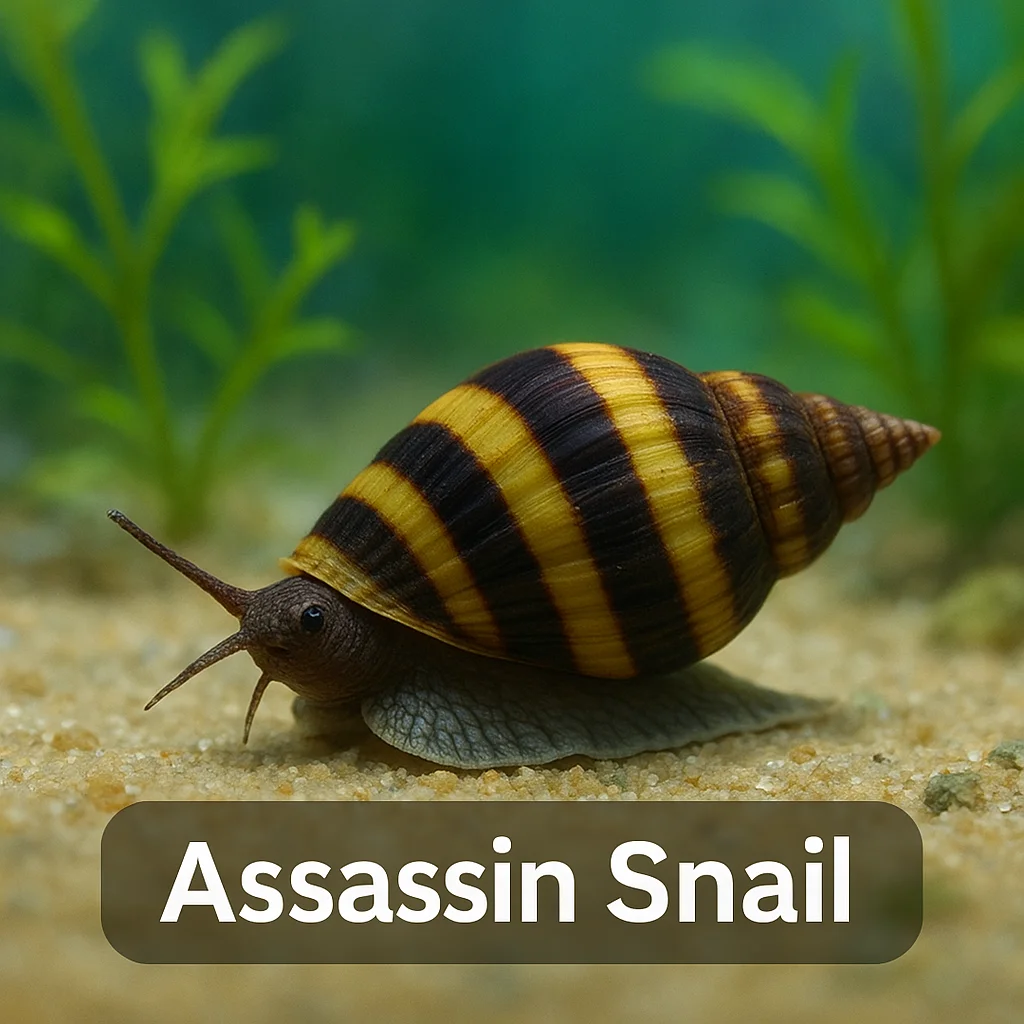
Recognizing the Assassin Snail is relatively straightforward due to its distinct features. It has a conical, spiraled shell with alternating bands of dark and light colors resembling a bumblebee pattern, which gives it one of its common names, the Bumblebee Snail. The body is typically a grayish hue that extends slightly outside the shell, particularly during movement.
- Body shape and silhouette: Conical, spiraled shell
- Key colors/patterns: Alternating dark and light bands, consistent regardless of mood or age
- Fin shapes and traits: Not applicable to snails
- Male vs female cues: Subtle, sexes are largely indistinguishable visually
- Common look-alikes: Other non-predatory snails; distinguishable by shell pattern and feeding behavior
🌍 Origin & Natural Habitat
The Assassin Snail originates from Southeast Asia, predominantly found in slow-moving freshwater habitats such as streams, rivers, and ponds. They thrive in areas with a sandy or muddy substrate, often hidden among leaf litter and plant debris. The tropical climate of their native regions means they are adapted to warmer waters with moderate seasonal variations in temperature and rainfall.
Understanding their natural habitat helps aquarists mimic optimal conditions in the tank, promoting health and activity. A substrate that allows for burrowing, coupled with structures like driftwood or rock crevices, can replicate the shifting underwater landscape of their origins.
🧪 Tank Setup & Water Parameters
Setting up an aquarium for Assassin Snails requires attention to substrate, water flow, and tank mates. A sand or fine gravel substrate is beneficial as these snails enjoy burrowing. While they are not overly demanding of strong currents, a gentle flow mimicking their natural streams is ideal. They require stable water temperatures between 72 to 78°F and slightly acidic to neutral pH levels. They thrive in tanks with live plants, offering shelter and environmental enrichment.
- Tank size considerations: Minimum 10 gallons
- Filtration and flow preferences: Moderate, simulating gentle streams
- Heating needs: Stable tropical temperatures
- Substrate and decor: Sand/fine gravel, plants, driftwood
- Lighting: Moderate, providing hiding spots
🤝 Temperament & Compatibility
Known for their peaceful demeanor, Assassin Snails are generally unaggressive and make ideal tank mates for many peaceful fish. In their quest for food, they demonstrate a unique behavior of preying on other snails, which makes them beneficial for controlling pest snail populations. However, care should be taken when housing them with delicate invertebrates or small snails, which may become prey.
- Schooling/shoaling needs: Solitary or small groups
- Behavior during feeding: Inconspicuous, often hidden during the day
- Good tankmates: Peaceful community fish
- Risky tankmates: Small or delicate invertebrates
🍽️ Diet & Feeding
In the wild, Assassin Snails primarily feed on other small snails and decaying protein-rich matter. In an aquarium, their diet can be supplemented with meaty foods such as fish flakes or pellets, though they do not need frequent feeding and will often manage by hunting smaller pest snails.
- Staple foods: Carnivorous diet, flake/pellets
- Feeding frequency: As needed, depending on snail population
- Special needs: Natural pest control through predation
🧬 Growth, Color Changes & Lifespan
The Assassin Snail generally maintains a consistent appearance throughout its life. As juveniles, their shells are softer and lighter in color, gradually hardening and deepening in hue as they mature. Like many aquarium species, they exhibit increased reclusiveness and potential stress signals, such as remaining tucked in their shells, if conditions are not ideal. Maintaining stable and appropriate tank conditions supports their typical lifespan of two to three years.
🪺 Breeding & Reproduction
Assassin Snails are egg layers, laying singular, square-shaped eggs that adhere to hard surfaces within the tank. Breeding in home aquariums is possible but not common, as they require specific conditions and patience. The young snails, once hatched, are miniature replicas of the adults and can take several months to mature.
🩺 Common Health Issues & Prevention
Overall, Assassin Snails are hardy creatures with few health concerns if maintained in proper conditions. Susceptible to the typical tank stressors, such as inappropriate water conditions or fluctuating temperatures, they benefit greatly from regularly maintained parameters and good filtration. Preventive measures include regular water changes, quarantine practices for new additions, and avoiding overpopulation.
- Prevention Basics: Quarantine new additions, regular water changes
- Stable parameters: Essential for stress reduction
🌱 Role in the Aquarium
Beyond their appeal as unique inhabitants, Assassin Snails serve a practical role by managing small snail populations, keeping pest species in check without chemical intervention. They are well-suited for community aquariums and often contribute to the physical and visual balance of planted tanks, where they are generally plant-safe due to their carnivorous habit. Ethical acquisition through captive breeding programs rather than wild collection helps conserve their natural populations.
📉 Conservation & Responsible Keeping
With a focus on sustainability, responsible aquarists are encouraged to source Assassin Snails from reputable captive breeding programs. This approach supports biodiversity and conservation efforts, ensuring wild populations are not depleted. Never releasing them into local ecosystems cannot be overstated, as their introduction may disrupt local species. When rehoming becomes necessary, seek out fellow enthusiasts or aquarium societies.
- Responsible Keeping Tips: Source captive-bred snails, avoid wild release
- Rehoming options: Aquarium societies, hobbyist groups
📌 Summary
- ID highlights: Conical shell, bumblebee pattern
- Origin: Southeast Asia, slow-moving waters
- Tank setup: Sand substrate, moderate flow
- Compatibility: Avoid delicate invertebrates
- Diet: Carnivorous, snail hunter
- Difficulty: Easy, suited for all levels
- Key cautions: Responsible sourcing, no local release