🐠 Amano Shrimp
🧾 Quick Facts
Amano Shrimp are a popular choice for freshwater aquariums due to their industrious algae-eating habits and peaceful demeanor. Named after renowned aquascaper Takashi Amano, they are favored for their ability to help maintain clean tanks naturally.
- Common names: Amano Shrimp, Algae Shrimp
- Scientific name: Caridina multidentata
- Freshwater
- Origin: Japan, Taiwan
- Typical adult size range: 2-3 inches (5-7 cm)
- Lifespan: 2-3 years
- Temperament: Peaceful
- Recommended tank size: Minimum 10 gallons (38 liters)
- Water temperature range: 68-78°F (20-25°C)
- pH guidance: 6.5-7.5
- Diet type: Omnivore
- Activity zone: Bottom
- Social needs: Thrive in groups
- Beginner suitability: Easy
🔍 Identification
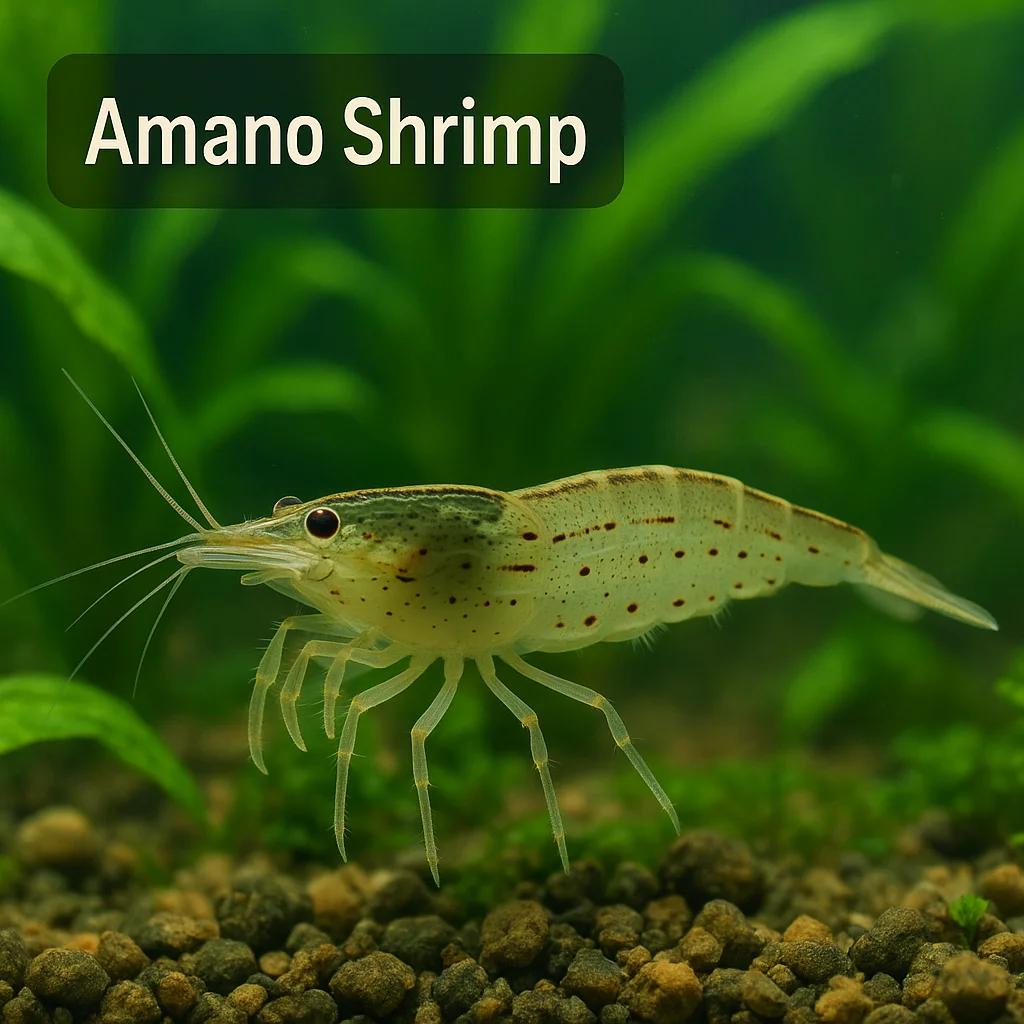
Amano Shrimp are easily recognizable by their transparent bodies with brownish spots and dots running laterally along their sides. Their bodies are elongated, with long, slender antennae and small legs that help them be agile eaters of tank algae and debris.
Male and female Amano Shrimp may look similar, but females are generally larger and have more distinctly curved underbellies. The spots on females are often more aligned and pronounced than on males. It's important to differentiate them from Ghost Shrimp, which lack the speckled markings and have slightly different body shapes.
- Elongated, transparent body
- Lateral row of brownish spots
- Slender antennae; active foragers
- Mature females tend to be larger
- Notable curved underbelly in females
- Soft brown/gray coloration with speckles
- Frequent confusion with Ghost Shrimp
- Activity at the tank bottom
- Subtle color intensification after molting
🌍 Origin & Natural Habitat
The Amano Shrimp is native to freshwater rivers and streams in Japan and Taiwan. These environments typically have dense plant growth and rocky substrates which provide ample hiding and feeding grounds. The regions experience seasonal changes such as monsoons, which influence water flows and temperatures.
Understanding their natural habitat can assist aquarists in recreating a suitable aquarium environment. This includes providing similar conditions in terms of water flow and vegetation to ensure they thrive and contribute effectively to the tank's ecosystem.
🧪 Tank Setup & Water Parameters
For an Amano Shrimp tank, a minimum size of 10 gallons is recommended, though larger tanks are beneficial for more significant algae control and activity observation. Provide a filter that supports gentle water flow to mimic their natural habitats. Use substrate materials like fine gravel or sand, and incorporate live plants to provide natural cover and feeding opportunities.
Adequate heating is necessary to maintain appropriate water temperatures, especially in colder regions. Lighting should enable plant growth without causing stress or excessive algae blooms.
- Tank of at least 10 gallons (38 liters)
- Fine gravel or sand substrate
- Live plants for cover and feeding
- Maintained gentle water flow
- Controlled and adequate lighting
- Stable, suitable temperature range
- Ample hiding spaces with rocks or driftwood
- Regular water quality checks
- Balanced feeding schedule
- Regular maintenance for water clarity
🤝 Temperament & Compatibility
Amano Shrimp are known for their peaceful nature and excel in community tanks with equally peaceful inhabitants. They do well when kept in groups, which increases their comfort and enhances their natural behaviors such as group foraging. While feeding, they efficiently clean algae and detritus, playing an essential role in tank maintenance.
Compatible tankmates include small to medium-sized fish like tetras, guppies, and other shrimp species. Avoid aggressive species that may harm them, such as large cichlids or crayfish. Individual temperaments can vary, and close observation is recommended when introducing new tankmates.
- Peaceful nature, ideal for community tanks
- Prefer groups for natural behavior
- Similarly docile fish make excellent tank mates
- Fish like tetras and guppies are suitable
- Avoid large or aggressive fish species
- Great at controlling algae naturally
- Need protection from potential predators
- Avoid overcrowding to reduce stress
- Observe behaviors upon introduction
🍽️ Diet & Feeding
Though primarily algae eaters, Amano Shrimp are omnivores. In the wild, they consume a variety of debris, dead or decaying plant matter, and small organisms. In aquariums, they can be fed a varied diet including high-quality shrimp pellets, algae wafers, and blanched vegetables like zucchini or spinach. Ensure they receive enough nutrition, especially in tanks with low algae production.
It's best to feed them in moderation to prevent water quality issues, typically feeding once a day or every other day, depending on algae availability in the aquarium.
- Primarily consume algae and detritus
- Offer shrimp pellets and algae wafers
- Supplement with blanched vegetables
- Monitor algae levels for diet adaptation
- Feed once or twice weekly if algae is ample
- Balance between algae control and health
- Avoid overfeeding to prevent waste buildup
- Observe feeding times to monitor health
🧬 Growth, Color Changes & Lifespan
Amano Shrimp grow from juveniles to adults by periodically molting their exoskeletons, a process that can cause temporary color intensification. They maintain a reasonably consistent appearance throughout their life, although slight color and pattern changes may occur based on mood or environmental factors.
Stress may present itself through prolonged hiding or less active behavior, but maintaining stable water conditions can help mitigate this. Their typical lifespan ranges from two to three years, heavily influenced by diet, water quality, and living conditions.
🪺 Breeding & Reproduction
Breeding Amano Shrimp in home aquariums is challenging due to their unique larval stage requirements. They are egg layers, with females carrying a clutch of eggs in their swimmerets. Once hatched, the larvae require brackish water conditions to develop, a necessity difficult to replicate in most freshwater home aquariums.
Because successful breeding requires specific conditions not commonly met in typical tank setups, most Amano Shrimp available for purchase are wild-caught or bred in specialized conditions.
🩺 Common Health Issues & Prevention
Amano Shrimp are generally hardy but can be susceptible to common freshwater shrimp ailments such as bacterial infections or parasite infestations. Ensure a stable, clean environment with effective filtration, a balanced diet, and regular habitat maintenance to prevent these issues.
- Ensure stable and clean tank conditions
- Maintain proper water parameters
- Quarantine new tank additions
- Avoid overcrowding to reduce stress
- Practice regular water quality monitoring
- Provide a balanced and varied diet
- Adequate filtration to prevent waste buildup
- Observe for signs of stress or agitation
🌱 Role in the Aquarium
Amano Shrimp play an essential role in maintaining aquarium cleanliness and balance, particularly in planted tanks. They help control algae growth without damaging plants and are an excellent addition to community aquariums due to their peaceful nature.
When sourced from reputable suppliers, they pose no ecological threat and are an ethical addition to aquariums. Avoid wild-caught specimens from vulnerable ecosystems, and instead choose captive-bred individuals where possible.
📉 Conservation & Responsible Keeping
In the aquarium industry, captive-bred Amano Shrimp are favored over wild-caught specimens to ensure sustainable practices and reduce environmental impact. Always avoid releasing them into local waters, as doing so could disturb local ecosystems.
If rehoming is necessary, consider aquarium clubs or local enthusiasts who can provide proper care.
- Prefer captive-bred shrimp for sustainability
- Never release into natural ecosystems
- Consider size when upgrading housing
- Research suppliers for ethical sourcing
- Engage local aquarium clubs for rehoming
- Maintain awareness of ecosystem impacts
- Consider tank capacity before purchase
- Follow best practices for aquariculture
📌 Summary
- Recognizable by brown spotting and transparent bodies
- Originates from Japan and Taiwan's freshwater streams
- Minimum tank size of 10 gallons recommended
- Compatible with small, peaceful fish species
- Omnivorous diet with algae and additional nutrition
- Beginner-friendly with a lifespan of 2-3 years
- Breeding requires specialized, brackish water conditions
- Key role in algae control and tank cleanliness
- Promote captive breeding for sustainability
- Stable water parameters crucial for health
- Value-added community tank addition